Natural Dog Anxiety Relief: Understanding Stress Triggers Before Choosing Solutions
Written by MyCern Research & Editorial Team
Anxiety is one of the most common but often misunderstood, behavioral challenges in dogs. Panting during thunderstorms, pacing when left alone, excessive barking, or destructive behavior are frequently labeled as “bad behavior,” when in reality they are stress responses driven by a dog’s nervous system.
Before exploring natural dog anxiety relief options, it’s essential to understand why a dog is anxious in the first place. Stress in dogs is rarely random. It is usually tied to identifiable triggers that activate the brain’s threat-detection pathways. Addressing those triggers first allows calming strategies and holistic aids to play a supportive, not compensatory, role.
This article explores:
- Common causes of anxiety in dogs
- How stress affects the canine nervous system
- Why identifying triggers matters before intervention
- How holistic calming aids can support not replace, proper management
What Anxiety Really Is in Dogs
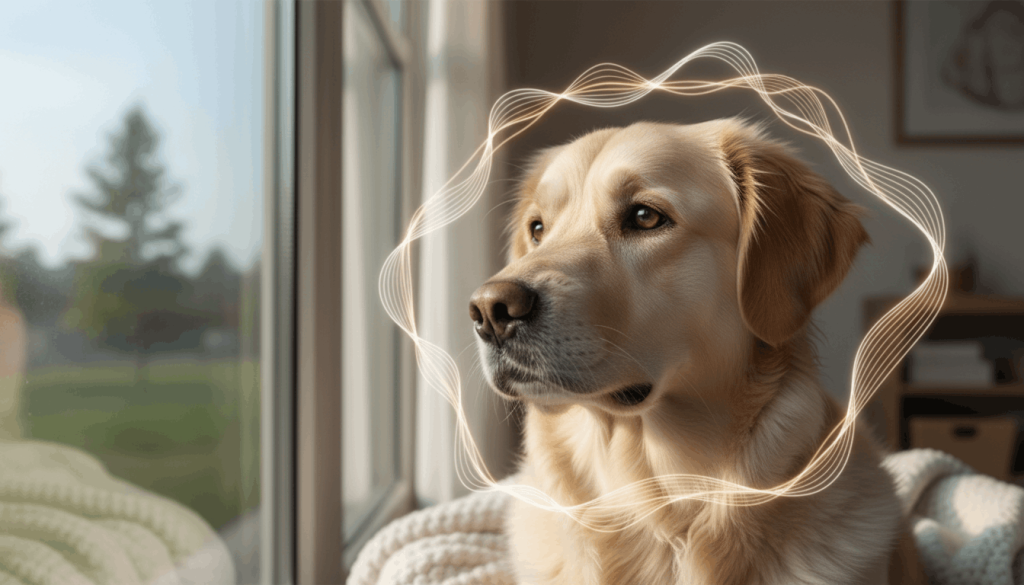
From a biological perspective, anxiety is a heightened state of alert driven by the brain’s limbic system. When a dog perceives a threat real or anticipated, the body releases stress hormones such as cortisol and adrenaline.
In short bursts, this response is protective. When stress becomes frequent or prolonged, however, it can alter behavior, sleep patterns, digestion, and immune signaling.
Importantly, anxiety is not a personality flaw. It reflects how a dog’s nervous system processes environmental input.
Common Anxiety Triggers in Dogs
Understanding what triggers stress is the foundation of effective anxiety support.
Noise Sensitivity
Loud or unpredictable sounds are among the most common anxiety triggers.
Examples include:
- Thunderstorms
- Fireworks
- Construction noise
- Sirens or alarms
Dogs hear at higher frequencies than humans, making certain sounds physically uncomfortable as well as psychologically startling.
Separation and Isolation
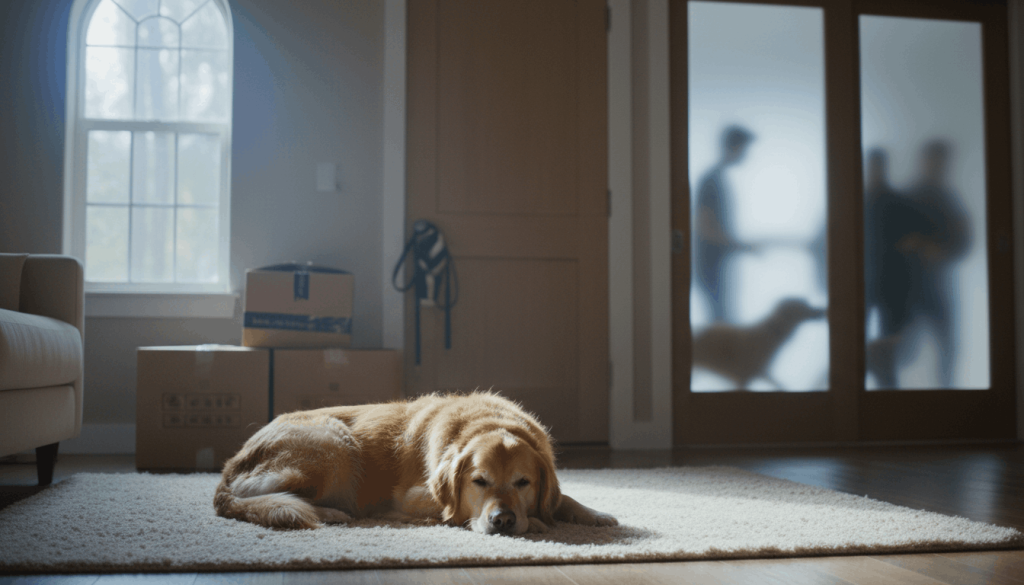
Dogs are social animals. Separation-related stress often appears when a dog is left alone or experiences changes in household presence.
Signs may include:
- Vocalization
- Destructive chewing
- House soiling
- Pacing or restlessness
This type of anxiety is closely linked to attachment patterns and predictability.
Changes in Routine or Environment
Dogs rely heavily on routine to feel secure. Even small disruptions can trigger stress.
Common examples:
- Moving homes
- New family members or pets
- Schedule changes
- Travel or boarding
The nervous system interprets unpredictability as potential threat, increasing vigilance.
Social Stressors
Interactions with unfamiliar dogs or people can be stressful, particularly for dogs with limited early social exposure.
Triggers may include:
- Crowded spaces
- Veterinary visits
- Grooming environments
- Confined encounters on leash
These stressors often involve a lack of perceived control, which intensifies anxiety.
Why Identifying the Trigger Comes First
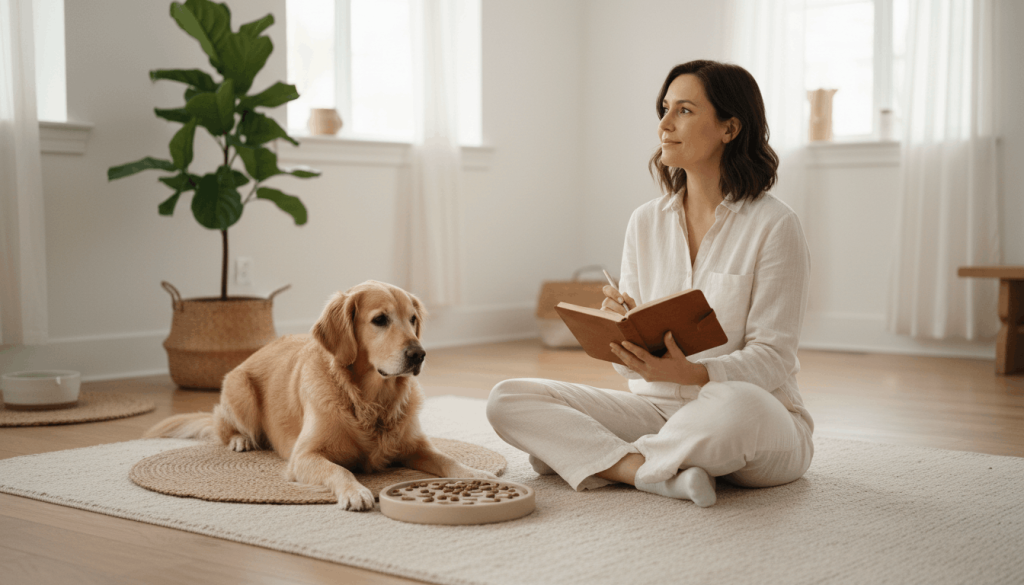
Many owners search for how to calm a stressed dog without first pinpointing the cause. While calming tools may reduce visible symptoms, unresolved triggers continue to activate stress pathways.
Without trigger identification:
- Anxiety may resurface in new forms
- Stress hormones remain elevated
- Behavioral progress becomes inconsistent
When the cause is understood, interventions can be matched to the specific stress pattern rather than applied broadly.
How Chronic Stress Affects the Body
Prolonged anxiety doesn’t only influence behavior—it affects whole-body physiology.
Research shows chronic stress in dogs can:
- Disrupt sleep cycles
- Alter digestive motility
- Increase inflammatory signaling
- Reduce immune resilience
This is why anxiety management is increasingly viewed as a wellness issue, not just a behavioral one.
The Role of Holistic Calming Aids
Holistic calming aids for pets are often misunderstood as “quick fixes.” In reality, they function best as support tools that work alongside environmental and behavioral strategies.
These aids may help:
- Support neurotransmitter balance
- Promote relaxation responses
- Reduce stress reactivity during known triggers
However, they do not remove the trigger itself. Their role is to help the nervous system cope more effectively while root causes are addressed.
Examples of Supportive, Non-Pharmaceutical Approaches
Natural anxiety support often includes a combination of strategies:
- Environmental management: Reducing noise exposure, creating safe spaces
- Predictable routines: Consistent feeding, walking, and rest schedules
- Mental enrichment: Controlled activities that provide focus without overstimulation
- Behavioral conditioning: Gradual exposure to triggers under calm conditions
Holistic calming aids may be layered into this foundation, not placed on top of unresolved stressors.
Why “Calming” Looks Different for Every Dog
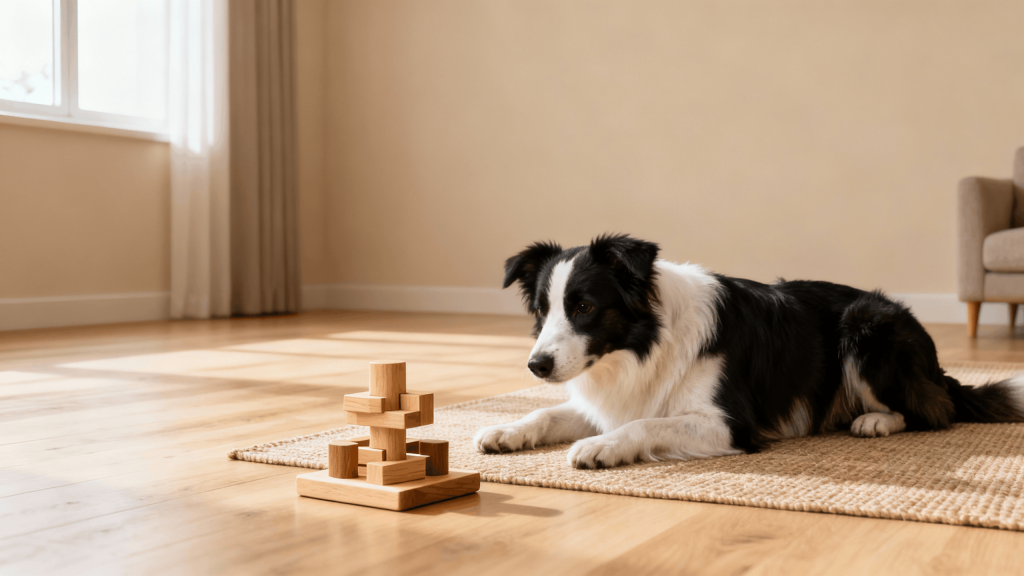
There is no universal anxiety profile. Two dogs may react to the same stimulus in entirely different ways due to genetics, early experiences, and individual sensitivity.
Effective natural dog anxiety relief respects this individuality by:
- Observing patterns rather than isolated incidents
- Matching support to specific triggers
- Adjusting strategies over time
This personalized approach leads to more stable, long-term results.
When Professional Guidance Matters
If anxiety is severe, escalating, or interfering with daily function, veterinary or behavioral evaluation is important. Underlying pain, hormonal changes, or neurological factors can amplify anxiety and should be ruled out.
Support works best when emotional health is considered part of overall physical wellness.
Conclusion
Natural dog anxiety relief begins with understanding not suppressing, stress responses. Noise, separation, routine changes, and social pressures all activate the canine nervous system in predictable ways. Identifying these triggers first allows calming strategies and holistic aids to play their proper role: supporting resilience rather than masking symptoms.
By focusing on cause before solution, dog owners can create calmer, more predictable environments that help their dogs feel safe, balanced, and supported over the long term.
References
- Overall, K. L. (2013). Manual of Clinical Behavioral Medicine for Dogs and Cats. Elsevier.
- Beerda, B., et al. (1998). Behavioral, saliva cortisol and heart rate responses to different types of stimuli in dogs. Applied Animal Behaviour Science, 58(3–4), 365–381.
- Dreschel, N. A., & Granger, D. A. (2005). Physiological and behavioral reactivity to stress in thunderstorm-phobic dogs and their caregivers. Applied Animal Behaviour Science, 95(3-4), 153-168.
- Sherman, B. L., & Mills, D. S. (2008). Canine anxieties and phobias. Veterinary Clinics of North America: Small Animal Practice, 38(5), 1081–1106.
- Tiira, K., & Lohi, H. (2015). Early life experiences and exercise associate with canine anxieties. PloS one, 10(11), e0141907.