
Balanced Diet for Dogs: A Practical Feeding Guide for Every Life Stage
Written by MyCern Research & Editorial Team
Choosing a balanced diet for dogs can feel confusing when every bag promises better health, shinier coats, or longer life. In reality, good nutrition is not about trends. It is about giving your dog the right nutrients, in the right proportions, for the right life stage.
Understanding what is a balanced dog diet helps you move past marketing and focus on what truly supports growth, energy, digestion, and long-term wellbeing. This clear and practical dog diet guide by age explains how feeding needs change from puppyhood to senior years and how to make confident, evidence-based choices.
This article explores
- What makes a balanced diet for dogs
- How nutrition changes by age
- How to choose appropriate commercial food
- When homemade diets may be suitable
- Simple daily feeding rules for healthy dogs
What is a balanced dog diet?

A balanced diet for dogs supplies all essential nutrients in proper proportions, including protein, fat, carbohydrates, vitamins, minerals, and water.
Protein supports muscles, organs, enzymes, and immune function. High-quality animal protein also provides complete amino acids that dogs use efficiently.
Fats are the most concentrated energy source. They support brain health, skin and coat condition, hormone production, and absorption of fat-soluble vitamins.
Carbohydrates provide accessible energy and dietary fiber that supports digestion and stool quality. While dogs do not require carbohydrates in the same way they require protein and fat, well-chosen carbohydrates improve overall diet structure and gut health.
Vitamins and minerals regulate metabolism, bone development, nerve signaling, and immune function. Water remains the most critical nutrient and must always be freely available.
The true definition of what is a balanced dog diet is not simply offering all nutrients, but supplying them in the correct ratios. Imbalances can create long-term skeletal, metabolic, and digestive problems even when ingredients appear healthy.
Commercial foods labeled “complete and balanced” are formulated to meet nutritional profiles established by Association of American Feed Control Officials. This ensures the food provides all essential nutrients for a specific life stage.
Dog diet guide by age
Puppy nutrition
Puppies grow faster than at any other time in life. Their balanced diet for dogs must support bone formation, brain development, immune maturation, and rapid muscle growth.
Puppy diets require
- Higher protein density
- Controlled calcium and phosphorus
- Higher energy per kilogram
- DHA for brain and vision development
Feeding adult food to puppies risks nutrient deficiencies and improper bone development.
Large-breed puppies need special attention. Fast growth increases the risk of joint and skeletal disorders. A proper dog diet guide by age for large breeds focuses on controlled calories and carefully balanced minerals rather than higher food volume.
Puppy feeding schedule
- Up to 4 months: four meals daily
- 4 to 6 months: three meals daily
- After 6 months: two meals daily
Avoid free feeding. Structured meals support stable growth and healthy digestion.

Adult dog nutrition
Once growth is complete, adult dogs shift from development to maintenance. A well-designed balanced diet for dogs in adulthood supports muscle preservation, energy balance, skin and coat health, and immune stability.
Adult dogs typically need
- Moderate to high-quality protein
- Moderate fat for energy
- Digestible carbohydrates and fiber
- Complete vitamin and mineral coverage
The transition from puppy food should be gradual over seven to ten days to prevent digestive upset.
A key principle of what is a balanced dog diet is individual adjustment. Highly active dogs, working dogs, and dogs living in cold environments often require more calories and slightly higher fat. Indoor or sedentary dogs need lower energy intake to prevent weight gain.
Body condition is your best guide. You should feel the ribs easily without pressing and see a visible waist when viewed from above.
Senior dog nutrition
Aging changes digestion, metabolism, and muscle maintenance. The balanced diet for dogs in senior years should help preserve lean body mass while limiting unnecessary calories.
Senior diets usually emphasize
- Highly digestible protein to protect muscle
- Reduced energy density to prevent weight gain
- Omega-3 fatty acids to support joints and inflammation control
- Added fiber for digestive comfort
- Antioxidants to support immune and cognitive health
A proper dog diet guide by age recognizes that large dogs often become seniors earlier than small dogs and require nutritional adjustments sooner.
Evaluating commercial dog food
Understanding the label is essential when choosing a balanced diet for dogs.
Look for a clear life-stage statement confirming the food is complete and balanced for growth, maintenance, or all life stages. Foods validated through feeding trials provide stronger real-world evidence than those formulated only on paper.
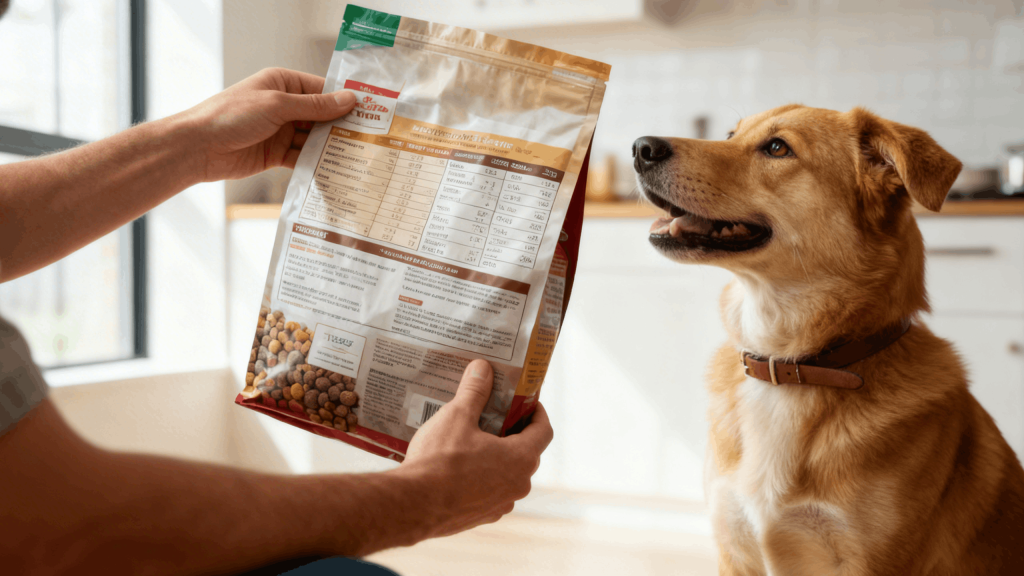
The ingredient list is arranged by weight before cooking. Named animal proteins such as chicken, beef, turkey, or fish indicate clearer sourcing. Meat meals can also be high-quality and concentrated protein sources.
Useful indicators include
- Named animal proteins in the first ingredients
- Added omega-3 sources such as fish oil
- Clearly identified mineral sources
Avoid vague ingredients such as “meat meal” without species identification and foods heavily dependent on simple fillers.
Independent nutritional standards for dogs are also outlined by the National Research Council and guide professional formulation practices.
Homemade and raw diets
Some owners choose home-prepared diets to control ingredients or manage food sensitivities. However, research shows that most homemade recipes fail to meet the full definition of what is a balanced dog diet.
Common problems include
- Inadequate calcium and phosphorus
- Missing essential fatty acids
- Insufficient vitamin D and E
- Mineral imbalances
Feeding an incomplete diet can cause serious long-term health consequences, especially in puppies.
If you prepare food at home, work with a veterinary nutrition professional and follow recipes precisely. Supplements are not optional in most homemade programs. Raw diets also carry food safety risks and must be handled carefully.
A properly formulated commercial balanced diet for dogs remains the safest and most practical option for most households.

Treats and supplements
Treats should never exceed ten percent of daily calorie intake. Excess treats dilute the nutritional balance of even the best food.
Dogs eating a complete commercial diet generally do not need additional supplements. Adding vitamins or minerals without guidance can disrupt nutrient ratios and create toxicity risks.
Supplement use is appropriate only when recommended by a veterinarian for specific conditions such as joint disease, skin disorders, or confirmed deficiencies.
Common feeding challenges
Picky eating is often behavioral rather than nutritional. Constantly switching foods, excessive treats, or table scraps encourage food refusal. Scheduled feeding, limited treats, and consistency usually restore normal appetite.
Always rule out medical issues before assuming feeding behavior is simply preference.
How MyCern supports canine nutritional wellness
At MyCern, our science-guided wellness philosophy recognizes that a balanced diet for dogs is the foundation of physical health, emotional stability, and quality of life. Proper nutrition supports immune function, digestive comfort, muscle maintenance, and long-term vitality.
We emphasize the same evidence-based principles used in human wellness: consistency, nutrient quality, and alignment with biological needs. Understanding what is a balanced dog diet empowers families to make informed choices rather than following trends.
When nutrition is aligned with life stage, activity level, and health status, dogs are better equipped to remain active, resilient, and comfortable as they age.
Practical daily feeding guidelines
- Choose life-stage appropriate food based on this dog diet guide by age.
- Confirm that foods are labeled complete and balanced for the correct life stage.
- Feed on a consistent schedule, usually twice daily for adult dogs.
- Monitor body condition monthly and adjust portions when needed.
- Transition foods gradually over seven to ten days.
- Limit treats to less than ten percent of daily calories.
- Provide fresh, clean water at all times.

Conclusion
Creating a balanced diet for dogs does not require expensive boutique brands or complicated home cooking. It requires understanding what is a balanced dog diet, recognizing how nutritional needs shift throughout life, and selecting foods that meet recognized standards for your dog’s current age and lifestyle.
This practical dog diet guide by age shows that puppies need controlled growth support, adult dogs need maintenance nutrition tailored to activity, and senior dogs need gentle, highly digestible diets that protect muscle and joints.
The best food is not defined by marketing claims, but by how well it supports healthy body condition, stable energy, strong digestion, and long-term wellbeing for your individual dog.
References
- Case, L. P., Daristotle, L., Hayek, M. G., & Raasch, M. F. (2010). Canine and feline nutrition: a resource for companion animal professionals. Elsevier Health Sciences.
- Freeman, L. M., Stern, J. A., Fries, R., Adin, D. B., & Rush, J. E. (2018). Diet-associated dilated cardiomyopathy in dogs: what do we know?. Journal of the American Veterinary Medical Association, 253(11), 1390-1394.
- Larsen, J. A., & Villaverde, C. (2016). Scope of the problem and perception by owners and veterinarians. Veterinary Clinics: Small Animal Practice, 46(5), 761-772.
- National Research Council, Division on Earth, Life Studies, Committee on Animal Nutrition, Subcommittee on Dog, & Cat Nutrition. (2006). Nutrient requirements of dogs and cats. National Academies Press.
- Stockman, J., Fascetti, A. J., Kass, P. H., & Larsen, J. A. (2013). Evaluation of recipes of home-prepared maintenance diets for dogs. Journal of the American Veterinary Medical Association, 242(11), 1500-1505.