

How Often Should You Feed a Dog? Age-Based Feeding Schedules for Puppies, Adults, and Seniors
Written by MyCern Research & Editorial Team
One of the most common questions pet owners ask is how often should you feed a dog to support healthy growth, stable energy, and long-term wellbeing. While food quality is important, feeding frequency plays a major role in digestion, metabolism, blood sugar regulation, and behavior.
This article explores:
- How feeding needs change from puppyhood to senior years
- How to follow an age-appropriate dog feeding schedule
- When a structured puppy feeding schedule is especially important
- Practical feeding guidance supported by veterinary nutrition research
Why Feeding Frequency Matters for Dogs
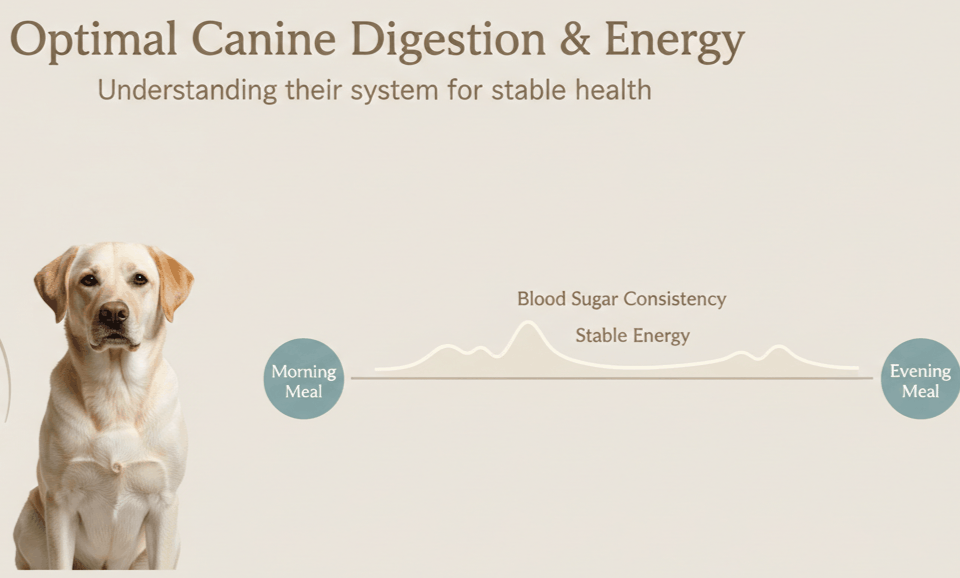
Dogs process nutrients differently at each life stage. Puppies have limited stomach capacity and rapidly changing energy demands. Adult dogs need stable intake to support muscle maintenance and activity. Senior dogs experience metabolic and digestive changes that often benefit from smaller, more frequent meals.
Feeding frequency influences:
- Nutrient absorption efficiency
- Blood glucose stability
- Gastrointestinal comfort
- Daily energy consistency
A well-designed feeding schedule supports both physical health and predictable daily routines.
Puppy Feeding Schedule (Birth to 12 Months)
During growth, feeding frequency is more critical than meal size.
A structured puppy feeding schedule supports steady growth and reduces the risk of digestive upset and energy crashes.
General guidance:
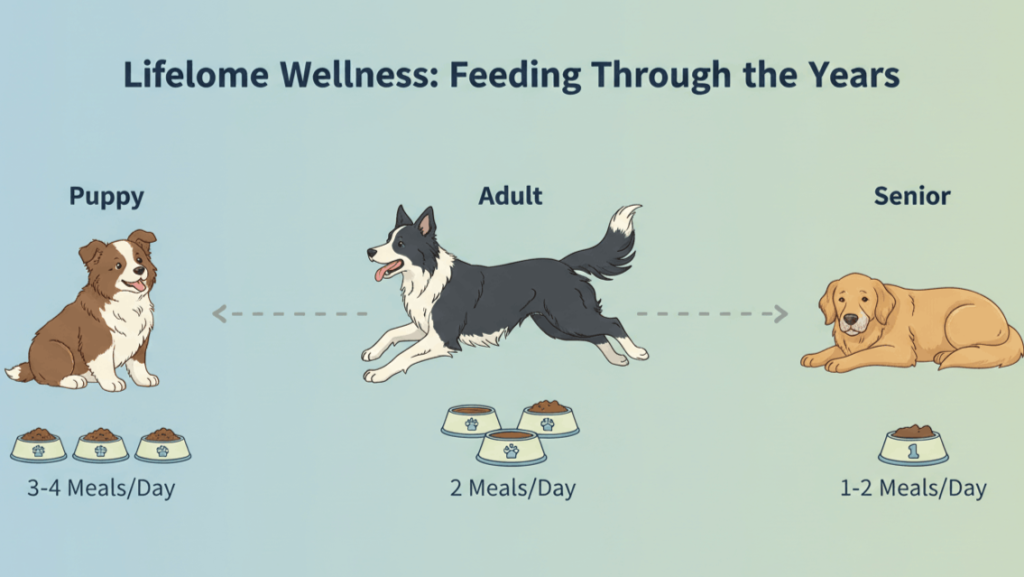
- Up to 3 months: 4 meals per day
- 3 to 6 months: 3 meals per day
- 6 to 12 months: Gradual transition to 2 meals per day
Puppies have high nutrient requirements but small stomach volume. Spreading daily intake into multiple meals helps maintain stable blood glucose and improves nutrient utilization.
Large-breed puppies in particular benefit from consistent meal timing, as growth rate and energy balance are closely linked to long-term skeletal health.
How Often Should You Feed a Dog in Adulthood?
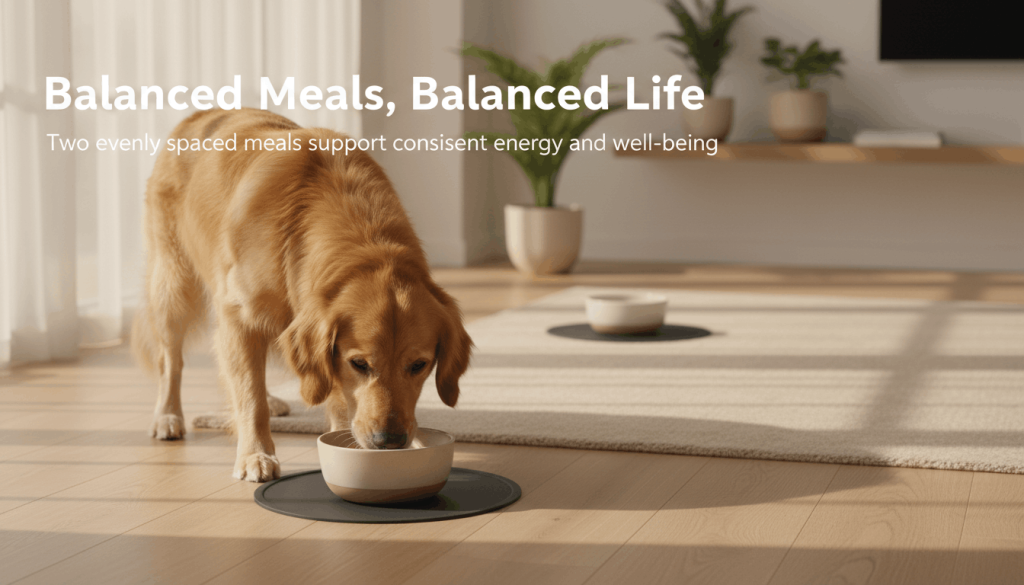
For most healthy adult dogs, the standard answer to how often should you feed a dog is:
- Two meals per day
A twice-daily dog feeding schedule supports:
- Better digestion compared with one large meal
- Reduced risk of post-meal lethargy
- More stable energy throughout the day
Research in canine nutrition suggests that splitting daily food intake improves satiety and may help regulate body weight in adult dogs.
Some highly active working or sporting dogs may benefit from adjusted timing around training or activity, but total daily intake remains more important than adding extra meals.
Feeding Senior Dogs (Typically 7 Years and Older)
Senior dogs experience gradual changes in digestive efficiency, lean muscle maintenance, and metabolic rate. For many older dogs:
- Two smaller meals per day remain appropriate
- In some cases, three smaller meals may improve comfort and appetite
A modified dog feeding schedule for senior dogs can help:
- Support nutrient absorption
- Reduce large post-meal digestive load
- Maintain consistent energy levels
Older dogs are also more sensitive to fluctuations in routine. Predictable feeding times help support appetite regulation and daily behavior patterns.
Factors That May Adjust Feeding Frequency
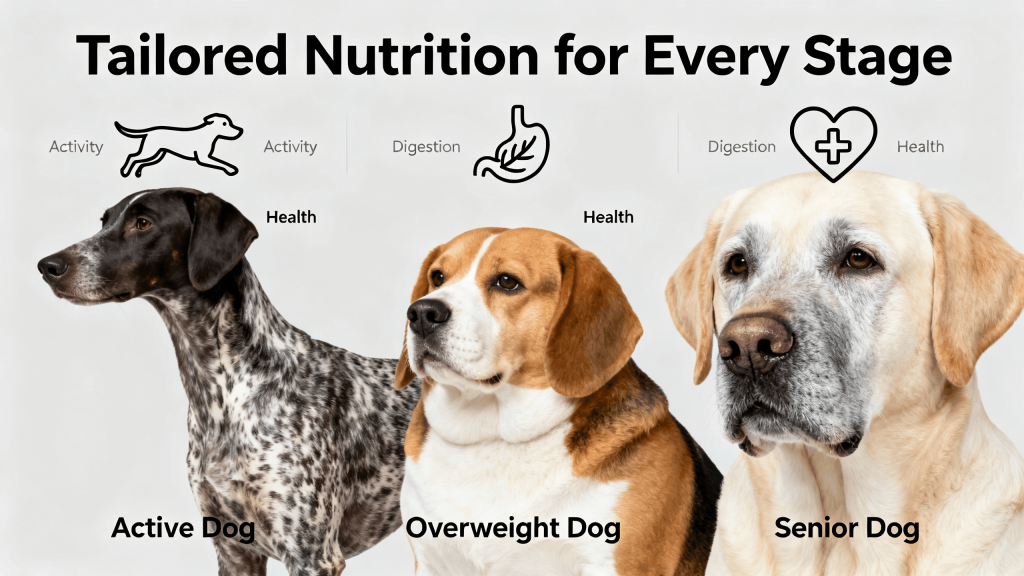
While age is the primary guide, individual factors can influence how often a dog should be fed:
- Body condition and weight management goals
- Activity level and exercise demands
- Neutering status
- Digestive sensitivity
- Veterinary-managed health conditions
The best feeding frequency is one that supports healthy body composition, consistent stool quality, and stable daily energy.
FAQ – Feeding Frequency in Dogs
How often should you feed a dog if they seem constantly hungry?
Persistent hunger may be linked to calorie density, feeding volume, activity level, or learned behavior. Increasing meal frequency without adjusting total intake may worsen weight gain. A structured feeding schedule with appropriate portion control is usually more effective.
Is once-a-day feeding safe for dogs?
Most dogs tolerate one meal daily, but research suggests that dividing daily intake into at least two meals supports better digestion and satiety. For many dogs, one large meal may increase gastrointestinal discomfort.
Does a puppy feeding schedule reduce digestive problems?
Yes. Multiple smaller meals help stabilize blood glucose and reduce the digestive burden associated with large portions in growing puppies.
How often should you feed a dog during training periods?
Daily meals should remain structured. Training treats should be included as part of the total daily intake rather than added on top of regular meals.
Should senior dogs be fed more often than adult dogs?
Some senior dogs benefit from slightly more frequent, smaller meals due to reduced digestive efficiency or reduced appetite. However, two meals per day remains suitable for most healthy older dogs.
Conclusion
Understanding how often should you feed a dog is not simply about convenience, it is about supporting digestion, metabolism, growth, and daily stability. An age-appropriate dog feeding schedule, especially a consistent puppy feeding schedule during early life, helps establish healthy patterns that support lifelong wellbeing.
By adjusting feeding frequency as dogs grow and age, owners can better support both nutritional needs and overall quality of life.
References
- Laflamme, D. P. (2012). Nutrition for aging cats and dogs and the importance of body condition. Veterinary Clinics of North America: Small Animal Practice, 42(4), 769–783.
- Weber, M., Bissot, T., Servet, E., Sergheraert, R., Biourge, V., & German, A. J. (2007). A high-protein, high-fiber diet designed for weight loss improves satiety in dogs. Journal of Veterinary Internal Medicine, 21(6), 1203–1208.
- Fahey Jr, G. C., Barry, K. A., & Swanson, K. S. (2008). Age-related changes in nutrient utilization by companion animals. Annu. Rev. Nutr., 28(1), 425-445.
- German, A. J. (2006). The growing problem of obesity in dogs and cats. The Journal of Nutrition, 136(7), 1940S–1946S.

