
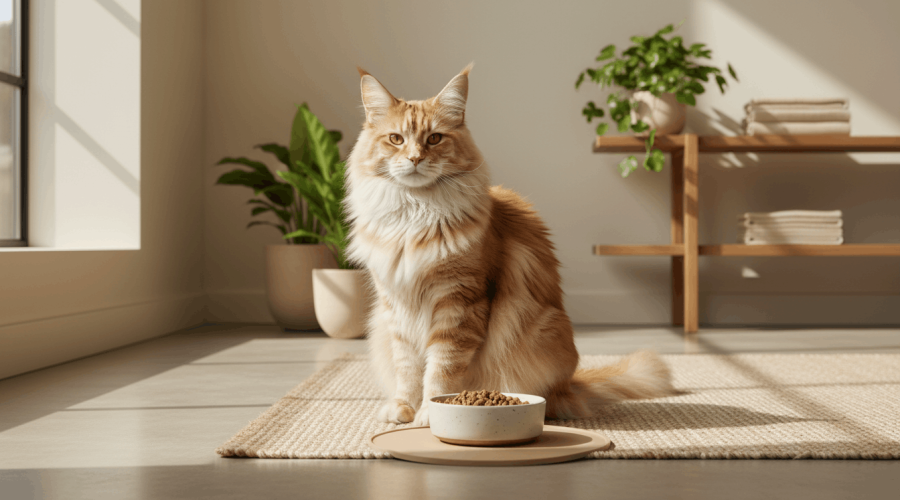
How Often Should You Feed a Cat? Vet-Guided Feeding Schedules for Every Life Stage
Written by MyCern Research & Editorial Team
One of the most common questions cat owners ask is how often should you feed a cat to support healthy growth, stable energy, and long-term wellbeing. Unlike dogs, cats are natural nibblers with unique metabolic and behavioral feeding patterns. Creating the right cat feeding schedule is not only about portion control—it also supports digestion, body condition, and daily routine.
This article explores:
- How feeding frequency changes across a cat’s life stages
- The science behind structured feeding routines
- The pros and limitations of free feeding vs scheduled feeding cats
- Practical, vet-guided feeding guidance
Why Feeding Frequency Matters for Cats
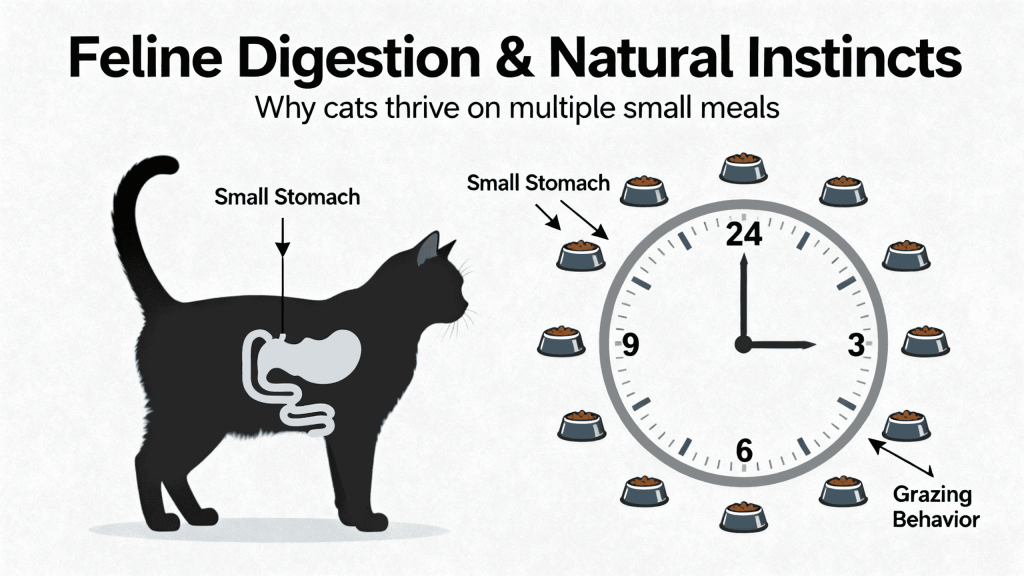
Cats are obligate carnivores with relatively small stomach capacity and a natural tendency to eat multiple small meals throughout the day. Feeding frequency influences:
- Blood glucose stability
- Hunger and satiety signaling
- Behavioral stress and food anticipation
- Body weight regulation
Understanding how often should you feed a cat helps align feeding habits with feline physiology rather than human convenience.
Kitten Feeding Schedule (Up to 12 Months)
Kittens grow rapidly and require frequent nutrient intake to support tissue development and immune maturation.
A practical cat feeding schedule for kittens includes:
- Up to 4 months: 4 small meals per day
- 4 to 6 months: 3 meals per day
- 6 to 12 months: 2 to 3 meals per day
Kittens have high energy demands and limited stomach capacity. Spreading daily intake across multiple meals improves nutrient absorption and helps prevent energy dips.
Structured feeding also supports healthy food motivation without creating excessive hunger between meals.
How Often Should You Feed a Cat in Adulthood?
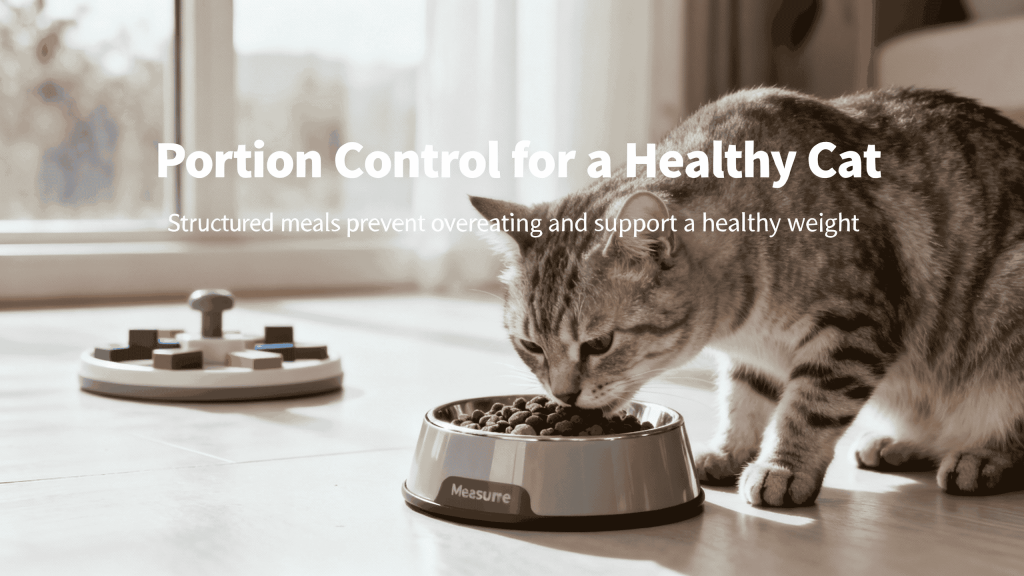
For most healthy adult cats, the general recommendation for how often should you feed a cat is:
- Two measured meals per day, or
- Two main meals with small controlled portions offered through puzzle feeders
A predictable cat feeding schedule supports appetite regulation and reduces the risk of overconsumption especially in indoor cats with lower daily activity.
From a metabolic perspective, adult cats benefit from consistent meal timing that mirrors their natural pattern of multiple small prey meals.
Feeding Senior Cats (Typically 7 Years and Older)
As cats age, changes in digestion, lean body mass, and appetite become more common.
For many senior cats:
- Two to three smaller meals per day support better nutrient utilization
- Smaller, more frequent meals may improve acceptance in cats with reduced appetite
Adjusting feeding frequency helps support:
- Muscle maintenance
- Digestive comfort
- More stable daily energy
Monitoring body condition is especially important in older cats, as both unintentional weight loss and gradual obesity are common.
Free Feeding vs Scheduled Feeding Cats
The debate around free feeding vs scheduled feeding cats is common, especially for multi-cat or indoor households.
Free feeding means food is available all day.
Potential advantages:
- May suit cats that naturally graze small amounts
- Convenient for owners with irregular schedules
Limitations:
- Makes portion control difficult
- Obscures early appetite changes, which are often an early health signal
- Increases risk of gradual weight gain in less active cats
Scheduled feeding uses measured meals at set times.
Advantages:
- Supports accurate portion control
- Allows early detection of reduced appetite
- Helps manage multi-cat households and special diets
- Encourages healthy food routines
From a clinical nutrition perspective, scheduled feeding is generally preferred for long-term weight management and health monitoring.
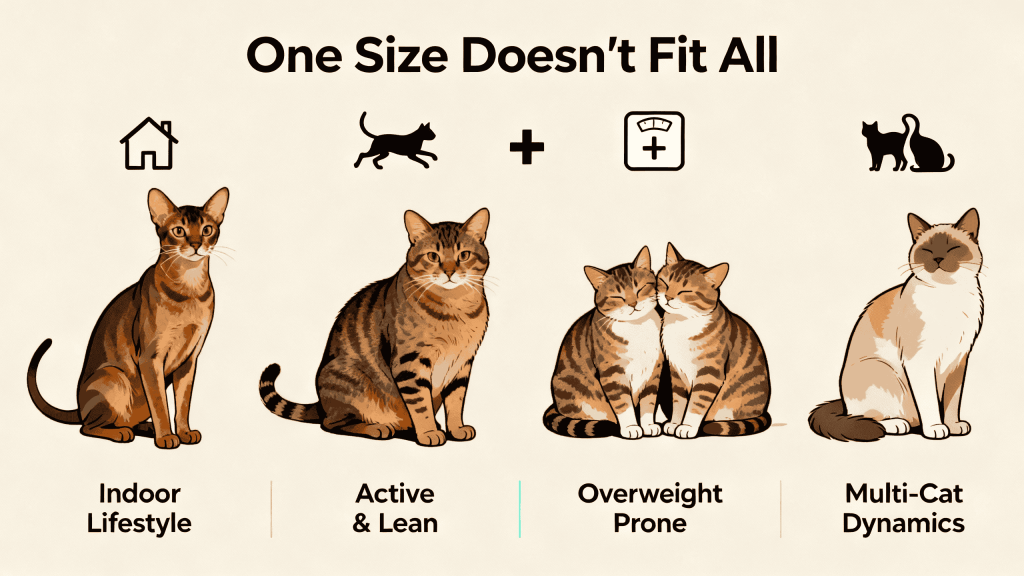
Individual Factors That Influence Feeding Frequency
While life stage is the primary guide, some cats benefit from individualized feeding schedules due to:
- Indoor-only lifestyle
- Body condition or weight goals
- Multi-cat competition or stress
- High activity or environmental enrichment routines
The best approach to how often should you feed a cat is one that maintains healthy body composition, predictable appetite, and stable behavior.
FAQ – Cat Feeding Schedules
How often should you feed a cat if they beg for food constantly?
Frequent begging may reflect learned behavior rather than true hunger. Structured feeding times, puzzle feeders, and environmental enrichment often reduce food-seeking behaviors without increasing total calories.
Is free feeding bad for cats?
Free feeding is not harmful for every cat, but for many indoor cats it increases the risk of weight gain and delays recognition of appetite changes. This is why free feeding vs scheduled feeding cats is often discussed in veterinary settings.
Can cats eat more than two meals per day?
Yes. Some cats do well with three or more small meals when total daily intake remains controlled.
Do kittens need different feeding frequency than adult cats?
Yes. Kittens require more frequent meals due to rapid growth and limited stomach capacity.
Conclusion
Understanding how often should you feed a cat means recognizing that feeding frequency supports more than just nutrition—it influences metabolism, appetite regulation, and daily wellbeing. A consistent cat feeding schedule, especially when compared with free feeding vs scheduled feeding cats, provides better portion control and clearer insight into your cat’s health.
By adjusting feeding frequency across life stages and individual needs, owners can support both long-term health and healthy daily routines.

References
- Zoran, D. L. (2002). The carnivore connection to nutrition in cats. Journal of the American Veterinary Medical Association, 221(11), 1559–1567.
- Laflamme, D. P. (2005). Nutrition for aging cats and dogs and the importance of body condition. Veterinary Clinics of North America: Small Animal Practice, 35(3), 713–742.
- German, A. J. (2006). The growing problem of obesity in dogs and cats. The Journal of Nutrition, 136(7), 1940S–1946S.
- Cameron, K. M., et al. (2014). Feeding behavior and energy intake of domestic cats. Journal of Feline Medicine and Surgery, 16(10), 777–783.

