Why Does My Dog Eat Grass? Common Reasons, Digestive Clues, and When to Worry
Written by MyCern Research & Editorial Team
Many dog owners ask why does my dog eat grass, especially when it seems to happen suddenly or repeatedly during walks. While this behavior often looks unusual, grass consumption is one of the most frequently observed non-food behaviors in dogs. Understanding the true dog eating grass reasons helps owners distinguish between normal instinctive behavior and potential digestive or health-related signals.
This article explores:
- The most common explanations behind grass eating
- What grass consumption may reveal about digestion and comfort
- When it is normal for dogs to eat grass and when it deserves closer attention
Why Does My Dog Eat Grass?
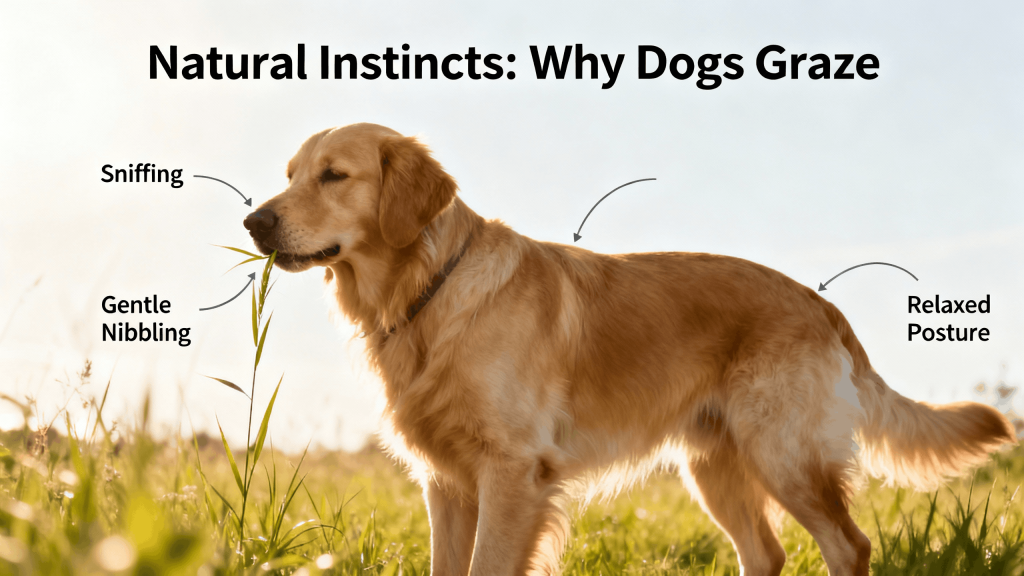
From a behavioral and physiological perspective, grass eating is considered a form of plant ingestion that has been documented in both domestic dogs and wild canids. Several complementary theories help explain why does my dog eat grass, rather than a single universal cause.
Natural Foraging and Ancestral Behavior
One of the simplest dog eating grass reasons is inherited foraging behavior. Wild canids regularly consume plant material indirectly through prey or directly through grazing. This plant intake may help diversify the digestive content and stimulate gastrointestinal motility.
Research observations of wild carnivores show that plant consumption is not always linked to illness, suggesting that is it normal for dogs to eat grass may often be answered with yes—when it occurs occasionally and without other symptoms.
Digestive Stimulation and Gut Motility
Another leading explanation for why does my dog eat grass involves digestive mechanics. Fibrous plant material can stimulate mechanical movement of the stomach and intestines. This may help dogs who experience mild digestive discomfort, sluggish motility, or transient bloating.
In some dogs, grass consumption appears shortly before defecation, suggesting that plant fiber may encourage intestinal transit. This does not necessarily indicate disease, but it may reflect subtle digestive regulation.

Nausea and Stomach Discomfort
A common belief is that dogs eat grass to induce vomiting. While some dogs do vomit after grazing, studies indicate that most dogs that eat grass are not visibly ill beforehand and do not vomit afterward.
However, in a subset of dogs, repeated grass eating followed by retching may signal nausea or gastric irritation. In this context, why does my dog eat grass may reflect a temporary attempt to relieve stomach discomfort rather than a behavioral habit.
Dietary and Nutrient Factors
Although grass itself is not a meaningful nutrient source for dogs, certain dog eating grass reasons may relate indirectly to diet composition.
Dogs fed highly digestible commercial diets still benefit from adequate fermentable fiber and dietary variety. When diets are low in fiber or lack certain plant-derived compounds, some dogs may display increased plant-seeking behavior.
This does not automatically mean nutritional deficiency, but it highlights how feeding patterns can influence oral exploration and grazing behavior.
Boredom, Stress, and Environmental Enrichment
Behavioral factors are another important part of why does my dog eat grass.
Dogs that experience:
- Limited outdoor stimulation
- Predictable walking routes
- Low mental engagement
may graze simply because it provides sensory novelty. In these cases, grass eating functions as an exploratory or self-soothing behavior rather than a digestive response.
Stress-related behaviors can also include repetitive sniffing and nibbling, particularly in dogs exposed to environmental changes, new routines, or social stressors.

Is It Normal for Dogs to Eat Grass?
For most healthy dogs, is it normal for dogs to eat grass can be answered affirmatively when the behavior:
- Occurs occasionally
- Is not accompanied by lethargy, vomiting, or appetite changes
- Does not become obsessive or excessive
Large observational studies of companion dogs show that plant eating is a common and usually benign behavior.
Therefore, many dog eating grass reasons fall within the range of normal canine behavior.
When Grass Eating May Be a Digestive Clue
While usually harmless, certain patterns of grass consumption deserve closer observation. Repeated daily grazing, especially when combined with:
- Lip licking or excessive salivation
- Restlessness after meals
- Soft stools or intermittent diarrhea
may suggest underlying digestive sensitivity, mild gastritis, or feeding schedule issues.
In these situations, why does my dog eat grass becomes a useful behavioral signal rather than an isolated habit.
When to Worry About Grass Eating
Veterinary evaluation is recommended if grass eating is accompanied by:
- Persistent vomiting or dry heaving
- Reduced appetite
- Abdominal discomfort or bloating
- Weight loss
- Sudden behavioral changes
Another important concern is chemical exposure. Lawns treated with herbicides, fertilizers, or pesticides pose a far greater risk than the grass itself.

Conclusion
Understanding why does my dog eat grass requires looking beyond a single explanation. For many dogs, plant consumption reflects normal exploratory and foraging behavior. For others, dog eating grass reasons may include digestive stimulation, mild nausea, or behavioral enrichment needs.
Most importantly, is it normal for dogs to eat grass depends on context. Occasional grazing in a healthy, energetic dog is usually harmless. However, repeated or compulsive grass eating especially when paired with digestive or behavioral changes, should be viewed as a useful early clue that something in your dog’s routine or physiology may need closer attention.
References
- Sueda, K. L. C., Hart, B. L., & Cliff, K. D. (2008). Characterisation of plant eating in dogs. Applied Animal Behaviour Science, 111(1–2), 120–132.
- McKenzie, S. J., Brown, W. Y., & Price, I. R. (2010). Reduction in grass eating behaviours in the domestic dog, Canis familiaris, in response to a mild gastrointestinal disturbance. Applied Animal Behaviour Science, 123(1-2), 51-55.
- Fahey Jr, G. C., Flickinger, E. A., Grieshop, C. M., & Swanson, K. S. (2004). The role of dietary fibre in companion animal nutrition. In Dietary fibre (pp. 295-328). Wageningen Academic.
- Overall, K. (2013). Manual of Clinical Behavioral Medicine for Dogs and Cats-E-Book: Manual of Clinical Behavioral Medicine for Dogs and Cats-E-Book. Elsevier Health Sciences.