How to Clean Pet Toys Properly: Preventing Germs Without Damaging Toys
Written by MyCern Research & Editorial Team
If you’ve ever wondered how to clean pet toys without damaging them or exposing your dog or cat to harsh chemicals, you’re not alone. Pet toys collect saliva, food residue, dust, and outdoor bacteria—and they quietly become one of the most contaminated items in a home.
Learning how to clean dog toys and cat toys safely protects your pet’s mouth, gut, and immune health while reducing the spread of germs around your house.
This article explores:
- Why regular pet toy cleaning matters for health
- How to wash dog toys and cat toys by material
- The best pet-safe cleaning methods
- When toys should be replaced instead of cleaned
Why pet toy cleaning matters (and why it affects your whole home)
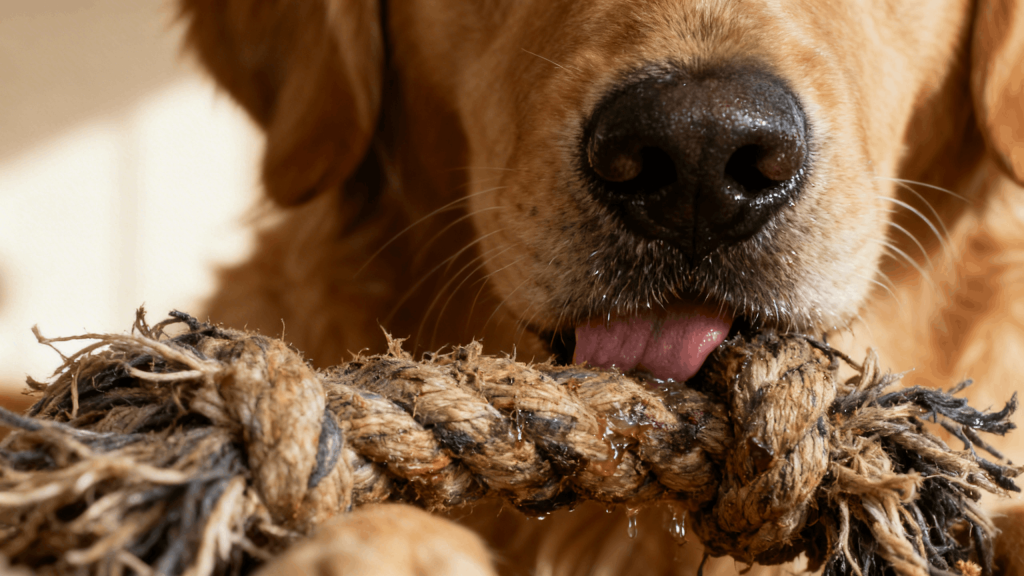
Pet toys repeatedly enter your dog’s mouth and your cat’s paws. Bacteria, yeast, and organic debris easily settle into toy surfaces especially ropes, plush fabric, and textured rubber.
Common organisms found on pet items include:
- Staphylococcus species
- E. coli
- Salmonella
- environmental molds and yeasts
These microbes can transfer to human hands during play, making pet toy hygiene important for families with children, older adults, or immunocompromised members.
For pets, contaminated toys may contribute to:
- mouth and gum irritation
- digestive upset
- higher infection risk in pets with dental disease or weaker immunity
How to clean dog toys safely (material-by-material guide)
Hard rubber and plastic toys
These are the easiest and safest to sanitize.
Best methods
- Dishwasher (top rack only)
Use hot water. Skip scented detergent or use a very small amount of fragrance-free soap. - Hand washing
Mix equal parts white vinegar and warm water. Scrub grooves and openings.
Deep clean (occasional only)
Use a diluted bleach solution (1 tablespoon per gallon of water) for 5–10 minutes, followed by very thorough rinsing.
Always air-dry completely.
Rope toys and plush fabric toys

Rope and fabric trap moisture and bacteria deep inside fibers.
Rope toys
- Soak in hot water + 1 cup white vinegar
- Scrub thoroughly
- Machine wash in a mesh bag on hot
- Dry fully (dryer or direct sunlight)
Plush toys
- Machine wash on gentle with fragrance-free detergent
- If the toy has a squeaker, use surface cleaning only
- Never return damp toys to your dog
Complete drying is critical moist toys grow mold faster than dirty dry toys.
Tennis balls and fuzzy chew toys
The fuzzy coating traps large amounts of debris.
- Hand wash with mild soap and warm water
- Scrub with a soft brush
- Rinse and air-dry completely
For heavy chewers, replacement is safer and more effective than repeated washing.
How to clean cat toys (important feline-specific safety rules)
Cats are more sensitive to chemical residues and frequently groom after playing. This means cleaning methods must be gentler and residue-free.
Hard plastic balls and puzzle toys
- Wash using equal parts vinegar and warm water
- Scrub gently
- Rinse very thoroughly
- Air-dry fully
Avoid scented products cats often refuse toys that smell “different.”
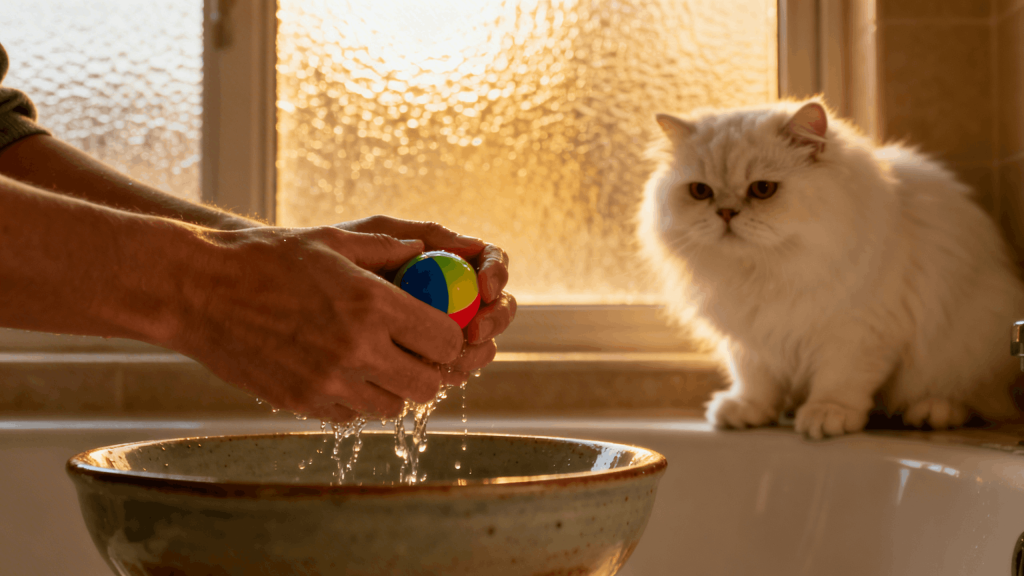
Fabric mice, feather toys, and catnip toys
- Hand wash gently with warm water and a tiny amount of unscented soap
- Rinse several times
- Air-dry completely
For toys that cannot be washed (feathers, glued parts, catnip sachets), place them in a sealed bag and freeze for 48 hours. Freezing reduces microbial and parasite contamination without moisture or chemicals.
Wand toy handles should be wiped weekly with diluted vinegar.
Pet-safe cleaning solutions that actually work
Recommended
- White vinegar – effective against many bacteria and leaves no toxic residue
- Baking soda – odor control and gentle scrubbing
- 3% hydrogen peroxide – breaks down into water and oxygen
- Hot water (above 140°F / 60°C) – strong physical disinfection
Avoid completely
- household disinfectant sprays
- antibacterial surface cleaners
- phenols and quaternary ammonium compounds
- essential oils (especially dangerous for cats)
- heavily fragranced detergents and fabric softeners
How often should you clean pet toys?
| Toy type | Recommended cleaning |
|---|---|
| Daily-use dog chew toys | 1–2 times per week |
| Rope & plush dog toys | every 3–4 days with heavy use |
| Toys dropped outdoors | after every outdoor session |
| Water toys | after each use |
| Indoor cat toys | every 2–3 weeks |
| Wand handles | weekly wipe-down |
When toys should be replaced, not cleaned
Replace toys immediately if you see:
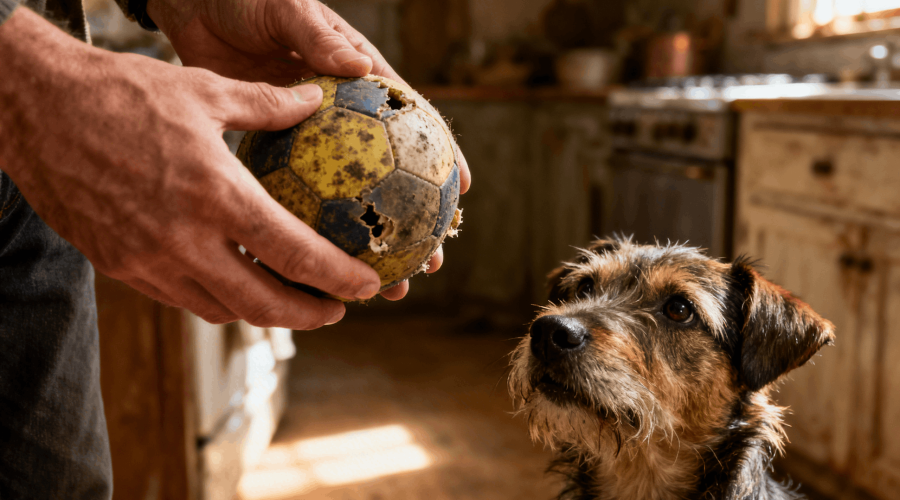
- cracks in rubber or plastic
- heavy rope fraying
- torn seams or exposed stuffing
- persistent odor after washing
- visible mold growth
- small pieces breaking off
Damaged toys harbor bacteria and increase choking and intestinal blockage risks.
How MyCern supports whole-pet wellness
At MyCern, we recognize that pet health is influenced not only by nutrition but also by daily environmental exposures including toy hygiene.
Our science-guided wellness philosophy focuses on supporting immune balance, digestive resilience, and recovery so pets are better equipped to manage everyday microbial exposure that even the best cleaning routine cannot completely eliminate.
Toy hygiene, clean living environments, and nutritional support work together to create a more resilient foundation for long-term pet wellness.
Practical pet toy cleaning strategies
- Sort toys by material before washing
- Keep a vinegar spray bottle for quick wipe-downs
- Use the dishwasher’s top rack for hard toys
- Rotate two sets of favorite toys
- Hang rope toys in sunlight for faster drying
- Inspect toys during every cleaning session
Frequently asked questions
How can I clean pet toys without harsh chemicals?
Use equal parts white vinegar and warm water. Soak toys for 15–20 minutes, scrub thoroughly, rinse well, and allow full drying. For dishwasher-safe toys, a hot-water cycle without detergent also disinfects effectively.
Can I put dog toys in the dishwasher?
Yes. Most hard rubber and plastic dog toys can be placed on the top rack. Avoid heated drying for toys with glued parts and skip scented detergents.
How do you wash dog toys with squeakers or electronics?
Do not submerge them. Wipe the surface with a damp cloth and mild soap solution. If moisture enters the toy, replacement is safer than continued use.
Is freezing cat toys safe for cleaning?
Yes. Freezing toys in sealed bags for 48 hours helps reduce bacteria and parasites and is especially useful for catnip and feather toys that cannot be washed.
How often should I clean cat toys compared to dog toys?
Dog toys usually need weekly cleaning or more often with heavy use. Indoor cat toys can usually be cleaned every 2–3 weeks, unless they become wet or visibly dirty.
Conclusion
Knowing how to clean pet toys properly is one of the simplest ways to protect both pet and household health. By matching the right method to each toy material using hot water, vinegar solutions, gentle washing, and thorough drying, you reduce harmful bacteria without exposing pets to unsafe chemical residues.
A consistent cleaning schedule, careful inspection, and timely replacement of damaged toys create a safer and more hygienic play environment for both dogs and cats.
References
- Raspa, Federica, et al. “Pet feeding habits and the microbiological contamination of dog food bowls: effect of feed type, cleaning method and bowl material.” BMC Veterinary Research 19.1 (2023): 261.
- Hoelzer, K., Moreno Switt, A. I., & Wiedmann, M. (2011). Animal contact as a source of human non-typhoidal salmonellosis. Veterinary research, 42(1), 34.
- Kowalski, W. (2010). Ultraviolet germicidal irradiation handbook: UVGI for air and surface disinfection. Springer science & business media.
- Addie, Diane D., et al. “Disinfectant choices in veterinary practices, shelters and households: ABCD guidelines on safe and effective disinfection for feline environments.” Journal of feline medicine and surgery 17.7 (2015): 594-605.
- Weese, J. S., & Fulford, M. B. (2011). Companion Animal Zoonoses.