Interactive Toys for Dogs: Mental Stimulation, Enrichment Play, and Brain Health for Every Breed
Written by MyCern Research & Editorial Team
Interactive toys for dogs are no longer just a way to pass time. They are now widely recognized as practical tools that support emotional balance, learning ability, and healthy behavior in everyday pet life. For many households, especially those with busy schedules, the right toys can make a meaningful difference in how dogs cope with boredom, frustration, and excess energy.
When used correctly, mental stimulation toys for dogs help activate problem solving, encourage natural instincts such as sniffing and foraging, and support calmer routines at home. At the same time, enrichment toys for pets can strengthen the human dog bond by turning play into shared, rewarding experiences.
This article explores:
- How interactive toys for dogs support brain and behavior health
- Why mental stimulation toys for dogs matter just as much as physical exercise
- How enrichment toys for pets can reduce boredom related behaviors
- Choosing interactive dog toys for aggressive chewers and interactive dog toys for large dogs
- A practical look at kong jumbler ball interactive toy for dog styles and similar movement based toys
- How interactive play fits into a balanced MyCern inspired wellness lifestyle
Why interactive toys for dogs support brain and behavior health
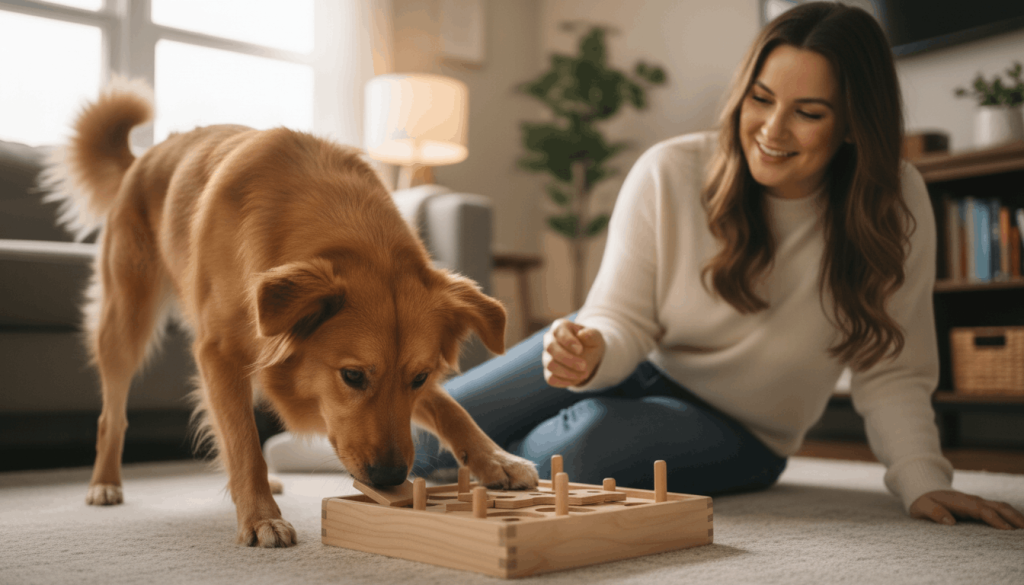
Dogs are natural problem solvers. In the wild, food rarely comes from a bowl. It requires searching, sniffing, tearing, and manipulating objects. Interactive toys for dogs recreate these challenges in a safe and controlled way.
Research in animal behavior shows that problem solving activities stimulate multiple regions of the brain involved in learning, emotional regulation, and memory. When dogs regularly engage with interactive toys, they practice focus, patience, and persistence. Over time, this can support improved emotional stability and reduced stress responses.
Many common behavior challenges such as excessive barking, destructive chewing, and attention seeking are strongly linked to mental under stimulation rather than a lack of physical exercise alone.
Mental stimulation toys for dogs at home
Mental stimulation toys for dogs focus on tasks rather than movement. These toys encourage dogs to use their nose, paws, and mouth to access food or hidden items.
Examples include:
- Sliding puzzle boards
- Treat hiding boxes
- Snuffle mats
- Rotating food dispensers
These toys slow down eating, promote problem solving, and provide a structured way to release mental energy. Even ten minutes of focused problem solving can be surprisingly tiring for many dogs, especially in apartment living or during busy weekdays.
For puppies and senior dogs in particular, mental stimulation can be safer and more sustainable than intense physical play.
Enrichment toys for pets and the role of shared environments

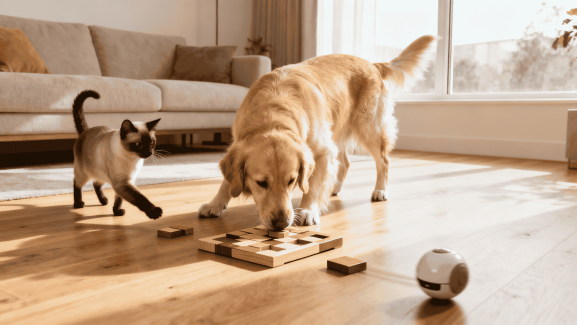
Enrichment toys for pets are not limited to dogs. In multi pet homes, both dogs and cats benefit from opportunities to explore, investigate, and manipulate objects in their environment.
Enrichment play supports:
- curiosity and learning
- emotional resilience
- confidence in new situations
- reduced boredom related behaviors
Rotating toys regularly helps prevent novelty loss. A small selection changed every few days keeps the environment stimulating without overwhelming the pet.
Interactive dog toys for aggressive chewers
Some dogs have extremely strong chewing drives. For these dogs, selecting the right interactive dog toys for aggressive chewers is essential for both safety and long term engagement.
Heavy chewers benefit from:
- thick natural rubber toys
- reinforced treat dispensers
- multi layered toys designed to compress and rebound
These toys provide resistance and tactile feedback, which can be calming for dogs with high oral needs. Strong chewing also supports jaw exercise and stress release when properly supervised.
The goal is not to eliminate chewing, but to redirect it toward safe, mentally engaging objects.
Interactive dog toys for large dogs

Large breeds often require toys that are scaled appropriately for their strength and body size. Interactive dog toys for large dogs should be heavy enough to prevent accidental swallowing and durable enough to withstand powerful play.
Large dogs often respond well to:
- oversized rolling treat balls
- large format puzzle feeders
- weighted interactive toys that move unpredictably
These toys encourage controlled movement, coordination, and controlled excitement rather than frantic chasing that may stress joints.
Movement based enrichment and ball style toys
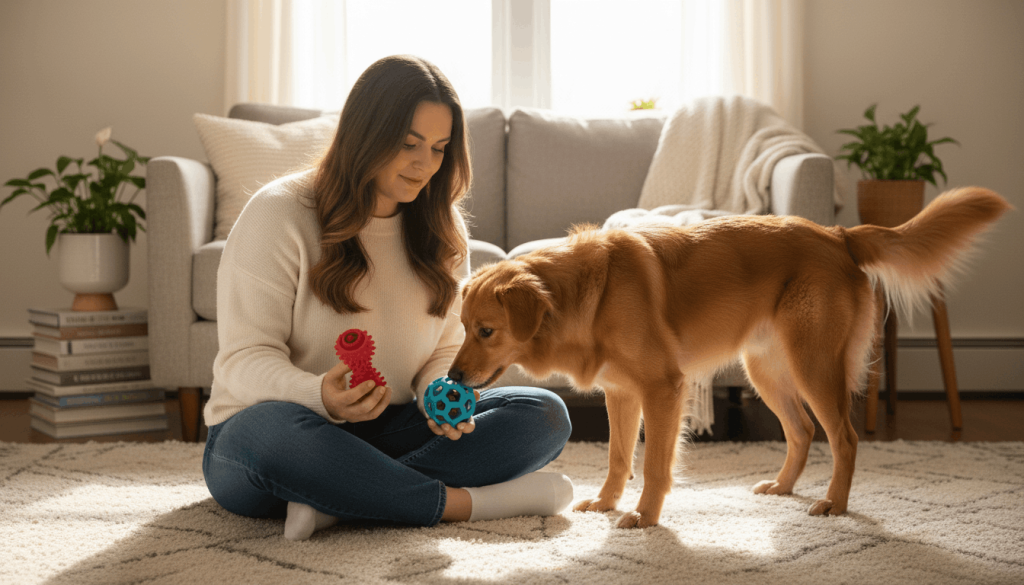
Among movement focused toys, rolling and bouncing balls with internal components remain highly engaging. Many owners search for options such as kong jumbler ball interactive toy for dog styles because the internal ball and handle design naturally encourage pushing, carrying, and problem solving.
You may also encounter the phrase kong jumbler ball interactive dog toy for dog when browsing enrichment categories. These toys combine movement and sound with physical interaction, creating multi sensory stimulation.
Ball based interactive toys work especially well for:
- dogs that enjoy chasing but become overstimulated by fetch
- dogs that need independent play options
- dogs that enjoy object manipulation more than food puzzles
The unpredictable motion keeps the dog engaged while still allowing the activity to remain self paced.
Choosing the right interactive toy for your dog’s personality
Not every dog enjoys the same type of challenge. Selecting the best interactive toys for dogs depends on temperament, age, and past experiences.
Highly food motivated dogs usually enjoy puzzle feeders and scent based toys. Toy driven dogs often prefer movement based enrichment. Sensitive dogs may start with very simple puzzles and gradually progress.
Observing how your dog interacts with a new toy during the first few sessions provides valuable insight into their preferred learning style.
How enrichment play supports calm behavior and emotional balance
Interactive toys do more than reduce boredom. They help regulate the nervous system.
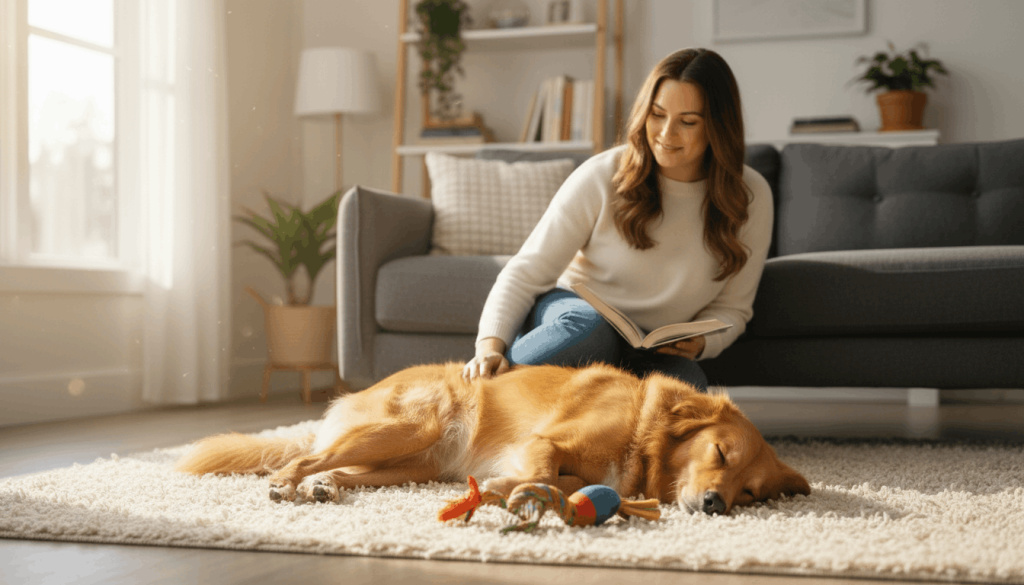
Slow, focused activities such as sniffing, licking, and gentle chewing activate calming neural pathways. This is why dogs often rest more deeply after completing a puzzle toy compared with a short walk alone.
Over time, regular enrichment routines can support:
- reduced restlessness in the evening
- improved settling behavior indoors
- greater tolerance for short periods of alone time
MyCern fit: interactive play as part of whole pet wellness
At MyCern, daily wellness is viewed as a combination of physical movement, emotional balance, and healthy mental engagement.
Interactive toys for dogs naturally fit this holistic lifestyle approach. They support brain activity, emotional resilience, and structured routines without overstimulation. When paired with regular walks, balanced nutrition, and calm home environments, enrichment play becomes part of a sustainable wellness rhythm rather than a quick fix.
MyCern encourages enrichment strategies that focus on long term quality of life, emotional comfort, and gentle cognitive engagement across every life stage.
Practical lifestyle tips for using interactive toys at home
- Start with very easy puzzles and increase difficulty gradually
- Limit play sessions to 10 to 20 minutes to avoid frustration
- Rotate toys every three to five days
- Supervise new toys, especially for aggressive chewers
- Clean puzzle toys regularly to prevent residue buildup
- Offer enrichment before peak excitement times such as evening hours
Frequently asked questions
Are interactive toys for dogs suitable for puppies?
Yes. Choose simple designs with soft materials and low difficulty. Mental stimulation toys for dogs can support learning and confidence building during early development.
How often should I use enrichment toys for pets?
Short daily sessions are more effective than long, irregular sessions. Consistency supports routine and emotional regulation.
Can interactive dog toys for aggressive chewers replace regular walks?
No. These toys complement physical activity but do not replace outdoor movement, social exposure, and physical conditioning.
Are interactive dog toys for large dogs safe indoors?
Yes, when space allows and toys are appropriately sized. Choose designs that roll slowly and avoid sharp bouncing indoors.
Conclusion
Interactive toys for dogs offer far more than entertainment. When used thoughtfully, they support brain engagement, emotional balance, and healthier daily routines. Mental stimulation toys for dogs strengthen focus and learning, while enrichment toys for pets promote curiosity and calm behavior in shared home environments. By selecting suitable interactive dog toys for aggressive chewers, safe interactive dog toys for large dogs, and movement based toys such as kong jumbler ball interactive toy for dog styles, owners can create enriching experiences that respect both physical and emotional needs. Integrated into a balanced lifestyle aligned with MyCern’s whole pet wellness philosophy, enrichment play becomes a powerful and sustainable way to support long term behavioral and cognitive health.
References
- Bensky, M. K., Gosling, S. D., & Sinn, D. L. (2013). The world from a dog’s point of view: a review and synthesis of dog cognition research. Advances in the Study of Behavior, 45, 209-406.
- Boissy, A., & Lee, C. (2014). How assessing relationships between emotions and cognition can improve farm animal welfare. Rev. Sci. Tech, 33(1), 103-110.
- Herron, M. E., Kirby-Madden, T. M., & Lord, L. K. (2014). Effects of environmental enrichment on the behavior of shelter dogs. Journal of the American Veterinary Medical Association, 244(6), 687-692.
- Deldalle, S., & Gaunet, F. (2014). Effects of 2 training methods on stress-related behaviors of the dog (Canis familiaris) and on the dog–owner relationship. Journal of Veterinary Behavior, 9(2), 58-65.
- Clark, F. E. (2017). Cognitive enrichment and welfare: Current approaches and future directions. Anim. Behav. Cogn, 4(1), 52-71.