
Why Indoor Cats Are Prone to Weight Gain and How to Support Healthy Metabolism
Written by MyCern Research & Editorial Team
Indoor living offers cats safety and comfort, but it also introduces unique challenges for maintaining a healthy body weight. Reduced physical activity, predictable food access, and environmental boredom can quietly shift a cat’s energy balance over time. Understanding how metabolism works in cats and how indoor lifestyles influence it, allows cat owners to support healthy weight and long-term wellbeing through informed daily habits rather than restrictive measures.
This article explores:
- Why indoor cats are biologically prone to weight gain
- How metabolism and energy balance work in cats
- The role of activity, portion control, and feeding routines
- Practical ways to support metabolic health indoors
- Daily habits that promote healthy body condition
Understanding Feline Metabolism
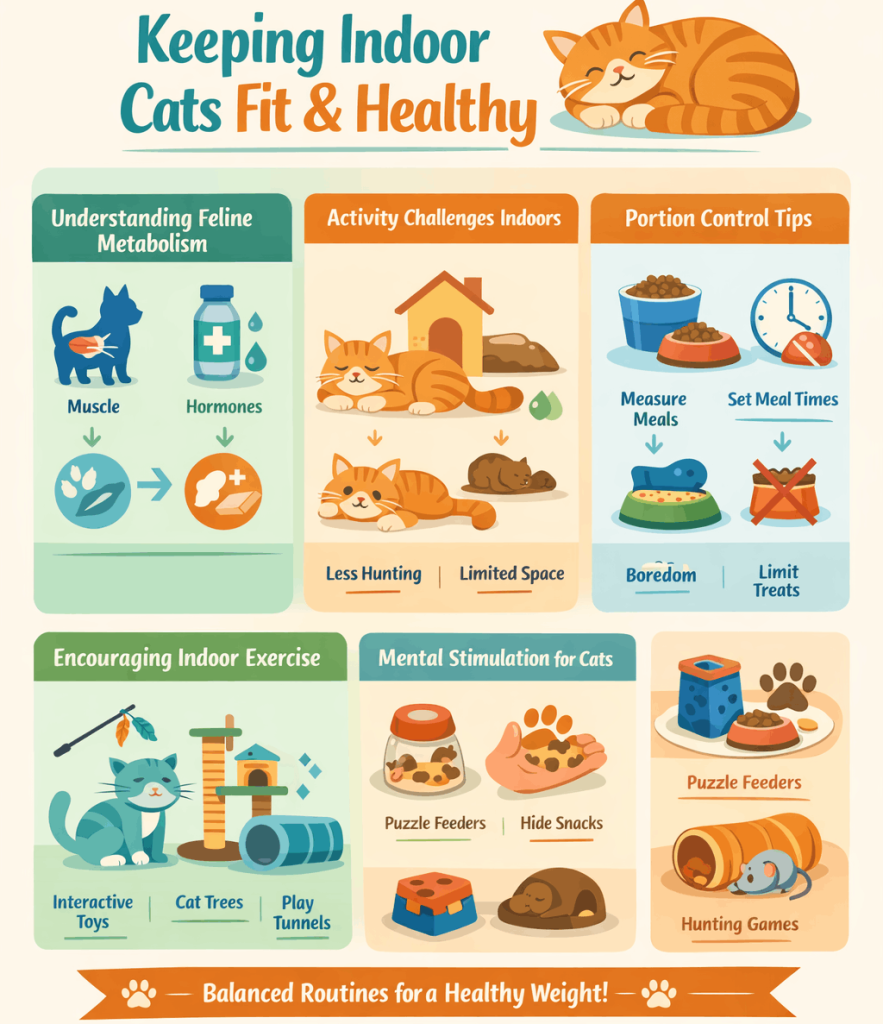
Metabolism refers to the processes that convert food into usable energy. In cats, metabolism is shaped by:
- Lean muscle mass: Drives calorie utilization
- Hormonal regulation: Influences appetite and energy storage
- Activity level: Signals how much energy the body needs
- Feeding patterns: Affect insulin response and fat storage
When calorie intake consistently exceeds energy use, excess energy is stored as fat.
Quick Tip Box – Why Cats Gain Weight Gradually:
- Metabolic changes occur slowly
- Subtle weight gain is hard to detect under fur
- Indoor routines are often highly predictable
- Appetite may remain high despite low energy output
How Indoor Living Affects Energy Balance
Indoor environments limit many natural behaviors that support metabolism:
- Hunting and stalking opportunities are reduced
- Movement is often restricted to small spaces
- Environmental stimulation may be limited
- Meals are usually easily accessible and predictable
These factors can reduce daily calorie expenditure without reducing appetite.
Quick Tip Box – Indoor Lifestyle Challenges:
- Less spontaneous movement
- Fewer environmental cues for activity
- Increased boredom-related eating
- Reduced muscle engagement
Portion Control and Feeding Habits
Portion size plays a central role in maintaining healthy weight:
- Overfeeding is a leading contributor to feline obesity
- Free-feeding may obscure true intake
- Treats can significantly increase daily calories
Quick Tip Box – Smarter Feeding Strategies:
- Measure meals rather than estimating
- Feed at consistent times to regulate appetite
- Limit treats and account for them in daily intake
- Adjust portions based on body condition, not bowl size
Activity as Metabolic Support
Physical activity helps support lean muscle and metabolic efficiency:
- Muscle tissue increases calorie use at rest
- Movement supports insulin sensitivity
- Activity helps regulate appetite signals
Quick Tip Box – Encouraging Indoor Activity:
- Schedule short, frequent play sessions
- Use interactive toys that mimic prey movement
- Encourage climbing with cat trees or shelves
- Rotate toys to maintain interest

Mental Stimulation and Eating Behavior
Mental engagement plays an indirect but important role in weight management:
- Boredom can increase food-seeking behavior
- Enrichment encourages movement and focus
- Puzzle feeders slow eating and increase activity
Quick Tip Box – Feeding the Mind, Not Just the Body:
- Use food-dispensing toys
- Hide small portions around the home
- Combine play with mealtime routines
- Reinforce natural hunting behaviors
Daily Habits That Support Healthy Metabolism
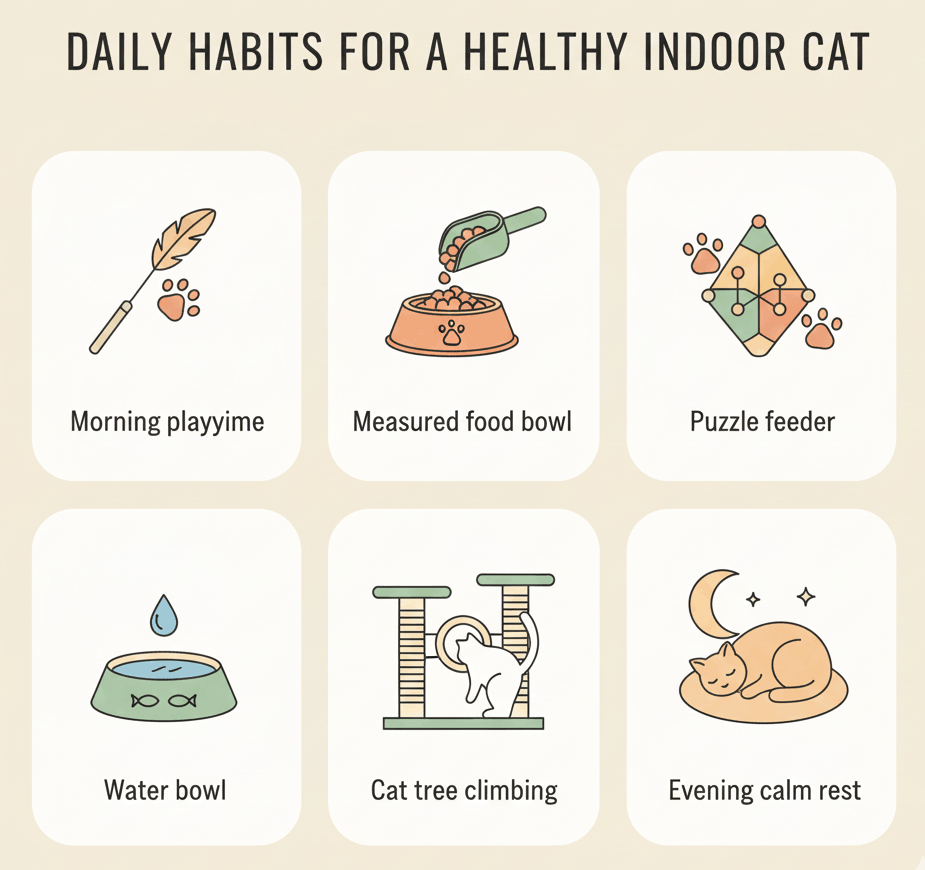
- Maintain predictable feeding and play schedules
- Monitor body condition rather than relying only on weight
- Adjust activity routines as cats age
- Encourage hydration to support metabolic processes
- Observe behavior and energy levels regularly
References
- German, A. J. (2006). The growing problem of obesity in dogs and cats. Journal of Nutrition, 136(7), 1940S–1946S.
- Laflamme, D. P. (2012). Understanding and managing obesity in cats. Veterinary Clinics of North America: Small Animal Practice, 42(5), 823–837.
- Scarlett, J. M., et al. (1994). Prevalence of obesity in cats. Journal of the American Veterinary Medical Association, 204(4), 647–650.
- Zoran, D. L. (2010). Obesity in cats: Causes, consequences, and management. Journal of Feline Medicine and Surgery, 12(9), 731–743.
Conclusion
Indoor cats are naturally predisposed to weight gain due to lower activity levels and consistent access to food, but healthy metabolism can be supported through thoughtful daily routines. By focusing on portion control, encouraging movement, and enriching the indoor environment, cat owners can help maintain healthy body condition without stress or deprivation. A balanced, science-informed approach supports long-term metabolic health and overall quality of life for indoor cats.

