Hairballs in Cats: When They’re Normal and When They’re a Sign of Digestive Trouble
Written by MyCern Research & Editorial Team
Hairballs are a familiar part of cat ownership, yet they’re often misunderstood. While occasional hairballs can be a normal result of grooming, frequent or problematic hairball formation may signal issues related to digestion, gut motility, or overall wellness. Understanding why hairballs form and what influences their frequency helps cat owners support digestive comfort and long-term health naturally.
This article explores:
- Why cats develop hairballs
- When hairballs are considered normal
- Signs that hairballs may indicate digestive imbalance
- The roles of grooming, fiber, and gut motility
- Daily habits that support healthy digestion and coat care

Why Cats Get Hairballs
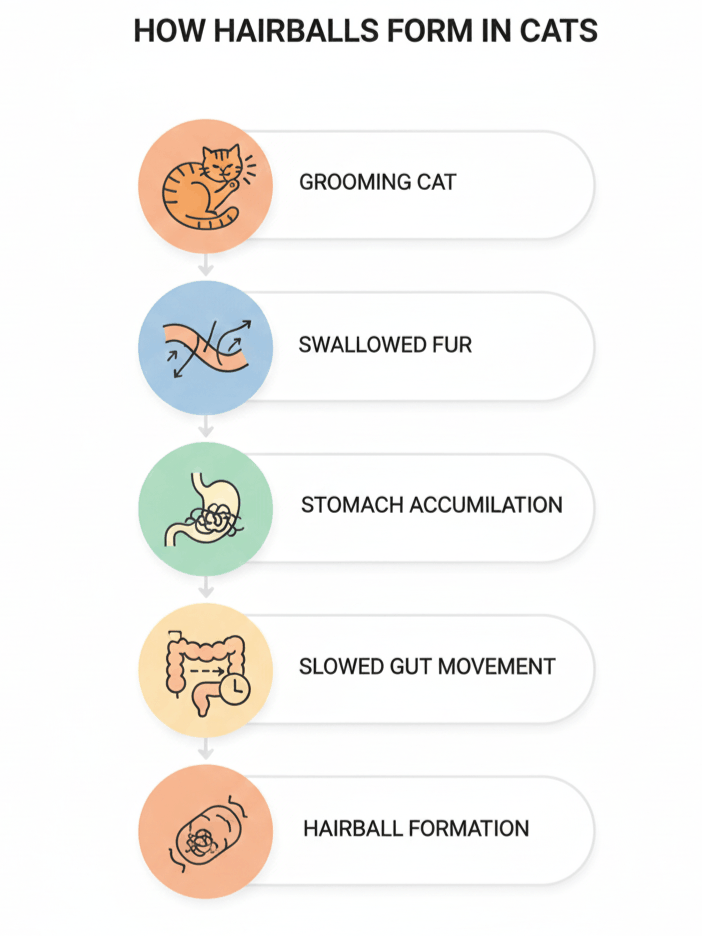
Cats are meticulous groomers. During grooming, loose hair is swallowed and typically passes through the digestive tract. Hairballs form when:
- Hair accumulates in the stomach instead of moving forward
- Gut motility is slowed
- Excessive grooming increases hair intake
Most hair is passed unnoticed in the stool, but some may collect and form a hairball.
Quick Tip Box – Normal Hairball Patterns:
- Occasional hairballs (e.g., once or twice a month)
- More common during seasonal shedding
- Typically expelled without ongoing distress
When Hairballs May Signal Digestive Trouble
Frequent or difficult hairballs may suggest underlying issues:
- Sluggish digestive transit
- Inadequate dietary fiber
- Reduced hydration
- Changes in gut microbiome balance
Quick Tip Box – Signs to Watch Closely:
- Frequent gagging without producing a hairball
- Vomiting food or foam regularly
- Decreased appetite or lethargy
- Constipation or changes in stool consistency

The Role of Gut Motility in Hairball Formation
Gut motility refers to the coordinated movement of food through the digestive tract:
- Healthy motility helps move swallowed hair efficiently
- Reduced motility allows hair to accumulate
- Stress and low activity may slow transit time
Supporting normal digestive movement helps prevent hair buildup in the stomach.
Fiber Intake and Digestive Balance
Dietary fiber plays a supportive role in managing hairballs:
- Insoluble fiber: Adds bulk to help move hair through the gut
- Soluble fiber: Supports stool consistency and gut bacteria
- Balanced fiber intake: Helps regulate transit time
Quick Tip Box – Fiber-Friendly Feeding Tips:
- Choose diets with appropriate fiber levels
- Avoid sudden dietary changes
- Introduce fiber gradually to prevent gas or discomfort
- Ensure consistent hydration alongside fiber intake
Grooming Habits That Reduce Hair Intake
Reducing the amount of loose hair swallowed can lower hairball frequency:
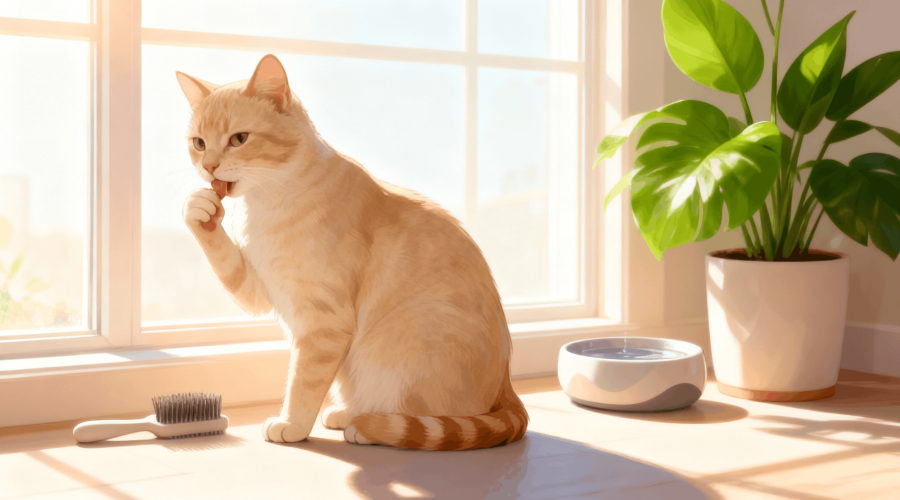
- Regular brushing removes loose fur before ingestion
- Long-haired cats benefit from more frequent grooming
- Seasonal shedding may require extra attention
Quick Tip Box – Grooming Routine Tips:
- Brush several times per week
- Use tools appropriate for coat type
- Keep grooming sessions calm and positive
- Monitor skin and coat condition during brushing
Daily Habits That Support Digestive Health
- Encourage daily movement and play to support gut motility
- Maintain predictable feeding routines
- Support hydration through fresh water access
- Reduce stress, which can affect digestive function
- Observe litter box habits for early signs of change

References
- Washabau, R. J., et al. (2010). Gastrointestinal motility disorders in cats. Journal of Veterinary Internal Medicine, 24(4), 713–723.
- Case, L. P., et al. (2011). Canine and Feline Nutrition: A Resource for Companion Animal Professionals. Elsevier Health Sciences.
- Zoran, D. L. (2010). The carnivore connection to nutrition in cats. Journal of the American Veterinary Medical Association, 236(4), 365–372.
- German, A. J., et al. (2010). Dietary fiber and gastrointestinal health in cats. Journal of Animal Physiology and Animal Nutrition, 94(1), e1–e8.
Conclusion
Hairballs are often a normal consequence of grooming, but frequent or problematic hairballs can indicate digestive imbalance. By supporting gut motility, providing balanced fiber, maintaining regular grooming, and encouraging daily activity, cat owners can help promote digestive comfort and reduce hairball formation naturally. A science-informed, preventive approach helps keep cats comfortable, active, and thriving.