Why Sudden Grooming Changes in Cats Should Never Be Ignored
Written by MyCern Research & Editorial Team
Cats are meticulous groomers. Their daily grooming routine keeps their coat clean, regulates body temperature, and supports skin health. When grooming patterns suddenly change, either excessive licking, over-grooming, or neglecting grooming entirely, it often signals underlying health or stress concerns. Recognizing these changes early can prevent complications and improve long-term wellbeing.
Understanding why grooming changes occur and what to watch for empowers owners to take timely action and support their cats’ health holistically.
This article explores:
- How grooming behavior reflects feline health and comfort
- Common causes of sudden changes in grooming patterns
- Signs that indicate stress versus medical issues
- Strategies to support skin, coat, and emotional wellness
- Practical steps for prevention and intervention
Why Grooming Matters
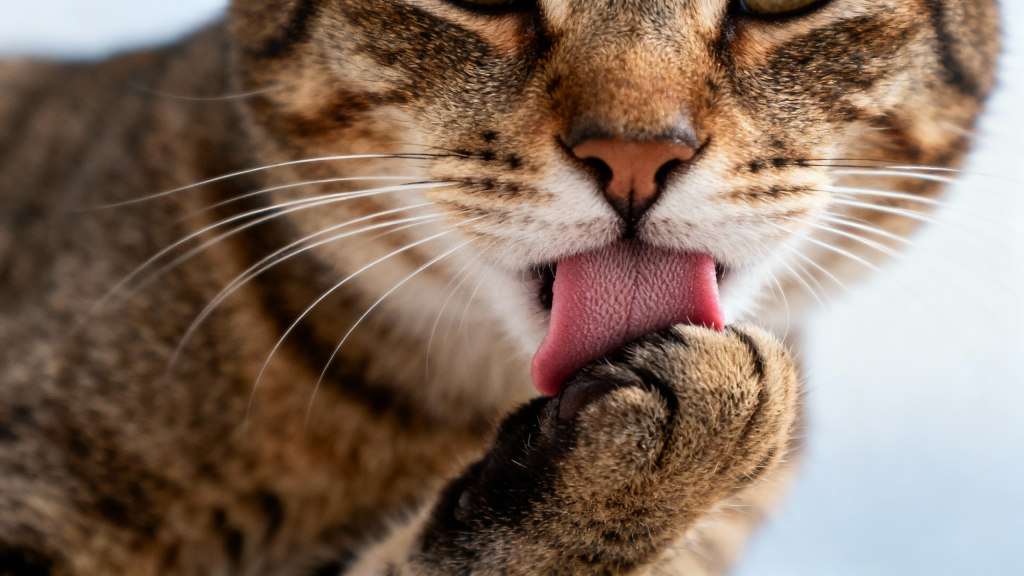
Grooming is more than vanity cats rely on it for:
- Hygiene: Removing loose hair, dirt, and debris
- Temperature regulation: Spreading natural oils and maintaining insulation
- Sensory input: Whisker and paw stimulation during grooming promotes balance and awareness
- Stress regulation: Self-soothing through licking or pawing
Disruptions to these routines can indicate that the cat’s physical or emotional equilibrium is affected.
Common Causes of Grooming Changes
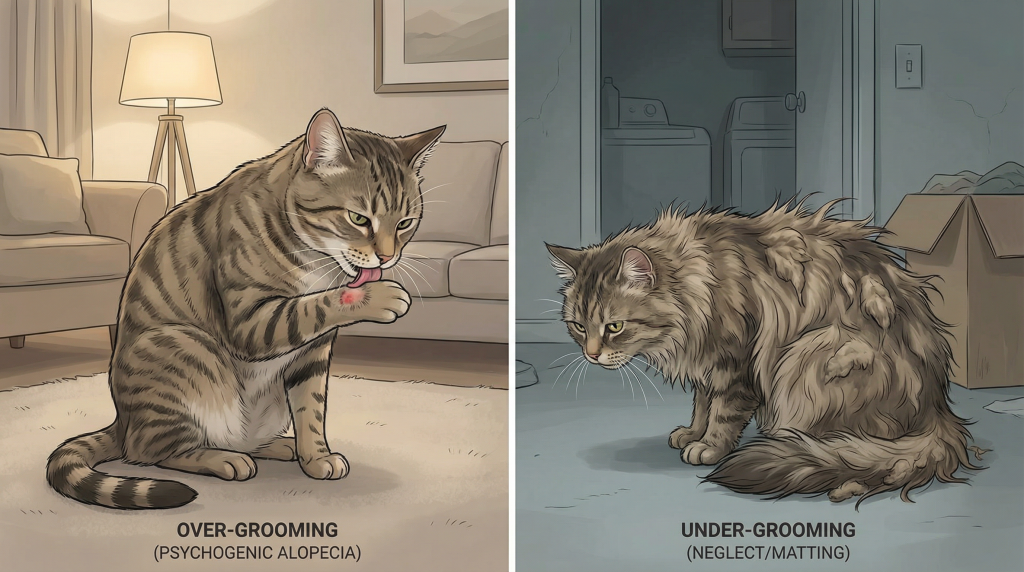
1. Over-Grooming (Excessive Licking or Bald Patches)
- Stress or anxiety: Environmental changes, new pets, or social tension
- Allergies: Food sensitivities or environmental allergens
- Skin irritations: Fleas, mites, or fungal infections
2. Under-Grooming (Neglecting Coat Care)
- Pain or mobility issues: Arthritis or joint stiffness can make grooming difficult
- Illness or metabolic conditions: Obesity, dental pain, or systemic disease
- Cognitive changes: Senior cats with confusion may forget routine self-care
Quick Tip Box – Subtle Signs to Monitor:
- Bald patches or thinning fur
- Redness, scabs, or crusts on the skin
- Excessive shedding or matting
- Changes in appetite, litter box habits, or energy
Distinguishing Stress from Medical Issues
- Stress-related grooming: Typically repetitive, focused on paws, belly, or flanks, often coinciding with environmental changes
- Medical grooming issues: May show as patchy hair loss, scabs, or general coat neglect, often accompanied by other symptoms such as vomiting, diarrhea, or lethargy
Observing patterns and timing can help identify whether intervention should focus on behavior, environment, or medical evaluation.
Supporting Skin, Coat, and Emotional Wellness
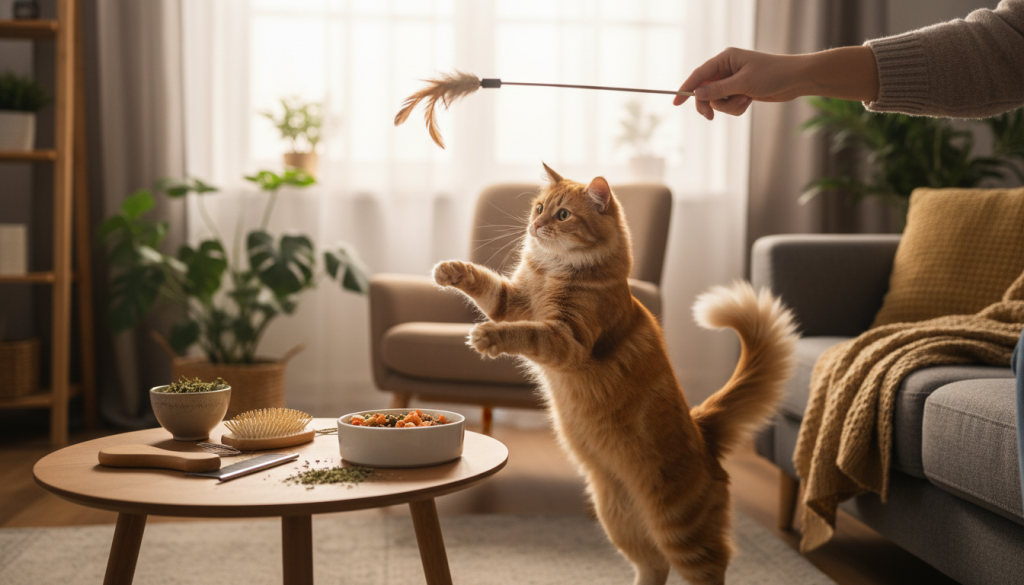
- Balanced nutrition: Ensure omega-3 fatty acids, proteins, and essential vitamins support skin and coat
- Regular vet checkups: Rule out infections, allergies, or hormonal imbalances
- Environmental enrichment: Reduce stress through interactive play, hiding spaces, and routine
- Grooming assistance: Brush cats gently to reduce matting and hairballs
- Monitor and document: Track changes to share with your veterinarian for early intervention
Quick Tip Box – Everyday Preventive Measures:
- Provide high-quality wet or mixed diets for hydration and skin support
- Minimize sudden environmental changes
- Maintain parasite prevention routines
- Observe litter box and behavioral patterns daily
When to Seek Veterinary Guidance
Immediate veterinary attention is warranted if you notice:
- Sudden, persistent over-grooming or bald patches
- Red, inflamed, or infected skin areas
- Signs of pain, mobility issues, or lethargy
- Rapid changes in appetite, weight, or elimination habits
Early diagnosis improves treatment outcomes and prevents chronic discomfort.

References
- Griffin, B., & Niel, L. (2012). Feline dermatology and the impact of environmental stress. Journal of Feline Medicine and Surgery, 14(7), 503–515.
- Mills, D. S., & Mills, C. M. (2014). Stress and behavior in domestic cats. Applied Animal Behaviour Science, 160, 20–29.
- Little, S. (2015). The Cat: Clinical Medicine and Management. 3rd Edition. Elsevier.
- Buffington, C. A. T. (2002). Environmental stress and feline lower urinary tract disease. Journal of the American Veterinary Medical Association, 220(11), 159–164.
Conclusion
Sudden changes in grooming are rarely trivial. They are a window into a cat’s physical health, emotional wellbeing, and environmental comfort. By observing patterns, supporting skin and coat health, and seeking timely veterinary advice, owners can prevent small issues from becoming chronic problems, ensuring their cat remains comfortable, healthy, and thriving.