Stress Relief for Cats: How to Recognize and Reduce Feline Anxiety Naturally
Written by MyCern Research & Editorial Team
Have you noticed your cat hiding more than usual, over-grooming, or suddenly avoiding the litter box? These behaviors are often early signs of anxiety, not misbehavior. Understanding stress relief for cats means learning how your cat communicates emotional discomfort through daily habits, body language, and routine changes.
The challenge with cats and stress relief is that cats naturally hide vulnerability. By the time obvious behaviors appear, stress may already be affecting their wellbeing. Early awareness and simple environmental changes can support long-term emotional balance and healthier daily behavior.
This article explores:
- Common stress signals owners often miss
- The main causes of feline anxiety
- Practical cat stress reduction strategies for home
- Natural ways to support emotional balance
- When professional support is needed
Recognizing stress signals in your cat
Subtle early warning signs
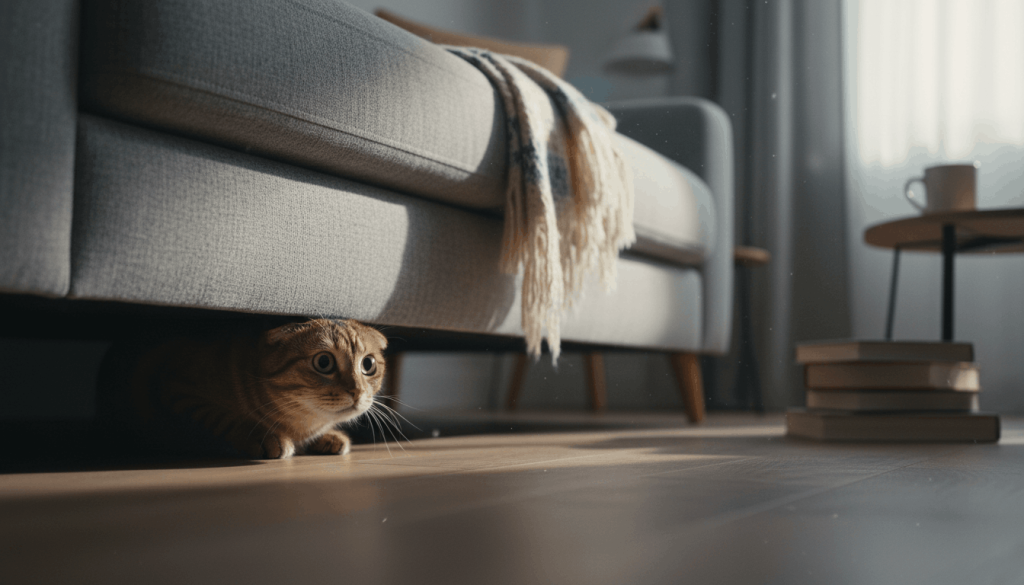
Many signs of stress appear quietly before serious problems develop. Watch for hiding more often or choosing new hiding places, reduced play or social interaction, changes in sleep patterns, lower appetite, increased alertness, and wide or dilated pupils in normal lighting.
These early behaviors show your cat is trying to cope. Addressing stress at this stage makes stress relief cats strategies far more effective.
Clear stress behaviors that need attention
When anxiety becomes overwhelming, cats may show aggression, inappropriate urination or defecation, excessive grooming that creates bald patches, constant vocalization, destructive scratching, or sudden avoidance of the litter box.
These are communication signals, not bad behavior. Punishment increases fear and worsens the stress cycle.
What causes stress in cats?
Environmental disruption
Cats rely on stable territory and routine. Moving homes, renovations, rearranging furniture, new schedules, or changes in household members can strongly affect emotional security. Even positive changes feel unpredictable to a cat.
Effective stress relief for cats begins by recognizing how sensitive cats are to changes in their environment.
Social pressure from people or pets
In multi-cat homes, stress often comes from competition over food, litter boxes, resting areas, or vertical space. Some cats also struggle with new visitors or long-term guests.
Crowding, bullying, or personality conflicts commonly undermine successful cats and stress relief efforts.
Medical problems that mimic stress
Pain, dental disease, arthritis, urinary discomfort, thyroid disease, sensory decline, or cognitive changes can all look like anxiety. A veterinary check is essential before assuming behavior is emotional.
Environmental strategies for cat stress reduction

Provide safe vertical territory
Elevated spaces allow cats to observe without feeling threatened. Cat trees, shelves, window perches, and sturdy furniture create important emotional safety zones. In multi-cat homes, vertical access helps reduce conflict and improves daily comfort.
Vertical territory is one of the simplest and most reliable tools for long-term cat stress reduction.
Offer secure hiding spaces
Cats need private, enclosed areas where they can decompress. Boxes, covered beds, open closets, or quiet corners allow emotional recovery. Always provide more hiding spaces than the number of cats in the home.
Never force a cat out of a hiding spot.
Litter box setup matters
Litter boxes directly influence emotional security. Use one box per cat plus one extra. Place boxes in separate, quiet locations. Scoop daily and use boxes large enough for full movement.
Poor litter box placement is both a cause of stress and a barrier to successful stress relief cats programs.
Routine-based stress relief for cats
Predictable daily structure
Cats feel safer when life follows patterns. Feed at consistent times, schedule regular play sessions, and maintain predictable interaction and sleep routines. When changes are unavoidable, adjust gradually whenever possible.
Routine supports emotional stability and strengthens cats and stress relief efforts.
Interactive play for confidence and calm
Daily interactive play burns nervous energy, builds confidence, and supports natural hunting behaviors. Two sessions of 10 to 15 minutes per day help reduce anxious behaviors and improve emotional resilience.
Let your cat successfully “catch” toys during play to complete the natural hunting cycle.
Environmental enrichment
Puzzle feeders, rotating toys, cat-safe plants, window watching, and safe outdoor enclosures provide mental stimulation. Enriched environments reduce boredom and prevent emotional stagnation that often leads to stress-related behaviors.
Natural calming support

Pheromone products
Synthetic feline facial pheromones help signal environmental safety. Diffusers and sprays are useful during moves, renovations, or social changes. They are most effective when combined with environmental and behavioral management rather than used alone.
Gentle calming supplements
Compounds such as L-theanine, chamomile, tryptophan, and certain plant extracts are commonly used to support relaxation. Always consult a veterinarian before starting any supplement, especially for cats with medical conditions.
Natural support can be a helpful part of a complete stress relief for cats approach.
Special situations
Moving and travel
Prepare a quiet safe room in the new home with familiar bedding, food, and litter. Keep routines as consistent as possible. Allow gradual exploration and avoid forcing fearful cats to adjust quickly.
Travel stress can be reduced by making carriers familiar and using pheromone sprays in advance.
Introducing new pets
Keep animals separated at first. Exchange scent items, allow visual contact through barriers, and move slowly to supervised interactions. Rushed introductions frequently create long-term emotional tension and undermine cats and stress relief goals.
Multi-cat household management
Provide multiple feeding stations, water sources, resting areas, perches, and litter boxes. If conflict persists, identify which cat is driving the tension and adjust access to shared resources accordingly.
When professional help is needed
Seek veterinary or behavioral support if aggression threatens safety, grooming causes wounds, anxiety prevents normal eating or litter box use, or stress behaviors worsen despite environmental changes.
Medication may be recommended in severe or chronic cases. Used alongside environmental changes and behavior modification, medication can support learning and emotional recovery rather than simply suppressing behavior.
How MyCern supports feline wellness
At MyCern, our science-guided wellness philosophy recognizes that stress relief for cats depends on both emotional security and physical wellbeing. Nutrition, enrichment, human interaction, and environmental design work together to support healthy stress responses.
Chronic stress affects digestion, immunity, and behavior. Likewise, even well-designed environments cannot fully support emotional resilience if overall health is compromised. True cats and stress relief strategies combine daily care, thoughtful environments, and nutritional foundations that help the body cope with routine challenges.
By using practical cat stress reduction techniques such as vertical territory, predictable routines, interactive play, and timely professional support, guardians can create calmer, more emotionally secure homes for their cats.
Practical daily stress prevention checklist
- Maintain consistent feeding, play, and interaction routines
- Provide multiple resources and resting spaces
- Respect hiding and quiet time
- Play interactively every day
- Monitor behavior changes early
- Create vertical territory throughout the home
- Introduce changes slowly and thoughtfully

Conclusion
Effective stress relief for cats begins with understanding that feline anxiety is real and strongly shaped by environment, routine, and social stability. Successful cats and stress relief strategies focus on safety, predictability, enrichment, and respectful handling of behavioral signals.
By applying proven stress relief cats methods including environmental design, consistent routines, play, enrichment, and natural calming support when appropriate, you help your cat feel secure rather than threatened. Sustainable cat stress reduction does not remove every challenge from your cat’s life, but it gives them the emotional tools and physical environment needed to cope confidently and comfortably, strengthening both wellbeing and the human-feline bond.
References
- Ellis, S. L. H., Rodan, I., & Carney, H. C. (2013). AAFP and ISFM Feline Environmental Needs Guidelines. Journal of Feline Medicine and Surgery, 15(3), 219–230.
- Herron, M. E., & Buffington, C. A. T. (2010). Environmental enrichment for indoor cats. Compendium: Continuing Education for Veterinarians, 32(12), E1–E5.
- Landsberg, G. M., Hunthausen, W. L., & Ackerman, L. J. (2013). Feline social behavior. In Behavior Problems of the Dog and Cat (3rd ed., pp. 291–310). Saunders Elsevier.
- Mills, D. S., Redgate, S. E., & Landsberg, G. M. (2011). A meta-analysis of studies of treatments for feline urine spraying. PLoS ONE, 6(4), e18448.
- Overall, K. (2013). Manual of clinical behavioral medicine for dogs and cats-E-Book: manual of clinical behavioral Medicine for dogs and cats-E-Book. Elsevier Health Sciences.