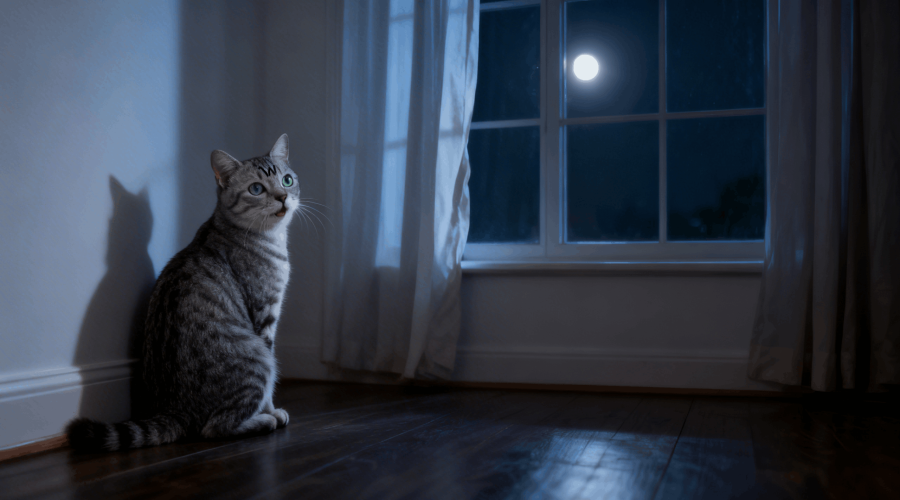
Why Does My Cat Meow at Night? Sleep Disruption, Stress, and Health Clues
Written by MyCern Research & Editorial Team
If you are searching why does my cat meow at night, you are not alone. Night-time vocalization is one of the most common feline behavior concerns reported by owners, especially when the sounds resemble crying, howling, or loud yowling.
This article explores:
- why cat vocalizing at night happens
- behavioral, emotional, and medical causes
- how to interpret why does my cat cry at night and why does my cat yowl at night
- science-based guidance for how to stop cat meowing at night
Why does my cat meow at night?
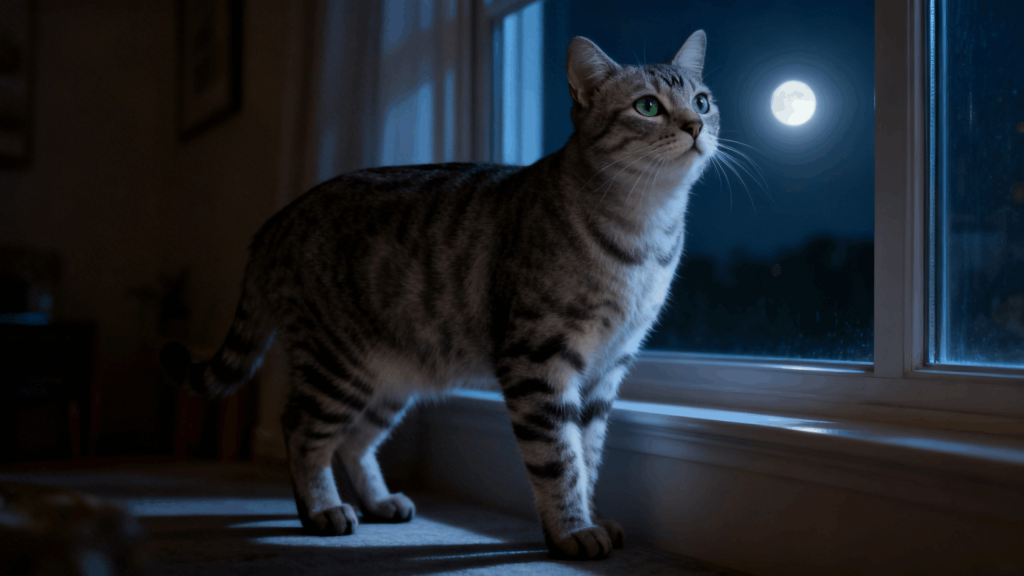
Cats are biologically crepuscular, meaning their natural activity peaks at dawn and dusk. When the home becomes quiet and dark, alertness increases. This is one of the most overlooked reasons behind why do cats howl at night or why do cats wail at night.
In indoor cats, reduced evening stimulation often leads to excess energy and attention-seeking behavior, which appears as cat vocalizing at night.
Stress and environmental triggers
A very common answer to why does my cat cry at night is stress.
Cats are highly sensitive to environmental changes such as:
- new pets or people
- moving furniture or litter boxes
- altered feeding or play schedules
- recent relocation or adoption
From a behavioral perspective, cat vocalizing at night often functions as a reassurance-seeking signal when predictability is lost. This explains many cases of why does my cat yowl at night after small household changes.
Social attachment and separation signals
Another important explanation for why does my cat meow at night is social dependency.
Cats form stable social bonds with their caregivers. When owners close bedroom doors or become unresponsive during sleep, why does my cat yowl at night can reflect social recall behavior.
This pattern is especially common in:
- single-cat homes
- recently rehomed cats
- cats with strong human attachment
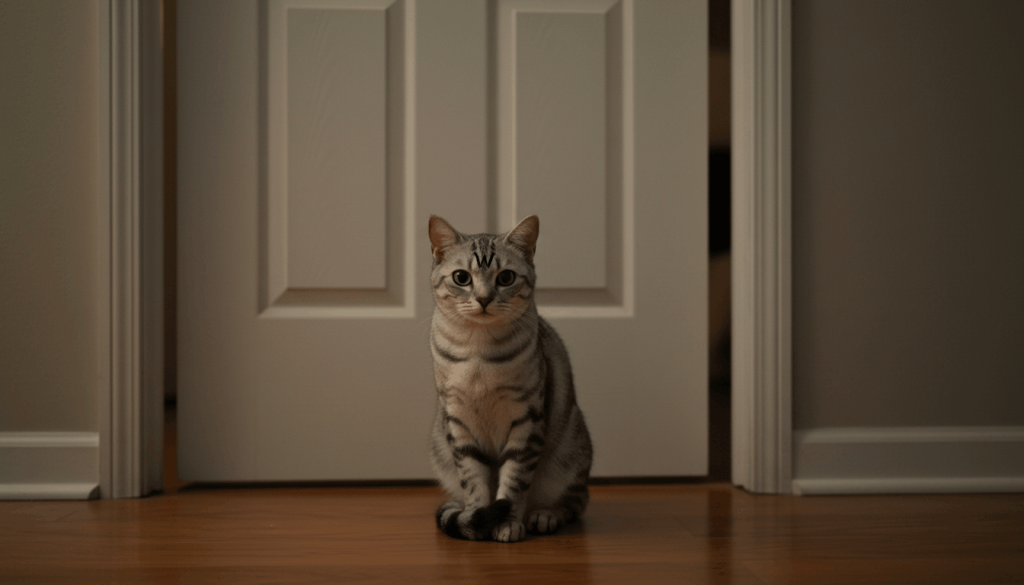
Hunger, routine, and learned behavior
Many owners asking why does my cat cry at night are unknowingly reinforcing the behavior.
If vocalization is followed by feeding, treats, or interaction, cats quickly learn that cat vocalizing at night is effective. Irregular feeding times strongly contribute to why do cats howl at night near kitchens or bedrooms.
Aging and cognitive changes
In senior cats, why does my cat yowl at night may be linked to age-related cognitive decline. Research shows that older cats can experience:
- disrupted sleep–wake cycles
- spatial disorientation
- increased anxiety
These neurological changes are strongly associated with nighttime confusion and loud calling.
Medical and physical discomfort
Health conditions must always be considered when evaluating why does my cat meow at night. Common contributors include:
- osteoarthritis and chronic pain
- hyperthyroidism
- systemic hypertension
- declining vision or hearing
In these cases, cat vocalizing at night may reflect discomfort, restlessness, or sensory confusion rather than behavioral issues.
How to stop cat meowing at night?
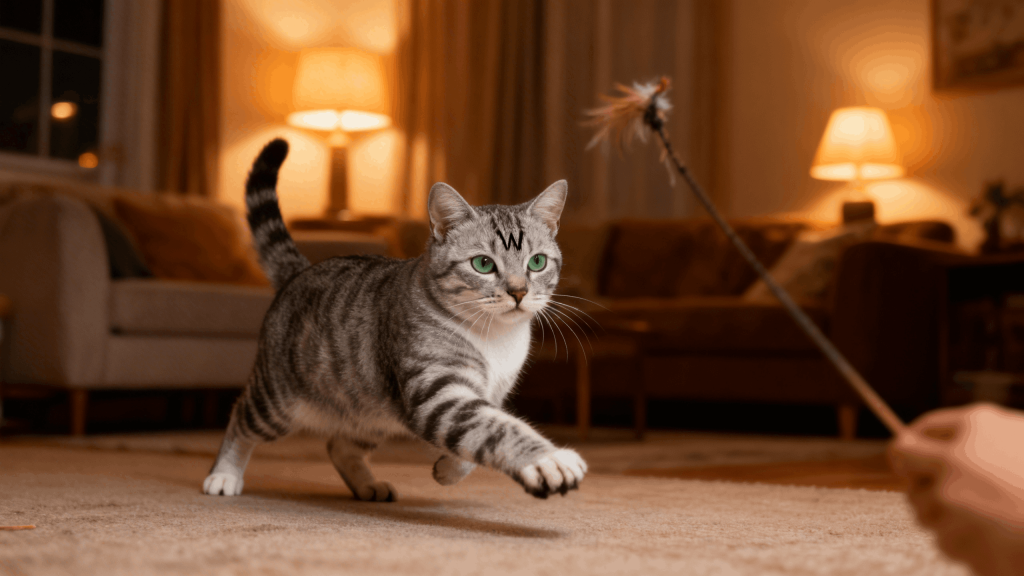
Owners searching how to stop cat meowing at night should focus on routine stability and emotional regulation.
Helpful approaches include:
- structured interactive play sessions in the evening
- a small, predictable late-night meal
- consistent feeding and sleep schedules
- enriched daytime environments (climbing, hiding, and foraging opportunities)
Sudden or progressive changes in cat vocalizing at night should always be discussed with a veterinary professional to rule out medical causes.
How MyCern supports healthy feline behavior
MyCern’s science-first approach emphasizes environmental predictability, stress-aware routines, and enrichment strategies that support emotional balance. Understanding why does my cat meow at night allows owners to address the root behavioral and physiological drivers rather than suppressing normal communication.
Frequently Asked Questions
Why does my cat meow at night for no reason?
In most cases, there is a reason—commonly excess energy, social attention-seeking, hunger, stress, or age-related changes.
Why does my cat cry at night and walk around the house?
This is frequently linked to anxiety, environmental change, or—especially in older cats—cognitive or sensory decline.
Why do cats howl at night suddenly?
Sudden night howling can indicate pain, illness, hormonal changes, or a major environmental disruption.
Why does my cat yowl at night outside my bedroom?
This usually reflects social attachment and frustration caused by restricted access to the owner.
How to stop cat meowing at night naturally?
Improve evening play, keep feeding schedules consistent, offer late-evening enrichment, and avoid reinforcing vocalization with attention or food.
Conclusion
So, why does my cat meow at night?
The most common causes include natural activity rhythms, stress and environmental instability, hunger-related conditioning, social attachment, aging-related cognitive change, and medical discomfort.
Whether owners notice why does my cat cry at night, why do cats wail at night, or persistent cat vocalizing at night, identifying the behavioral and physical context is essential for protecting both feline wellbeing and household sleep.
References
- Ellis, S. L., Rodan, I., Carney, H. C., Heath, S., Rochlitz, I., Shearburn, L. D., … & Westropp, J. L. (2013). AAFP and ISFM feline environmental needs guidelines. Journal of feline medicine and surgery, 15(3), 219-230.
- MacQuiddy, B., Moreno, J., Frank, J., & McGrath, S. (2022). Survey of risk factors and frequency of clinical signs observed with feline cognitive dysfunction syndrome. Journal of Feline Medicine and Surgery, 24(6), e131-e137.
- Landsberg, G. M., Nichol, J., & Araujo, J. A. (2012). Cognitive dysfunction syndrome: a disease of canine and feline brain aging. Veterinary Clinics of North America: Small Animal Practice, 42(4), 749-768.
- Buffington, C. T., Westropp, J. L., Chew, D. J., & Bolus, R. R. (2006). Clinical evaluation of multimodal environmental modification (MEMO) in the management of cats with idiopathic cystitis. Journal of feline medicine and surgery, 8(4), 261-268.
- Denenberg, S., & Dubé, M. B. (2018). Tools for managing feline problem behaviours: Psychoactive medications. Journal of feline medicine and surgery, 20(11), 1034-1045.