

Stress Relief for Dogs: Recognizing Stress and Supporting Emotional Balance
Written by MyCern Research & Editorial Team
Stress in dogs is far more common than most people realize. Changes in routine, noise, separation, travel, new family members, or even boredom can quietly affect a dog’s emotional state. Over time, unmanaged stress can influence behavior, sleep quality, appetite, and overall wellbeing.
Understanding stress relief for dogs is not about creating a perfectly calm home. It is about learning how dogs experience stress, recognizing early warning signals, and building simple daily habits that support emotional balance in a natural and gentle way.
This article explores:
- How dogs experience stress and why emotional health matters
- The most common stress signs in dogs and how to recognize them early
- Practical canine stress relief strategies you can use at home
- The role of calming aids for stressed pets within a balanced lifestyle
- How daily routines support dogs and stress relief over the long term
Understanding stress in dogs and emotional health

Dogs are highly sensitive to their environment. Their nervous system is constantly scanning for safety, predictability, and social connection. When a dog feels uncertain or overstimulated, the body releases stress hormones that prepare them for action.
Short bursts of stress are normal. The problem begins when stress becomes frequent or prolonged. Chronic emotional tension can interfere with learning, digestion, sleep, and social behavior.
True stress relief dog strategies focus on helping the nervous system return to balance rather than simply suppressing visible behaviors.
Stress signs in dogs you should never ignore
Recognizing early stress signs in dogs allows you to support emotional health before more serious behavioral patterns develop.
Common physical and behavioral indicators include:
- excessive yawning when not tired
- lip licking or tongue flicking during interactions
- pacing or inability to settle
- trembling or cowering
- sudden hiding or withdrawal
- excessive shedding during stressful situations
- whining, barking, or sudden vocalization
- reduced appetite or picky eating during routine activities
Some dogs show subtle changes such as becoming unusually clingy or unusually distant. These shifts often signal emotional overload rather than stubbornness.
Understanding these signals is a foundational step in effective stress relief for dogs.
Why stress relief matters for behavior and learning

When dogs are stressed, the brain prioritizes survival over learning. This means training, socialization, and routine tasks become much harder for the dog to process.
Long term stress can contribute to:
- reactivity toward people or other dogs
- reduced attention and focus
- slower learning during training
- digestive upset and irregular appetite
- sleep disturbances
Supporting emotional balance improves both quality of life and daily cooperation. This is why modern canine behavior science increasingly emphasizes emotional safety alongside physical care.
Canine stress relief through predictable routines
One of the most powerful forms of canine stress relief is routine.
Dogs thrive on predictability. Simple daily patterns help the brain anticipate what comes next and reduce uncertainty.
Helpful routines include:
- consistent feeding times
- regular walking schedules
- predictable play and rest periods
- calm transitions before bedtime
Even small adjustments such as offering a quiet rest period after walks can dramatically improve emotional regulation.
Environmental support for dogs and stress relief
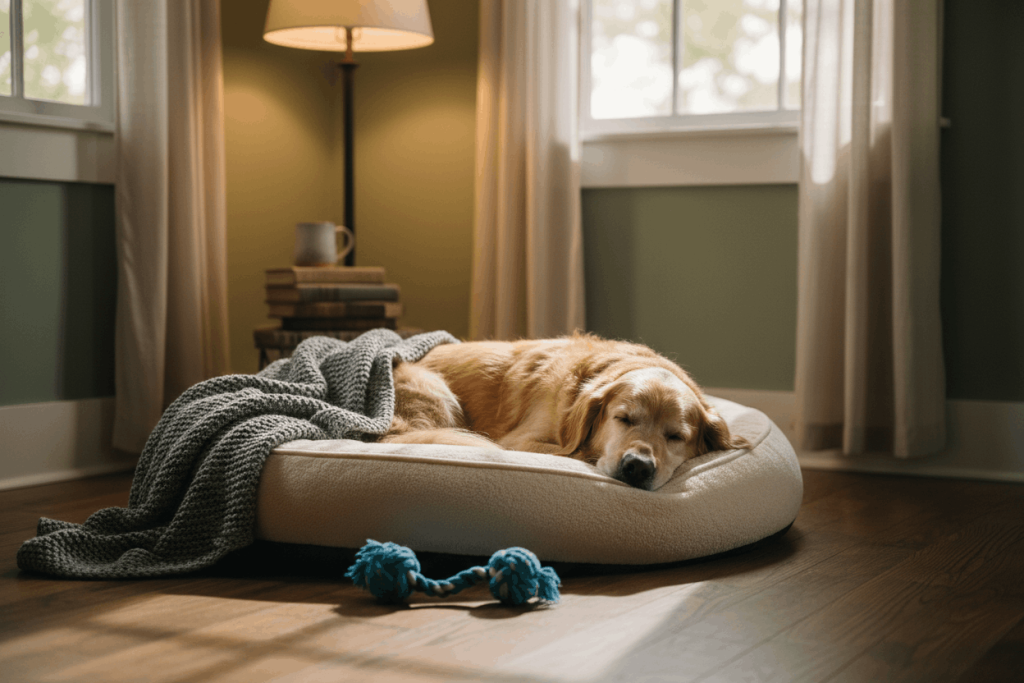
Your home environment plays a major role in emotional wellbeing.
To support dogs and stress relief in everyday life:
- create a quiet resting space away from foot traffic
- limit constant background noise when possible
- allow access to windows for visual stimulation without overwhelming exposure
- avoid sudden loud corrections during training
A calm environment gives the nervous system a chance to recover between stimulation periods.
The power of scent, licking, and gentle chewing
Not all calming strategies require movement.
Activities that naturally lower arousal include:
- sniffing games
- slow treat searching in snuffle mats
- licking mats
- long lasting but safe chew activities
These behaviors activate soothing neurological pathways and promote relaxation. For many dogs, these activities are more effective than high intensity play when emotional tension is present.
They form an important foundation for practical stress relief dog routines.
Movement that supports emotional balance

Exercise remains an essential tool for emotional regulation. However, the type of movement matters.
Gentle structured walks, exploration walks, and relaxed play sessions allow dogs to release nervous energy without triggering over arousal. Fast paced repetitive games can sometimes increase agitation rather than reduce it.
Balanced physical activity supports healthy stress processing and improves sleep quality.
Calming aids for stressed pets and how to use them wisely
Many guardians explore calming aids for stressed pets when lifestyle strategies alone are not enough.
These may include:
- natural pheromone based products
- calming music designed for dogs
- pressure garments
- gentle botanical based calming formulations
Calming aids should be viewed as supportive tools rather than replacements for proper routines, training, and emotional enrichment. The most effective programs combine environmental stability, appropriate stimulation, and gentle external support.
When used responsibly, calming aids can assist with transitions such as travel, thunderstorms, or household changes.
The role of social connection in stress relief for dogs

Dogs are social animals. Emotional security is strongly influenced by social interaction.
Quality connection includes:
- calm physical affection when welcomed
- shared quiet time
- positive reinforcement during training
- gentle play that matches the dog’s energy level
Regular social interaction supports emotional resilience and helps prevent isolation related stress responses.
MyCern fit: A holistic approach to emotional wellness
At MyCern, emotional wellbeing is viewed as an essential pillar of lifelong health.
Stress relief for dogs is not treated as a single solution, but as part of a wider lifestyle that includes balanced nutrition, healthy movement, mental enrichment, and calm daily rhythms. Supporting emotional balance through predictable routines, gentle stimulation, and carefully selected calming aids for stressed pets aligns with MyCern’s science based and prevention focused wellness philosophy.
By nurturing both physical and emotional systems, dogs develop stronger coping capacity for everyday challenges and environmental change.
Practical daily routine for stress relief
A simple emotionally supportive routine may look like this:
- morning calm walk with free sniffing time
- short training session using positive reinforcement
- mid day rest period in a quiet space
- evening enrichment activity such as puzzle feeding
- gentle interaction before bedtime
Consistency builds emotional safety and supports long term canine stress relief.

Frequently asked questions
What are the most common stress signs in dogs?
The most common stress signs in dogs include lip licking, yawning outside of sleep, pacing, trembling, hiding, reduced appetite, and sudden changes in social behavior.
How long does stress relief for dogs usually take?
Some dogs show improvement within days when routines become more predictable. Others may need several weeks of consistent emotional support and environmental stability.
Can calming aids for stressed pets replace training or behavior work?
No. Calming aids for stressed pets should support emotional regulation but do not replace structured training, enrichment, and lifestyle adjustments.
Is stress relief dog care different for puppies and senior dogs?
Yes. Puppies benefit from gentle exposure and predictable learning environments, while senior dogs often need quieter routines and lower intensity stimulation to support emotional comfort.
Can indoor dogs still experience stress?
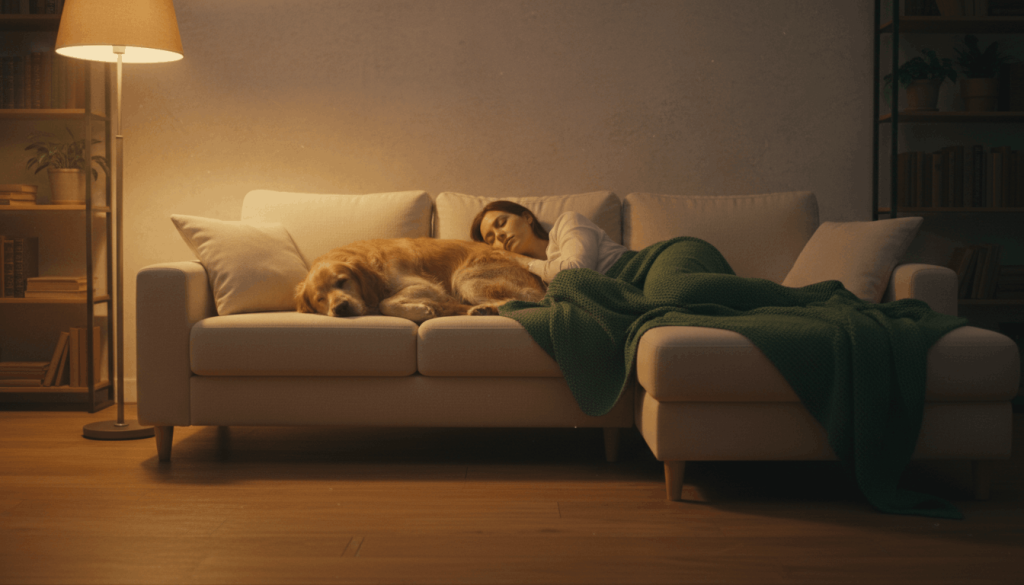
Yes. Indoor living can create stress if dogs lack mental stimulation, social interaction, and structured movement. Emotional enrichment is just as important as physical space.
Conclusion
Stress is a natural part of life for dogs, but chronic emotional strain does not have to be. By learning to recognize stress signs in dogs, creating predictable daily routines, offering calming sensory activities, and using calming aids for stressed pets thoughtfully, guardians can build meaningful and sustainable stress relief for dogs. A balanced approach that supports both mind and body allows dogs to develop stronger emotional resilience and enjoy healthier, calmer daily lives.
References
- Beerda, B., Schilder, M. B., van Hooff, J. A., & de Vries, H. W. (1997). Manifestations of chronic and acute stress in dogs. Applied animal behaviour science, 52(3-4), 307-319.
- Dreschel, N. A. (2010). The effects of fear and anxiety on health and lifespan in pet dogs. Applied Animal Behaviour Science, 125(3-4), 157-162.
- Heath, S. (2009). BSAVA manual of canine and feline behavioural medicine (pp. 35-48). D. Horwitz, & D. S. Mills (Eds.). Quedgeley, Gloucester England: British Small Animal Veterinary Association.
- Overall, K. (2013). Manual of clinical behavioral medicine for dogs and cats-E-Book: manual of clinical behavioral Medicine for dogs and cats-E-Book. Elsevier Health Sciences.
- Tiira, K., & Lohi, H. (2014). Reliability and validity of a questionnaire survey in canine anxiety research. Applied Animal Behaviour Science, 155, 82-92.

