How Environmental Toxins Impact Pets and Ways to Reduce Daily Exposure
Written by MyCern Research & Editorial Team
Every day, pets encounter a surprising number of environmental chemicals and toxins. From household cleaners to air pollution, pesticide residues, and contaminated water, these exposures can quietly affect health over time. Unlike humans, pets are closer to the ground, lick their fur, and explore with their noses and mouths, making them particularly vulnerable to daily toxins.
Understanding what environmental toxins are, how pets are exposed, and simple strategies to reduce contact can support long-term wellness and resilience.
This article explores:
- How environmental toxins enter pets’ bodies
- The short- and long-term impacts of exposure
- Common household and outdoor hazards
- Practical strategies to reduce daily toxin exposure
- Signs that may indicate environmental stress in pets
How Pets Encounter Environmental Toxins

Pets can be exposed to toxins through multiple pathways:
- Ingestion: Licking fur, eating contaminated food, or chewing household items
- Inhalation: Breathing in smoke, dust, aerosols, or polluted outdoor air
- Dermal absorption: Contact with treated lawns, chemical residues, or cleaning agents
Because pets groom themselves frequently, even low-level environmental contaminants can accumulate over time.
Quick Tip Box – Everyday Toxin Exposure Risks:
- Cleaning chemicals, air fresheners, and detergents
- Pesticides, herbicides, and fertilizers in gardens
- Secondhand smoke from cigarettes or fireplaces
- Polluted air in urban areas
How Toxins Affect Pet Health
Even at low levels, toxins can affect multiple systems:
- Immune system: Chronic exposure may challenge immune balance
- Liver and kidney function: Organs responsible for filtering chemicals work harder
- Respiratory system: Airborne toxins may trigger inflammation or sensitivity
- Skin and coat: Direct contact can lead to irritation or hair loss
Unlike acute poisoning, these subtle effects are often gradual and may go unnoticed until behavioral or physical changes appear.
Household Hazards to Be Aware Of
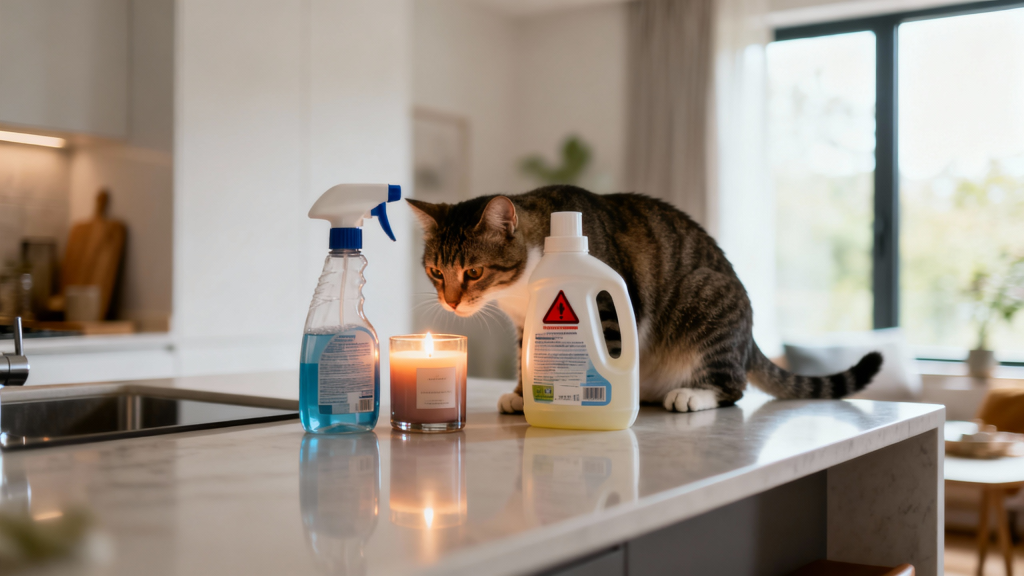
Indoor environments contain a variety of common, often overlooked toxins:
- Cleaning products: Bleach, ammonia, and multi-surface cleaners
- Air fresheners and candles: Volatile organic compounds (VOCs) can irritate lungs
- Personal care products: Essential oils or human medications left in reach
- Furniture and textiles: Off-gassing from new furniture, flame retardants, or synthetic fibers
Even when products are used according to instructions, frequent exposure can accumulate over months or years.
Outdoor and Garden Exposures
Pets spend time outside, and lawns, gardens, and streets are common toxin sources:
- Pesticides and herbicides: Commonly used in lawn care and gardening
- Vehicle emissions: Urban and high-traffic areas increase inhalation of particulates
- Water contaminants: Pools, puddles, or standing water may carry chemicals or heavy metals
Providing a safe outdoor environment and limiting exposure to treated areas reduces overall risk.
Subtle Signs of Environmental Stress

Environmental toxin exposure often manifests gradually. Pet owners can look for:
- Increased sneezing, coughing, or eye irritation
- Skin reactions such as redness, dryness, or patchy fur
- Changes in appetite or digestion
- Reduced energy or subtle behavioral changes
These signs are nonspecific, so consistent observation and preventive practices are key.
Practical Ways to Reduce Daily Exposure
- Choose pet-safe cleaning products – Opt for low-toxicity, unscented cleaners
- Air quality matters – Open windows when weather allows, consider HEPA filters
- Wash paws and fur after outdoor activity – Removes residues from grass, sidewalks, or soil
- Limit chemical lawn treatments – Provide untreated areas or leash walks in safe zones
- Store human medications and chemicals safely – Prevent accidental ingestion
- Routine grooming and vacuuming – Reduces dust, hair, and chemical residues

Supporting the Body’s Natural Defense
A balanced diet, hydration, and regular wellness checks help pets process minor environmental exposures effectively. While toxins cannot always be eliminated completely, supporting detoxification pathways through healthy nutrition and consistent care helps maintain long-term resilience.
When to Seek Veterinary Guidance
If you notice persistent symptoms potentially linked to environmental exposure, such as chronic coughing, vomiting, diarrhea, skin irritation, or sudden behavioral changes, a veterinary consultation is essential. Early intervention can prevent minor exposures from escalating into serious health issues.

References
- Larsen, J. A., et al. (2013). Environmental chemical exposures in domestic dogs: Implications for health. Journal of Veterinary Internal Medicine, 27(6), 1335–1345.
- Fox, M. R., et al. (2014). Chronic low-level exposure to toxins in pets. Applied Animal Behaviour Science, 157, 42–50.
- Breysse, P., et al. (2010). Indoor air quality and health in pets and humans. Environmental Health Perspectives, 118(5), 740–746.
- Buffington, C. A. T. (2002). Environmental stress and feline lower urinary tract disease. Journal of the American Veterinary Medical Association, 220(11), 159–164.
Conclusion
Environmental toxins are an often invisible factor in pet wellness. By understanding how cats and dogs encounter chemicals in the home and outdoors, and by adopting simple preventive measures, pet owners can reduce exposure and support long-term health. Awareness, observation, and practical daily adjustments are key to keeping pets thriving in today’s environment.