
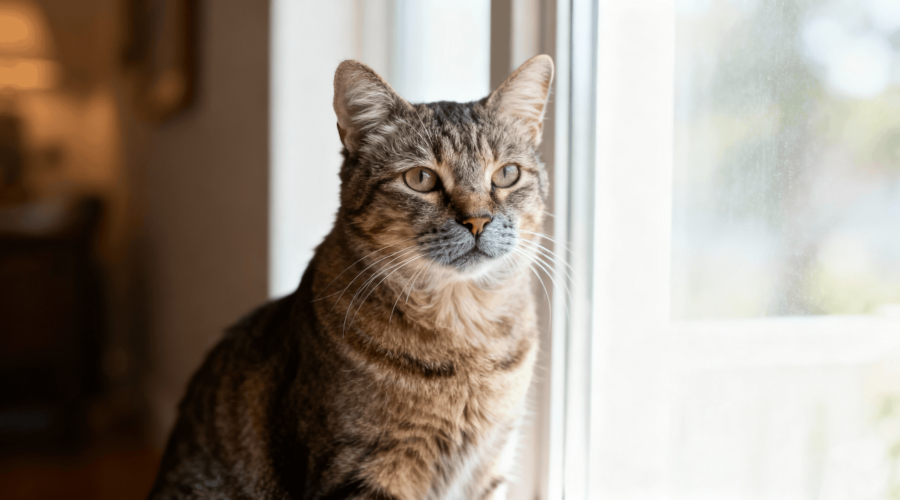
Hyperthyroidism in Cats: Why Weight Loss Doesn’t Always Mean Good Health
Written by MyCern Research & Editorial Team
Weight loss in cats is often assumed to be a sign of aging or reduced appetite. However, when weight loss occurs alongside an increased appetite, restlessness, or behavioral changes, it may signal a deeper metabolic issue. Hyperthyroidism is one of the most common endocrine disorders in older cats, and its effects extend far beyond body weight alone.
This condition accelerates metabolism at a systemic level, placing sustained strain on multiple organs—especially the heart. Understanding hyperthyroidism as a disorder of metabolic overdrive, rather than a simple thyroid enlargement, helps explain why early recognition and long-term monitoring are essential.
This article explores:
- How thyroid hormones regulate feline metabolism
- Why hyperthyroidism causes weight loss despite increased appetite
- The connection between thyroid excess and heart strain
- Behavioral and physiological signs owners may overlook
- Long-term considerations for supporting affected cats
The Role of the Thyroid in Feline Metabolism

The thyroid gland produces hormones—primarily thyroxine (T4)—that regulate how quickly cells convert nutrients into energy. These hormones influence nearly every organ system by controlling metabolic rate, oxygen consumption, and heat production.
In healthy cats, thyroid hormone levels remain tightly regulated. In hyperthyroidism, excessive hormone secretion pushes cells into a constant high-output state, increasing energy expenditure even at rest.
What Is Hyperthyroidism in Cats?
Feline hyperthyroidism is most commonly caused by benign enlargement of the thyroid gland, leading to excessive hormone production. The condition primarily affects middle-aged to senior cats and tends to progress gradually.
As hormone levels rise, the body’s baseline metabolic demand increases, forcing organs to work harder to meet energy requirements.
Why Weight Loss Occurs Despite Increased Appetite
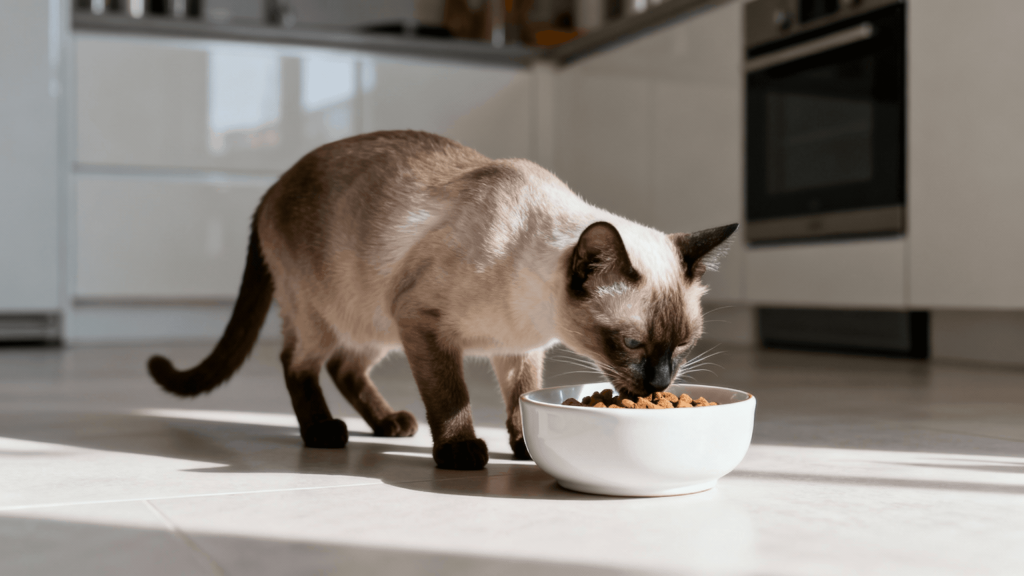
One of the hallmark features of hyperthyroidism is paradoxical weight loss. Cats may eat more frequently or appear constantly hungry, yet continue to lose muscle mass and body condition.
This occurs because elevated thyroid hormones:
- Accelerate nutrient breakdown
- Increase fat and muscle catabolism
- Reduce the body’s ability to store energy
Over time, the body burns calories faster than they can be replenished, even with increased food intake.
Appetite Changes and Digestive Effects
Hyperthyroidism does not simply increase appetite—it alters digestive physiology. Faster gastrointestinal transit and increased gut motility can reduce nutrient absorption efficiency.
Some cats may experience intermittent vomiting or loose stools, reflecting the digestive system’s response to excessive metabolic stimulation.
Cardiovascular Strain and Heart Changes

The heart is particularly sensitive to thyroid hormone excess. Elevated levels increase heart rate, contractility, and oxygen demand, placing sustained stress on cardiac muscle.
Over time, this can lead to:
- Thickening of the heart muscle
- Increased blood pressure
- Reduced cardiac efficiency
These changes may develop silently, making cardiovascular monitoring a key component of long-term management.
Behavioral and Neurological Signs
Beyond physical changes, hyperthyroidism often affects behavior. Cats may become more vocal, restless, or irritable due to heightened nervous system activity.
Sleep patterns may shift, with increased nighttime activity reflecting altered circadian regulation driven by metabolic stimulation.
Why Hyperthyroidism Is Often Missed Early
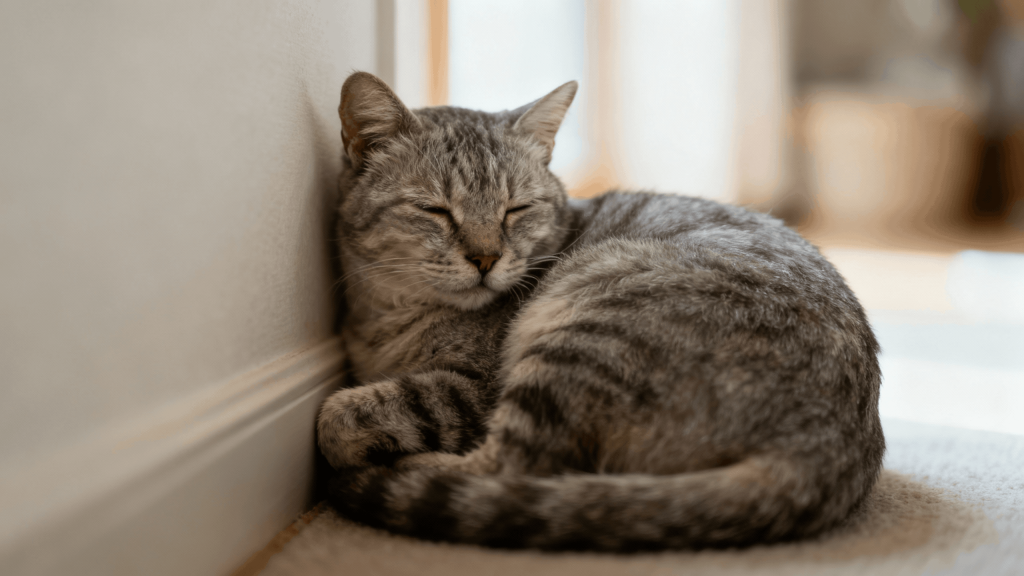
Early-stage hyperthyroidism may present with subtle signs that resemble normal aging. Mild weight loss, increased vocalization, or changes in coat texture are often overlooked until the condition advances.
Because cats compensate remarkably well, noticeable decline may only appear once multiple systems are affected.
Monitoring and Long-Term Support Considerations
Managing hyperthyroidism requires ongoing assessment rather than one-time intervention. Regular monitoring of body weight, heart function, and hormone levels helps track disease progression and overall stability.
Supporting consistent nutrition, minimizing metabolic stress, and maintaining routine veterinary evaluations all contribute to improved long-term quality of life.
When Veterinary Evaluation Is Essential
Any combination of unexplained weight loss, increased appetite, restlessness, or cardiovascular changes warrants prompt veterinary evaluation. Early diagnosis allows for more flexible management options and reduces the risk of secondary organ damage.

Conclusion
Weight loss in cats is not always a sign of declining intake or normal aging. In hyperthyroidism, it reflects a state of chronic metabolic acceleration that affects the entire body—particularly the heart. By understanding the hormonal drivers behind these changes, cat owners can recognize warning signs earlier and support their cat’s health more effectively through proactive monitoring and long-term care.
References
- Peterson, M. (2012). Hyperthyroidism in cats: what’s causing this epidemic of thyroid disease and can we prevent it?. Journal of feline medicine and surgery, 14(11), 804-818.
- Mooney, C. T. (2002). Pathogenesis of feline hyperthyroidism. Journal of Feline Medicine and Surgery, 4(3), 167–169.
- Biondi, B., & Cooper, D. S. (2008). The clinical significance of subclinical thyroid dysfunction. Endocrine Reviews, 29(1), 76–131.
- Brown, L., Fenning, A., Chan, V., Loch, D., Wilson, K., Anderson, B., & Burstow, D. (2002). Echocardiographic assessment of cardiac structure and function in rats. Heart, lung and Circulation, 11(3), 167-173.
- Peterson, M. E. (2006). Diagnostic tests for hyperthyroidism in cats. Clinical techniques in small animal practice, 21(1), 2-9.

