
Pet Joint Supplements Guide: Supporting Mobility and Comfort at Every Life Stage
Written by MyCern Research & Editorial Team
Joint health plays a foundational role in how comfortably pets move, play, and age. While stiffness and reduced mobility are often associated with senior years, joint tissues are under stress throughout a pet’s entire life. This is why pet joint supplements are increasingly viewed not only as reactive support, but as part of a long-term wellness strategy.
Joints are dynamic structures composed of cartilage, synovial fluid, ligaments, and surrounding muscle. Daily movement, body weight, genetics, and activity levels all influence how well these structures function over time. Understanding joint support across life stages helps owners make informed, proactive decisions.
This article explores how joint health changes with age, the role of key nutrients such as glucosamine for pets, and where mobility supplements for dogs and cats fit within a holistic approach to movement support.
How Joint Health Changes Over a Pet’s Lifetime

Joint development begins early. In puppies and kittens, rapid growth places significant demands on cartilage and connective tissue. Large and fast-growing breeds may experience higher mechanical stress during this stage, making balanced nutrition and controlled activity essential.
During adulthood, joints enter a maintenance phase. Cartilage naturally undergoes gradual wear, particularly in active pets or breeds predisposed to mobility challenges. At this stage, joint-support nutrients may help maintain structural integrity and lubrication.
In senior pets, age-related changes become more pronounced. Cartilage turnover slows, synovial fluid composition may change, and muscle mass often declines. These factors combined can influence comfort, balance, and daily mobility.
What Are Pet Joint Supplements?
Pet joint supplements are nutritional formulations designed to provide building blocks that support joint tissues rather than treat disease. Their role is supportive and gradual, supplying compounds involved in cartilage structure, connective tissue resilience, and inflammatory balance.
Unlike medications, supplements are most effective when used consistently and alongside appropriate lifestyle factors such as healthy weight, regular movement, and supportive environments.
Glucosamine for Pets: Supporting Cartilage Structure
One of the most widely researched joint-support nutrients is glucosamine. Glucosamine for pets is a naturally occurring compound involved in the synthesis of glycosaminoglycans, key components of cartilage.
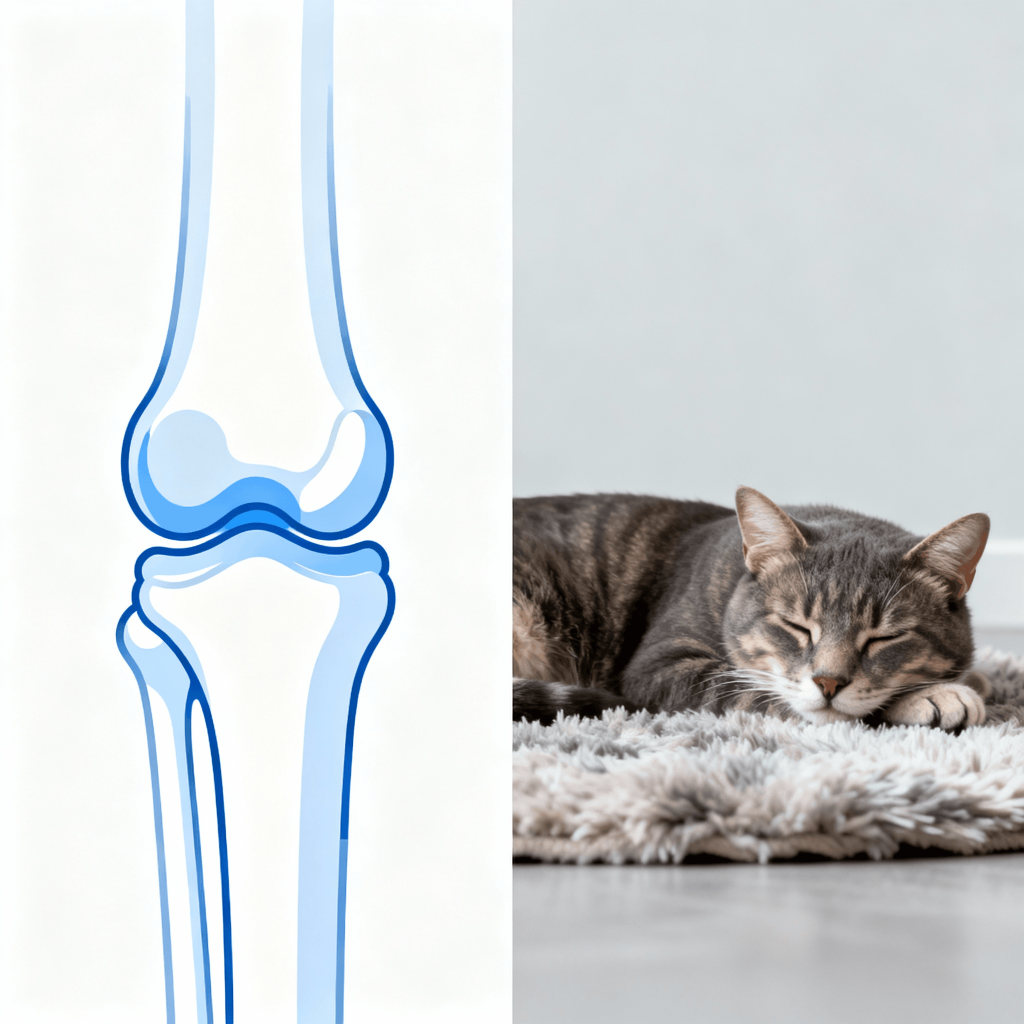
Research suggests glucosamine contributes to:
- Maintenance of cartilage matrix
- Support of joint lubrication
- Long-term connective tissue integrity
Because cartilage has limited regenerative capacity, providing structural nutrients may help support joint function over time, particularly in aging or physically active pets.
Mobility Supplements for Dogs and Cats: A Multi-Nutrient Approach
Joint health is complex, which is why mobility supplements for dogs and cats often combine multiple complementary nutrients. These formulations typically include glucosamine alongside compounds that support cartilage elasticity, tissue resilience, and oxidative balance.
Common categories of supportive ingredients include:
- Structural cartilage components
- Fatty acids involved in inflammatory regulation
- Sulfur-containing compounds supporting connective tissue
- Antioxidants that protect joint cells from oxidative stress
The combined effect of these nutrients is often more meaningful than relying on a single ingredient.
Joint Support Beyond Supplements
While pet joint supplements can play a valuable role, they are most effective as part of a broader mobility-support plan. Excess body weight increases joint load, while insufficient muscle strength reduces joint stability. Gentle, consistent activity helps maintain range of motion and muscular support.
Environmental considerations such as non-slip surfaces and supportive resting areas, also influence long-term comfort.

Conclusion
Joint health is a lifelong concern that begins well before visible mobility changes appear. Thoughtfully selected pet joint supplements, including formulations containing glucosamine for pets and balanced mobility supplements for dogs and cats, can support joint structure and comfort when integrated into a holistic wellness routine.
By combining nutritional support with appropriate movement, weight management, and environmental care, pet owners can help preserve mobility and quality of life across every stage of their companion’s journey.
References
- Amato, E. (2024). THE ROLE OF DIETARY SUPPLEMENTS IN MANAGING OSTEOARTHRITIS IN DOGS. The American Journal of Veterinary Sciences and Wildlife Discovery, 6(04), 7-13.
- Moreau, M., & Troncy, E. (2017). Review of fortified foods and natural medicinal products in companion animals afflicted by naturally occurring osteoarthritis. In Nutritional Modulators of Pain in the Aging Population (pp. 281-291). Academic press.
- Salazar, J., Bello, L., Chávez, M., Añez, R., Rojas, J., & Bermúdez, V. (2014). Glucosamine for osteoarthritis: biological effects, clinical efficacy, and safety on glucose metabolism. Arthritis, 2014(1), 432463.
- Johnson, K. A., Lee, A. H., & Swanson, K. S. (2020). Nutrition and nutraceuticals in the changing management of osteoarthritis for dogs and cats. Journal of the American Veterinary Medical Association, 256(12), 1335-1341.