

Early Signs of Arthritis in Dogs: How to Spot Joint Pain Before Mobility Declines
Written by MyCern Research & Editorial Team
Arthritis in dogs is one of the most common and under-recognized causes of long-term discomfort in adult and senior pets. Many owners associate dog arthritis only with obvious limping or advanced stiffness. In reality, the earliest biological changes inside the joint begin long before visible mobility loss appears.
Learning how to recognize the early and often subtle signs of arthritis in dogs allows owners to support comfort, movement, and daily wellbeing at a much earlier stage.
This article explores:
- what is happening inside joints during the early stages of dog arthritis
- the most reliable early arthritis symptoms in dogs
- how to tell if a dog has joint pain before limping develops
- practical ways to support joint health and daily movement
Understanding arthritis in dogs at the biological level
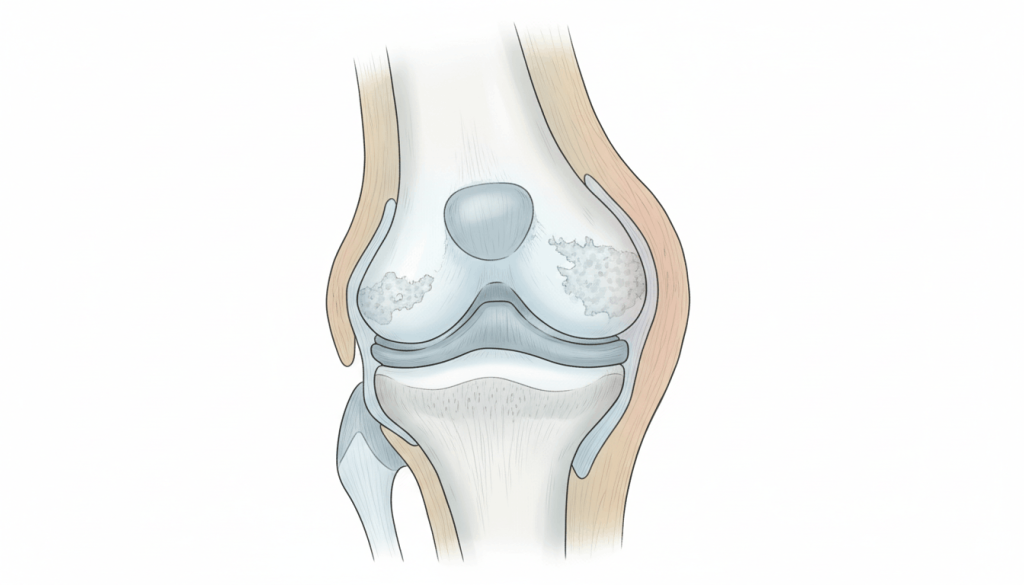
Arthritis in dogs, most commonly osteoarthritis, is a degenerative joint condition involving gradual breakdown of articular cartilage, low-grade inflammation of the joint capsule, and changes to the underlying bone.
Cartilage normally acts as a smooth, shock-absorbing surface. When microscopic damage accumulates, the joint becomes less efficient at distributing load. Inflammatory mediators increase inside the joint, and nerve endings become more sensitive to mechanical stress.
Importantly, this process begins quietly. Dogs can compensate extremely well, which is why early dog arthritis is often missed.
Why early detection matters
Once structural cartilage loss has progressed, it cannot be fully reversed. However, identifying early arthritis symptoms in dogs allows owners to reduce mechanical strain, support muscle function, and preserve joint stability before daily movement becomes restricted.
From a functional perspective, early intervention focuses on protecting joint biomechanics rather than reacting to advanced degeneration.
The earliest signs of arthritis in dogs owners often overlook
The most reliable signs of arthritis in dogs in the early phase are behavioral and movement-related, not dramatic limping.
Subtle movement changes
Many owners first notice that their dog:
- hesitates before jumping into the car or onto furniture
- uses stairs more slowly or pauses before climbing
- takes longer to rise from resting positions
These small delays are often the first indicators of developing dog arthritis.

Stiffness after rest
Stiffness after sleeping or lying down is one of the classic early arthritis symptoms in dogs. The first few steps may appear short, cautious, or slow before movement gradually improves.
This pattern reflects reduced joint lubrication and early inflammatory sensitivity.
Changes in posture and weight distribution
Dogs with early joint pain often shift weight away from uncomfortable limbs. This may look like:
- standing with the affected leg slightly off-loaded
- leaning more heavily on the front limbs when hind joints are involved
- altered sitting posture
Learning how to tell if a dog has joint pain often begins with noticing these quiet postural adjustments.
Reduced enthusiasm for familiar activities
A dog that previously loved long walks, fetch, or play may still participate, but for shorter periods. Owners frequently interpret this as normal aging, yet it is commonly one of the earliest signs of arthritis in dogs.
Subtle behavioral changes
Joint discomfort can affect mood and tolerance. Some dogs become:
- more withdrawn
- less tolerant of handling around hips, knees, or shoulders
- more reluctant to be brushed or lifted
These behaviors are frequently misattributed to personality changes rather than pain.
High-risk groups for early dog arthritis
Certain dogs are more likely to develop arthritis in dogs earlier in life.
Large and giant breeds
Labradors, German Shepherds, Golden Retrievers, and giant breeds experience higher joint loading forces throughout life, increasing cartilage stress.
Dogs with previous injuries
Cranial cruciate ligament rupture, hip dysplasia, elbow dysplasia, and previous joint trauma significantly raise the likelihood of early degenerative change.
Overweight dogs
Even modest excess body weight increases joint compression and accelerates cartilage wear, making early arthritis symptoms in dogs more likely to appear.
How to tell if a dog has joint pain at home

Owners can perform simple daily observations:
- Watch your dog rise after rest from a distance
- Observe symmetry when walking toward and away from you
- Note hesitation before jumping or climbing
- Pay attention to shortened play sessions
Repeated small changes across several days are more meaningful than a single isolated observation.
How early joint pain alters movement patterns
When dogs experience early joint discomfort, they unconsciously modify stride length and loading patterns. Over time, this compensation places additional strain on surrounding joints and muscles.
This is why untreated dog arthritis can quietly contribute to secondary problems such as muscle imbalance, spinal strain, and reduced stability.
How MyCern fits into early joint wellness
MyCern’s approach to arthritis in dogs focuses on proactive daily joint support rather than symptom masking.
Within the MyCern wellness philosophy, nutritional formulations are designed to complement balanced diets by supporting:
- normal inflammatory balance
- connective tissue metabolism
- cartilage structural maintenance
This science-guided positioning aligns with emerging research emphasizing long-term joint environment support during the early stages of degenerative change.
Lifestyle strategies that help slow mobility decline
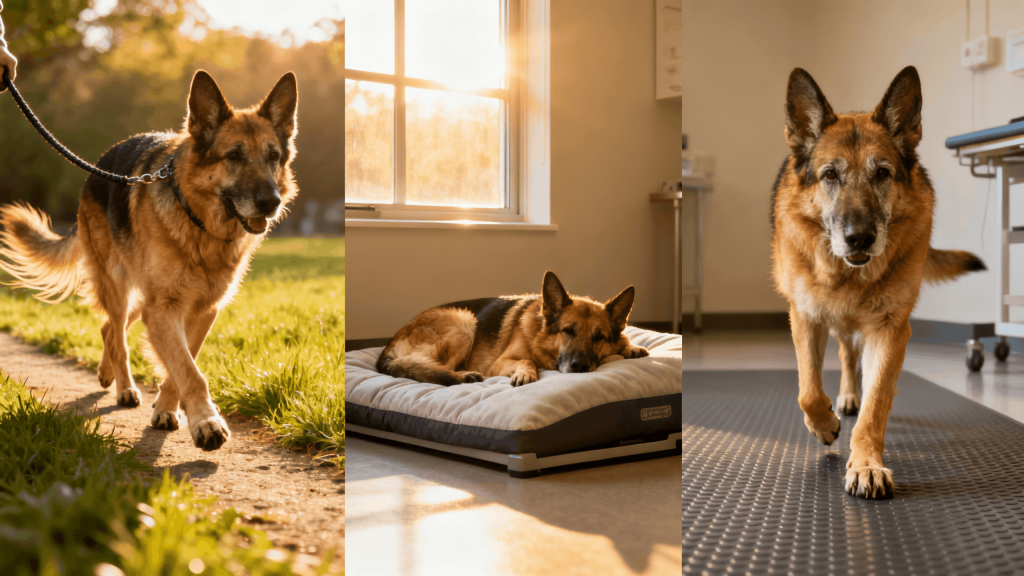
Small daily adjustments can meaningfully support dogs showing early arthritis symptoms in dogs:
- Maintain lean body condition to reduce joint loading
- Provide regular low-impact activity such as controlled leash walks
- Avoid repetitive high-impact jumping on hard surfaces
- Use non-slip flooring in common walking areas
- Provide supportive bedding to reduce pressure on sensitive joints
Preserving muscle strength is particularly important, as muscles stabilize joints and reduce mechanical stress on cartilage.
Frequently Asked Questions
What are the first signs of arthritis in dogs?
The earliest signs of arthritis in dogs include stiffness after rest, slower rising, hesitation before stairs or jumping, reduced play duration, and subtle posture changes.
How can I tell if my dog has joint pain without obvious limping?
To understand how to tell if a dog has joint pain, watch for changes in movement confidence, shorter activity tolerance, altered sitting posture, and reluctance to be handled around certain joints.
At what age does dog arthritis usually begin?
Dog arthritis can begin as early as 1–3 years of age in large breeds or dogs with joint abnormalities. In many dogs, early degenerative changes occur long before owners notice mobility problems.
Are early arthritis symptoms in dogs always permanent?
Early arthritis symptoms in dogs reflect underlying joint stress and inflammation. While cartilage damage cannot be reversed, early support strategies can help maintain comfort, movement quality, and joint function over time.
Is stiffness after sleeping always a sign of dog arthritis?
Not always. Temporary stiffness can occur after intense activity. However, repeated stiffness after normal rest is one of the most consistent early indicators of arthritis in dogs.
Should I change my dog’s exercise routine if arthritis is suspected?
Yes. Shifting toward controlled, consistent, low-impact activity helps maintain muscle strength while reducing unnecessary joint stress in dogs with early dog arthritis.

Conclusion
Arthritis in dogs rarely begins with dramatic limping. The earliest signs appear as quiet movement hesitations, subtle stiffness, and small changes in daily behavior. Recognizing the true early arthritis symptoms in dogs and understanding how to tell if a dog has joint pain before mobility declines, allows owners to protect joint health at a stage when long-term comfort and function can be most effectively supported.
By observing closely and supporting joint biology early, dog arthritis becomes a manageable part of lifelong wellness rather than a late-stage crisis.
References
- Johnston, S. A. (1997). Osteoarthritis: joint anatomy, physiology, and pathobiology. Veterinary Clinics of North America: Small Animal Practice, 27(4), 699-723.
- Dawson, L. (2016). Development and evaluation of a canine and feline welfare assessment tool for use in companion animal veterinary clinics (Doctoral dissertation, University of Guelph).
- Anderson, K. L., O’Neill, D. G., Brodbelt, D. C., et al. (2018). Prevalence, duration and risk factors for appendicular osteoarthritis in dogs. The Veterinary Journal, 241, 1–7.
- Marshall, W. G., Bockstahler, B. A., Hulse, D. A., & Carmichael, S. (2009). A review of osteoarthritis and obesity: current understanding of the relationship and benefit of obesity treatment and prevention in the dog. Veterinary and Comparative Orthopaedics and Traumatology, 22(05), 339-345.

