Wet vs. Dry Food for Cats: Health Implications Beyond Preference
Written by MyCern Research & Editorial Team
Cat owners often face the age-old question: wet food or dry food? While taste preference matters, the choice impacts more than mealtime enjoyment. Diet form influences hydration, dental health, nutrient absorption, and long-term wellbeing. Cats are obligate carnivores with unique physiology, and understanding how wet and dry diets affect their bodies can help owners make informed, balanced feeding decisions.
This article explores:
- Differences in moisture content and nutrient delivery
- Hydration and kidney health considerations
- Impacts on dental health and chewing behavior
- How diet form affects metabolism and gut health
- Strategies for combining wet and dry food for balanced nutrition
Hydration: Why Wet Food Matters

Cats naturally have a low thirst drive, a trait inherited from desert-dwelling ancestors. This makes dietary moisture a critical factor in maintaining urinary tract and kidney health.
Key considerations:
- Wet food contains 70–80% water, supporting hydration
- Dry food averages 6–10% water, requiring extra drinking
- Adequate hydration reduces the risk of urinary tract stress and bladder crystals
Quick Tip Box – Supporting Hydration in Dry-Food Cats:
- Provide multiple fresh water sources around the home
- Encourage play that promotes drinking (fountains, shallow bowls)
- Consider mixing a small amount of water or broth into dry kibble
Nutrient Density and Absorption
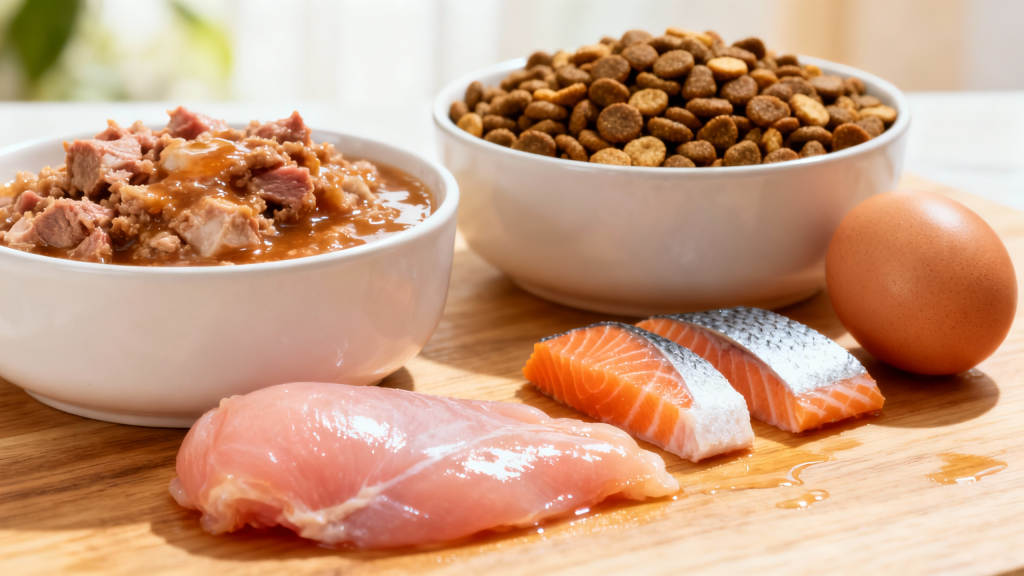
Both wet and dry foods can meet nutritional requirements if formulated correctly, but bioavailability and portion control differ:
- Wet food is often higher in protein and lower in carbohydrates, aligning with feline metabolic needs
- Dry kibble is calorie-dense; overfeeding can contribute to obesity in indoor or less active cats
- Nutrient degradation over time can occur more quickly in wet food after opening, making proper storage important
Feeding decisions should balance protein quality, caloric density, and your cat’s activity level.
Dental Health: Myth and Reality
Many owners choose dry food for dental benefits, but research shows its effects are limited:
- Kibble may help reduce plaque slightly through mechanical abrasion
- Cats often chew quickly, reducing the abrasive effect
- Regular dental care (brushing, treats, professional cleanings) remains essential regardless of diet type
Quick Tip Box – Dental Wellness Tips:
- Rotate diet with wet and dry to support both hydration and chewing
- Provide safe chew toys or dental treats
- Schedule annual veterinary dental checkups

Metabolism and Gut Health
Diet form also influences digestion and satiety:
- Wet food slows gastric emptying, which may help cats feel full longer
- Dry food can encourage grazing behavior, leading to more frequent caloric intake
- Fiber content, prebiotics, and probiotics in diet support healthy microbiome balance, regardless of moisture content
Quick Tip Box – Supporting Digestive Wellness:
- Gradually transition foods to avoid gut upset
- Observe stool quality and consistency as a measure of tolerance
- Avoid sudden diet changes without veterinary guidance
Combining Wet and Dry Food: Best of Both Worlds

For many households, a mixed feeding strategy balances hydration, nutrient intake, and dental benefits:
- Feed wet meals once or twice daily
- Offer measured dry food for controlled snacking or enrichment
- Adjust total daily calories to maintain healthy weight
This approach supports hydration, satisfies texture preferences, and allows variety without compromising nutritional balance.
When to Seek Veterinary Guidance
Consult a veterinarian if your cat shows signs of dietary intolerance or health issues:
- Chronic urinary tract problems or excessive thirst
- Unexplained weight changes
- Vomiting, diarrhea, or persistent digestive upset
- Difficulty chewing or dental discomfort
Early intervention helps prevent minor dietary issues from becoming long-term concerns.

References
- Buffington, C. A. T., et al. (2006). Role of water content in the prevention of urinary tract disease in cats. Journal of Feline Medicine and Surgery, 8(2), 77–83.
- Case, L. P., et al. (2011). Canine and Feline Nutrition: A Resource for Companion Animal Professionals. 3rd Edition. Elsevier.
- Laflamme, D. P. (2012). Nutrition and feeding management of cats. Veterinary Clinics of North America: Small Animal Practice, 42(2), 289–301.
- Larsen, J. A., et al. (2015). The effect of diet form on dental health in cats. Journal of Veterinary Dentistry, 32(3), 167–174.
Conclusion
Choosing between wet and dry food goes beyond preference, it affects hydration, nutrient absorption, digestion, and dental wellness. Understanding your cat’s unique physiology and combining feeding strategies thoughtfully can support long-term health, satisfaction, and comfort. Consistent observation, portion control, and veterinary guidance ensure your cat thrives, regardless of diet form.