Why Does My Cat Bite My Feet? Play Behavior vs Stress Signals
Written by MyCern Research & Editorial Team
Have you ever asked yourself, why does my cat bite my feet when you are simply walking past or relaxing in bed? This is one of the most common cat behaviors owners struggle with. In most homes, the real issue is not aggression. It is misunderstanding cat nipping feet meaning and missing the difference between play and stress.
In simple terms, foot biting usually comes from hunting instincts, boredom, or poor play outlets. Less often, it comes from fear, stress, or pain. Learning how to read your cat’s behavior helps you stop the bites without damaging trust.
This article explores:
- Why cats show cat playful biting feet behavior
- How to tell normal kitten play biting from stress or aggression
- What triggers foot attacks
- Practical and humane ways to stop it
Understanding cat nipping feet meaning

To understand why does my cat bite my feet, you need to know one basic fact. Cats are natural hunters.
In the wild, cats chase small animals that move close to the ground and dart quickly. Your feet move the same way. They appear suddenly, disappear around corners, and wiggle under blankets. To your cat’s brain, that looks exactly like prey.
Most cat playful biting feet follows the same pattern:
- watching and hiding
- stalking
- a fast pounce
- grabbing with the front paws
- sometimes kicking with the back legs
This is normal hunting play. It feels rewarding to your cat and helps release built up energy. In most cases, your cat is not trying to hurt you.
Feet become the target because:
- they move at ground level
- they move unpredictably
- they appear suddenly
- they are always available
For young cats, kitten play biting of feet is especially common. Kittens are learning how to hunt and how hard they can bite.
Cat play biting vs stress or aggression
Not all biting means the same thing. Understanding context is essential when learning cat nipping feet meaning.
Signs of playful foot biting
Play based biting usually looks like this:
- happens during active times such as morning and evening
- your cat stalks before attacking
- bite pressure is light or moderate
- your cat lets go quickly
- ears stay mostly forward
- no hissing or growling
This is typical cat playful biting feet behavior caused by under stimulation.
Warning signs of stress or true aggression
Biting may be more serious if you notice:
- hard bites that break skin
- flattened ears and stiff body
- hissing, growling, or lunging
- your cat does not release easily
- the attack seems sudden and intense
This type of behavior can be linked to fear, frustration, redirected aggression, or pain. In these cases, the reason behind why does my cat bite my feet is not play and should be addressed carefully.
Why kitten play biting becomes a long term habit

During early life, kittens normally learn limits from their littermates. When play becomes too rough, another kitten squeals and stops playing. This teaches bite control.
Kittens raised alone or separated too early often miss this lesson. As a result, kitten play biting can feel much harder and more intense.
The good news is that most kittens improve naturally when they receive proper play, structure, and redirection.
The under stimulation problem
One of the biggest reasons why does my cat bite my feet continues into adulthood is boredom.
Indoor cats are intelligent and physically capable predators. Without enough activity, hunting energy builds up. Your moving feet become the easiest outlet.
This is why owners often notice more cat playful biting feet in cats who:
- stay alone all day
- have few interactive toys
- lack climbing and viewing spaces
- do not have daily play routines
Timing and movement triggers
Cats are naturally most active at dawn and dusk. Many foot attacks happen:
- early in the morning
- after owners come home
- in the evening before bed
Fast movement is another major trigger. Running to the kitchen, rushing to the bathroom, or moving feet under blankets strongly activates the chase response.
Slow and predictable movement rarely causes attacks.
How to stop foot biting safely and effectively
If you want to stop asking why does my cat bite my feet, prevention works better than correction.
Never reinforce foot play
Do not use hands or feet as toys.
Do not kick, shout, or chase your cat.
Do not pull your feet away quickly. That movement looks like prey and encourages more chasing.
Redirect immediately
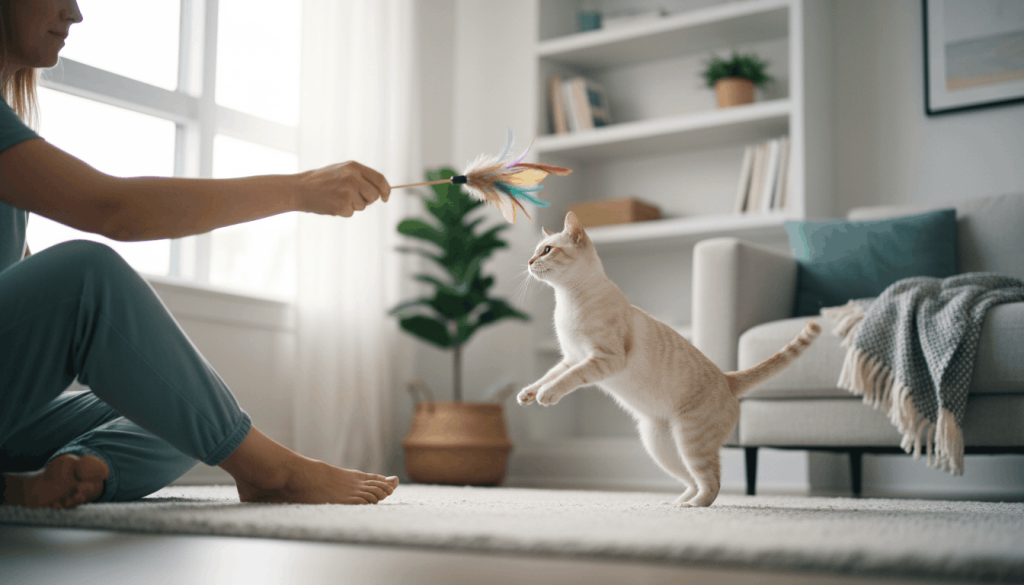
When you notice stalking or intense focus on your feet, throw a toy away from your body or pick up a wand toy. This teaches your cat what they should hunt instead of you.
Keep toys available in the rooms where attacks usually happen.
Schedule daily interactive play
This is the most important step for stopping cat playful biting feet.
Aim for two short sessions per day, about 10 to 15 minutes each. Use toys that allow chasing, jumping, and grabbing. End play with a small food reward to complete the natural hunt cycle.
This dramatically reduces the urge to attack your ankles.
Add environmental enrichment
Cats who have more to do bite people less often. Support healthy behavior by offering:
- window perches
- climbing shelves or cat trees
- rotating toys
- puzzle feeders
These reduce boredom driven cat nipping feet meaning behaviors.
When your cat bites, freeze
If a bite happens, stop moving completely. Wait until your cat releases, then calmly redirect to a toy. Freezing removes the prey response that makes the behavior rewarding.
Night time foot biting under blankets

Feet moving under covers are extremely tempting. To reduce this problem:
- play actively with your cat before bedtime
- feed after play
- provide a comfortable sleeping spot in another area
Some cats need temporary bedroom exclusion while new routines are established.
When foot biting may signal a deeper problem
Sudden or worsening biting should always be checked by a veterinarian. Pain, dental disease, arthritis, thyroid disease, or neurological issues can change tolerance and behavior.
If your cat begins biting after being stepped on, frightened, or chased, fear may be the cause. Fear based biting requires gentle desensitization and positive associations, not punishment.
How MyCern supports feline behavioral wellness
At MyCern, our science guided wellness philosophy recognizes that behaviors such as foot biting often reflect unmet biological and emotional needs. Supporting physical comfort, daily mental stimulation, predictable routines, and stress reduction creates the foundation for healthy behavior.
When cats are physically well and mentally engaged, cat playful biting feet behavior naturally decreases because their instincts are being satisfied in appropriate ways.
Practical checklist
- Schedule two daily play sessions
- Keep redirection toys nearby
- Freeze instead of pulling away
- Never use hands or feet as toys
- Add climbing and viewing spaces
- Seek veterinary advice if biting changes suddenly

Conclusion
Understanding why does my cat bite my feet begins with recognizing that most foot biting is not bad behavior. It is misplaced hunting energy. In the majority of homes, cat nipping feet meaning translates to one simple message: your cat needs more structured play, stimulation, and appropriate outlets.
By learning to distinguish normal kitten play biting and cat playful biting feet from stress or pain related behavior, and by providing daily interactive play and enrichment, you can protect your ankles while still respecting your cat’s natural instincts and emotional wellbeing.
References
- Stella, J. (2021). Behavioral biology of the domestic cat. Behavioral Biology of Laboratory Animals, 223-241.
- Horwitz, D. F. (Ed.). (2018). Blackwell’s five-minute veterinary consult clinical companion: canine and feline behavior. John Wiley & Sons.
- Delgado, M. (2022). Play behavior in cats. Clinical handbook of feline behavior medicine, 46-63.
- Overall, K. (2013). Normal feline behavior and ontogeny: neurological and social development, signaling and normal feline behaviors. In Manual of clinical behavioral medicine for dogs and cats (pp. 312-359). Canada: Elsevier Health Sciences.