
How to Tell if a Cat Is Happy: 10 Subtle Signs Cat Owners Miss
Written by MyCern Research & Editorial Team
Wondering how to tell if a cat is happy or if your cat is simply tolerating your company? Cats express emotions quietly. To truly understand them, you must learn cat body language and how small movements reveal comfort, trust, and emotional safety.
This guide explains how to tell if your cat is happy using clear, real-life behaviors you can spot at home. These are the most reliable signs of a happy cat, based on everyday feline body language and natural behavior patterns.
This article explores
- the most accurate signs of a happy cat
- how cat happiness body language appears in daily life
- how to read feline body language without guessing
Understanding feline body language
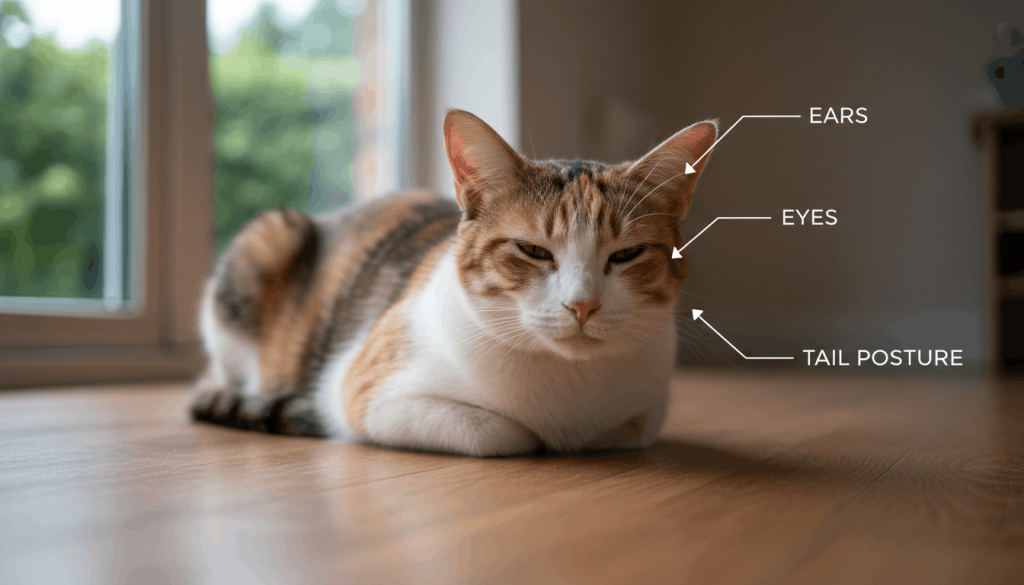
Before learning the signs, it helps to understand one key truth. Cats evolved to communicate quietly. Their emotional signals are gentle and often missed.
That is why feline body language matters more than dramatic behavior. A relaxed cat does not jump or bark for attention. Instead, comfort shows through posture, eyes, ears, tail and movement.
If you want to know how to tell if a cat is happy, you must look at the whole body, not one single action.
10 clear signs of a happy cat
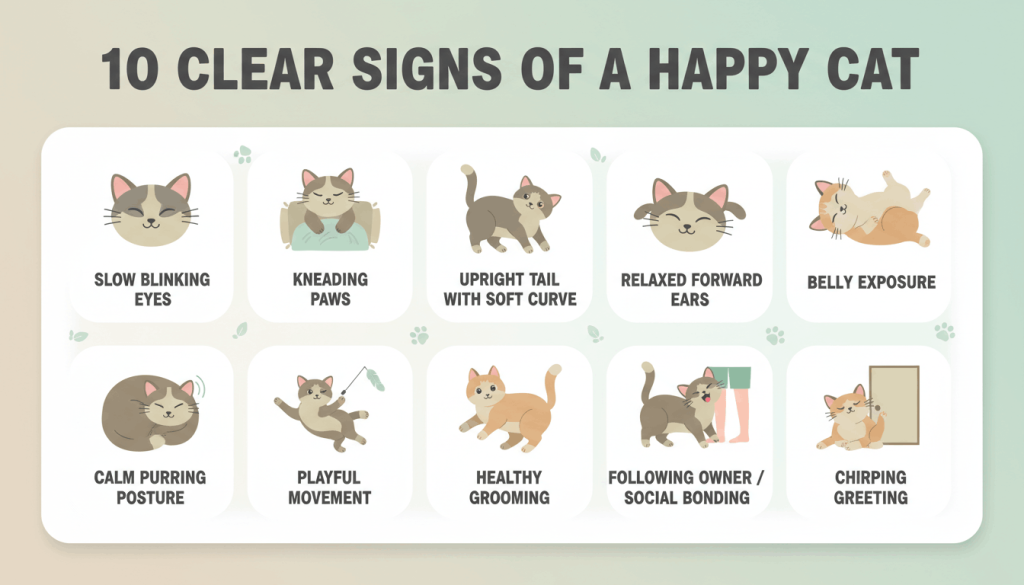
1. Slow blinking at you
Slow blinking is one of the most meaningful forms of cat happiness body language.
When your cat slowly closes and opens their eyes while looking at you, it signals trust and emotional comfort.
If your cat regularly slow blinks, it is one of the strongest signs of a happy cat.
2. Purring during calm moments
Purring alone does not always mean happiness. Context matters.
A happy purr happens while resting, being gently petted, or sitting comfortably near you. The body remains loose, eyes soft and posture relaxed.
When purring appears with relaxed cat body language, it usually reflects contentment.
3. Tail held upright with a soft curve
A tail standing upright with a slight hook at the tip is classic positive cat happiness body language.
This position shows confidence, security and friendly intent. It is one of the easiest ways to tell how your cat feels when approaching you.
4. Ears facing forward and relaxed
Relaxed ears point forward and move gently in response to sound.
Flattened, sideways or backward ears signal stress. Forward ears paired with a calm posture are a clear indicator in feline body language that your cat feels safe.
5. Showing the belly while resting
When a cat rolls onto their back and exposes the belly, it shows deep trust.
This does not always mean they want to be touched. It does mean your cat feels safe in your presence, which is a major clue for anyone learning how to tell if your cat is happy.
6. Kneading with the front paws
Kneading comes from kittenhood and reflects comfort and emotional security.
A kneading cat is reliving a calm and protected feeling. It remains one of the most consistent signs of a happy cat.
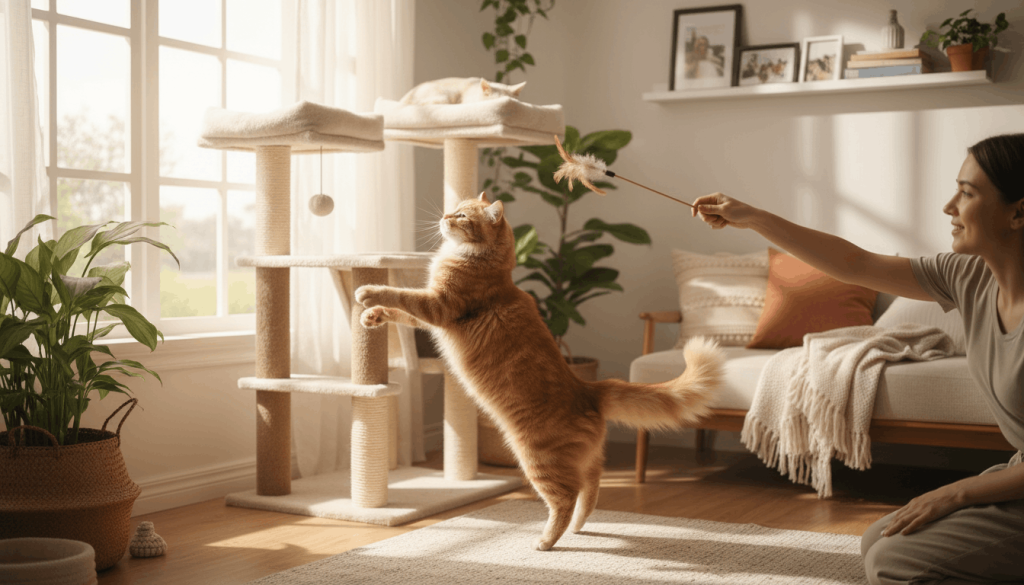
7. Willingness to play
Play indicates emotional and physical wellbeing.
A cat that stalks toys, runs after objects or initiates play is demonstrating positive engagement with its environment. This behavior strongly reflects balanced cat body language and good emotional health.
8. Normal grooming and healthy appetite
Happy cats groom themselves regularly and eat with relaxed interest.
Over-grooming, poor appetite or sudden changes in self-care can suggest emotional or physical stress. Healthy routines often support stable feline body language.
9. Choosing to stay near you
One of the simplest ways to understand how to tell if a cat is happy is to notice proximity.
A content cat often chooses to be in the same room as you, watches you from a perch or follows you quietly through the house. This social closeness reflects comfort, not neediness.
10. Soft greeting chirps or trills
Many cats make a short chirping sound when greeting their favorite person.
This gentle vocalization is a friendly social signal and an often overlooked part of cat happiness body language.
How to read cat body language correctly
The most important rule in understanding cat body language is combination.
A truly happy cat often shows several signals together
- relaxed posture
- slow blinking
- forward ears
- softly curved tail
- calm movement
If only one sign appears while the body looks tense, the cat may not be fully comfortable.
Learning how to tell if a cat is happy becomes much easier when you observe patterns instead of single behaviors.
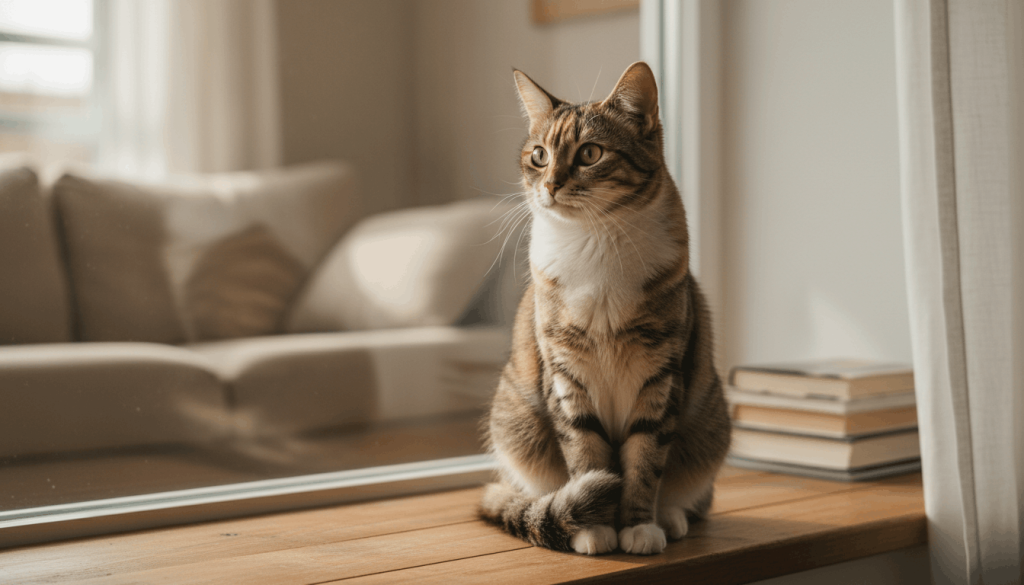
Personality differences matter
Not every cat expresses happiness the same way.
Some cats are affectionate and vocal. Others are quiet and independent. Both styles can reflect contentment.
That is why learning your own cat’s normal behavior is essential for reading feline body language accurately.
When happy signs suddenly disappear
Understanding the signs of a happy cat helps you notice when something changes.
If your cat suddenly
- stops playing
- hides more often
- avoids social contact
- shows tense body posture
this may indicate stress, illness or environmental disruption. Changes in cat happiness body language are often the earliest warning signs.
Supporting your cat’s happiness at home
To encourage positive emotional wellbeing
- offer climbing and resting spaces
- provide regular play sessions
- keep daily routines predictable
- allow your cat to control when interactions start and stop
Respecting boundaries is one of the most powerful ways to strengthen trust and improve long-term cat body language signals.
How MyCern supports feline wellness
At MyCern, our science guided approach recognizes that emotional wellbeing and physical health are closely connected.
Understanding feline body language and recognizing the emotional needs of cats helps owners create lower stress environments. Combined with proper nutrition, hydration and daily enrichment, these foundations support overall comfort and behavioral balance.
A cat that feels physically supported and emotionally secure is more likely to show consistent signs of a happy cat in daily life.
Practical tips for reading happiness
- Observe your cat’s relaxed baseline behavior
- Watch for changes, not just positions
- Always read the whole body
- Stop interaction when ears rotate back or tails begin to twitch
- Let your cat initiate contact sometimes
These habits help you accurately understand how to tell if your cat is happy without guessing.
Conclusion
Learning how to tell if a cat is happy means learning to read subtle but reliable emotional signals. Through relaxed posture, slow blinking, gentle vocalizations, kneading, forward ears and calm social behavior, cats quietly show their comfort and trust.
By understanding cat body language, recognizing cat happiness body language, and respecting the natural communication style of feline body language, you gain a deeper, clearer picture of your cat’s emotional wellbeing.
These gentle behaviors are not small details. They are the real, everyday signs of a happy cat.
References
- Bradshaw, J. W. S., & Cameron-Beaumont, C. (2020). The signaling repertoire of the domestic cat and its undomesticated relatives. In The Domestic Cat The Biology of its Behaviour (3rd ed., pp. 67-93). Cambridge University Press.
- Ellis, S. L. H., Rodan, I., & Carney, H. C. (2019). AAFP and ISFM feline environmental needs guidelines. Journal of Feline Medicine and Surgery, 21(3), 219-230.
- Shreve, K. R. V., & Udell, M. A. R. (2017). What’s inside your cat’s head A review of cat cognition research. Learning & Behavior, 45(2), 127-142.
- Turner, D. C., & Bateson, P. (2014). The domestic cat Communication and cognition. In Behavioral Biology of the Domestic Cat (pp. 156-182). CABI Publishing.