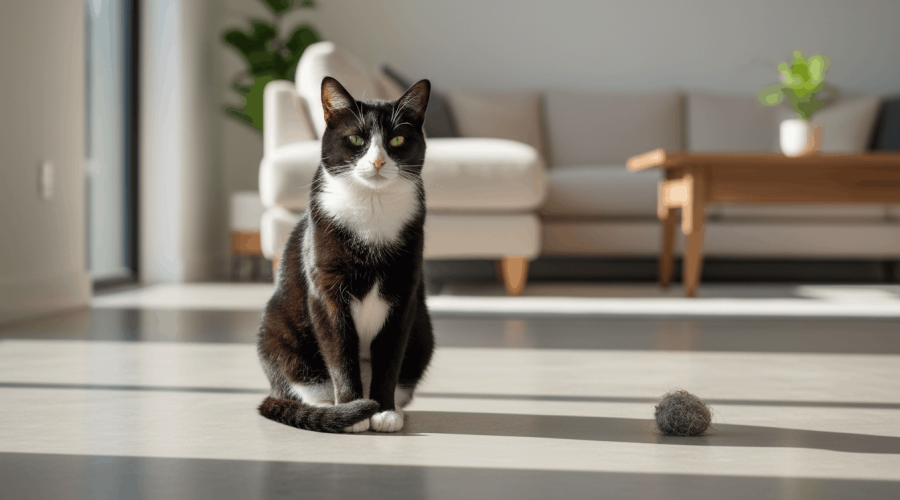
Why Does My Cat Vomit Hairballs So Often? Causes, Digestive Links, and Prevention Tips
Written by MyCern Research & Editorial Team
If you’ve ever found a tubular pile of fur on the floor, you’ve likely wondered why does my cat vomit hairballs so often and whether repeated cat hairball vomit is truly normal. While occasional hairballs are part of feline self-grooming, frequent hairballs in cats can signal more than simple shedding. They often reflect subtle changes in digestion, motility, grooming behavior, or stress.
Understanding the biological reasons behind cat hairballs and vomiting helps owners recognize when the behavior is expected and when hairballs become a meaningful wellness signal rather than a nuisance.
This article explores:
- Why cats form hairballs in the first place
- The digestive and motility factors behind hairball cat vomit
- How to recognize when hairballs are a problem
- Evidence-based prevention strategies that support normal feline physiology
Why Does My Cat Vomit Hairballs?
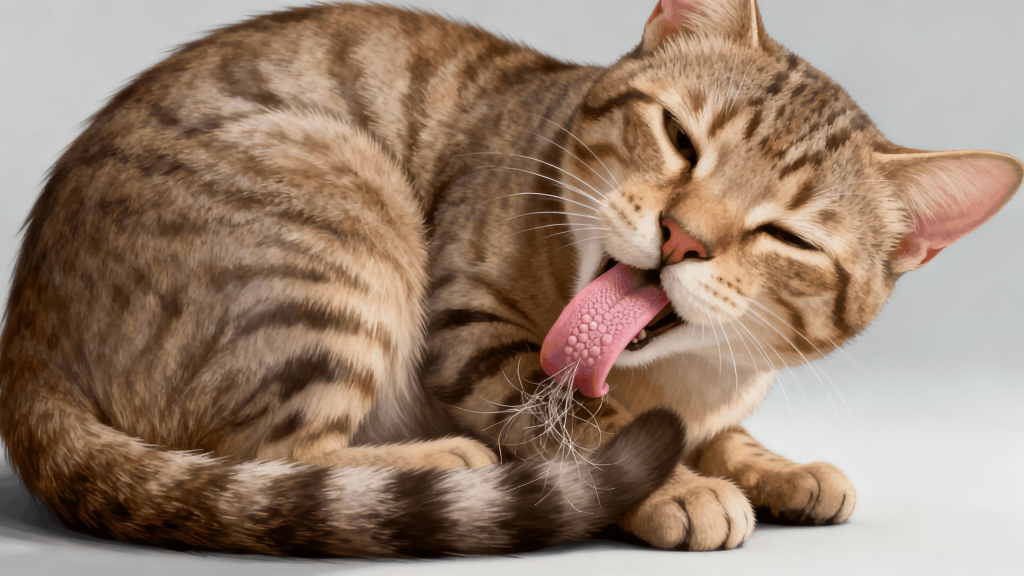
The primary reason behind why does my cat vomit hairballs lies in the cat’s natural grooming behavior. The tongue’s backward-facing papillae efficiently trap loose fur, which is then swallowed.
Unlike some species, cats have limited ability to regurgitate hair through the intestines efficiently. When hair accumulates in the stomach and fails to pass normally into the small intestine, it may trigger a vomiting reflex, resulting in classic cat hairball vomit.
However, this process is influenced by more than grooming alone.
Hairballs and Digestive Motility: The Missing Link
From a physiological standpoint, cat hairballs and vomiting are closely tied to gastric emptying and intestinal motility.
Healthy gastrointestinal movement normally allows small amounts of hair to move through the digestive tract and exit in stool. When gastric emptying slows or intestinal movement becomes less coordinated, hair can accumulate and compact.
Research in feline gastroenterology shows that subtle disturbances in motility without overt disease, can increase the likelihood of cat vomits hairballs episodes.
This explains why frequent hairballs in cats may appear even when appetite and activity seem normal.
Why Some Cats Develop Frequent Hairballs
Not all cats experience the same frequency of hairball cat vomit. Several biological and lifestyle factors increase risk.
Coat characteristics
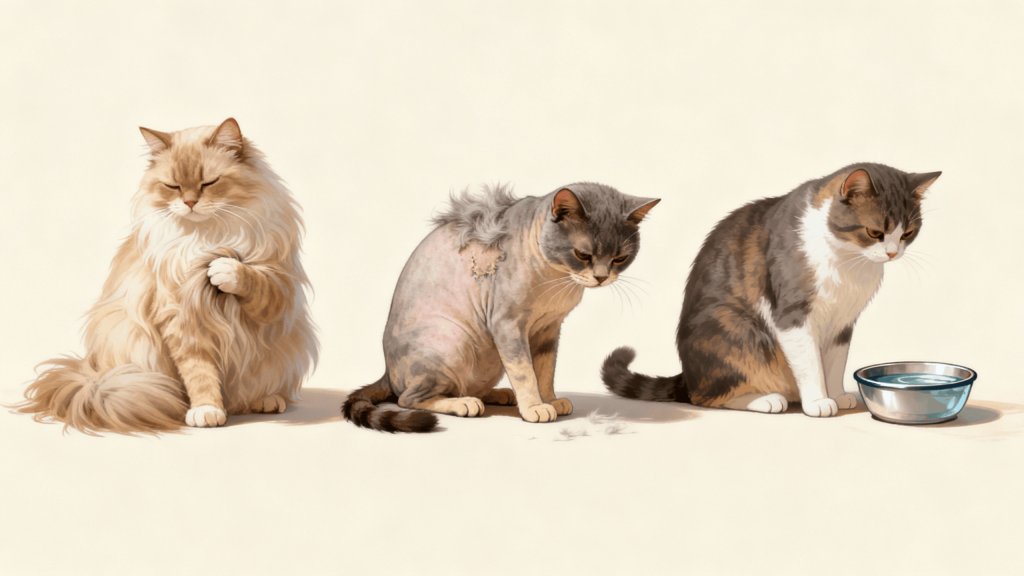
Long-haired and double-coated cats naturally ingest more fur during grooming. The volume of hair entering the stomach alone can overwhelm normal digestive transit.
Grooming intensity
Cats under environmental stress, boredom, or routine disruption may groom excessively. Over-grooming increases swallowed hair and directly contributes to cat hairballs and vomiting.
Reduced hydration
Low fluid intake can reduce intestinal lubrication and stool softness. Drier intestinal contents make it more difficult for hair to pass smoothly, increasing the chance that cat vomits hairballs instead of eliminating them normally.
Subtle digestive sensitivity
Mild gastric irritation or low-grade inflammation can interfere with coordinated motility, making frequent hairballs in cats more likely even in otherwise healthy animals.
When Hairballs Are a Problem
A critical distinction for owners is understanding when hairballs are a problem rather than routine.
Occasional hairballs such as once or twice per month, are generally considered normal for many cats. However, veterinary research suggests closer attention is needed when:
- Cat vomits hairballs multiple times per week
- Vomiting occurs without producing a hairball
- Appetite decreases or weight loss appears
- Lethargy or hiding behavior increases
Repeated cat hairball vomit may sometimes mask early gastrointestinal disease, inflammatory bowel conditions, or developing motility disorders.
In these situations, hairballs become a symptom rather than the primary issue.
The Digestive Biology Behind Hairball Vomiting
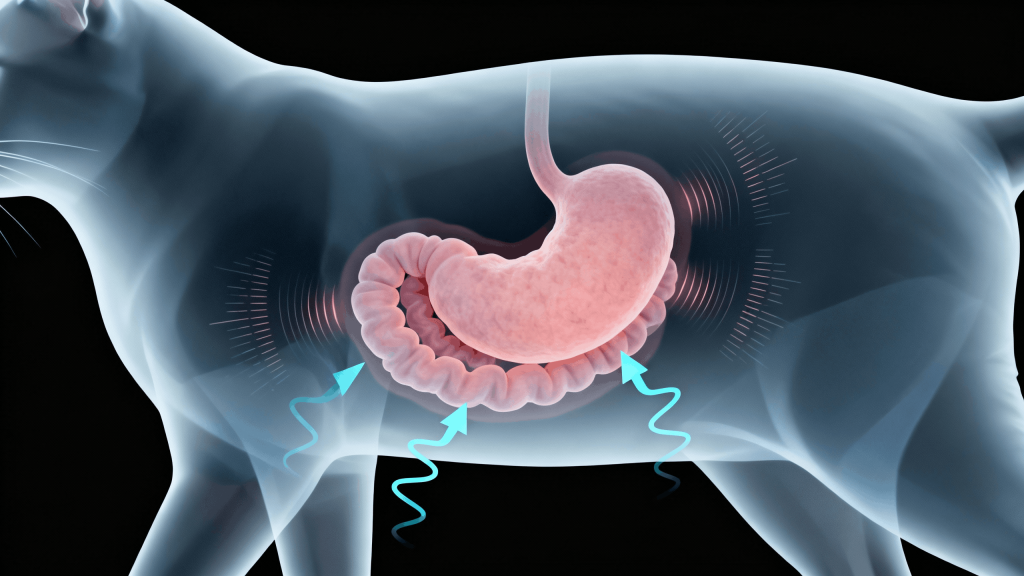
The stomach responds to accumulated fur through mechanoreceptors that sense distension and irritation. When fur mats persist, they stimulate the emetic reflex, producing hairball cat vomit.
Importantly, research shows that most hairballs form in the stomach rather than the intestine. This explains why supporting normal gastric emptying and intestinal flow is central to reducing cat hairballs and vomiting.
Evidence-Based Prevention Tips
Support normal gut movement
Dietary patterns that promote healthy gastrointestinal transit can help hair move through the intestines rather than back out through vomiting.
Soluble and moderately fermentable fibers have been shown to improve stool quality and intestinal motility in cats.
Improve hydration
Increasing water intake—through wet food inclusion or water fountains—supports softer intestinal contents and smoother movement of hair through the digestive tract.
Reduce excessive grooming triggers
Environmental enrichment, predictable routines, and mental stimulation help reduce stress-driven grooming behaviors, lowering the volume of hair swallowed.
Gentle coat management
Regular brushing significantly reduces the total amount of loose hair available for ingestion, directly lowering the likelihood of cat hairball vomit.
Lifestyle Tips That Make a Measurable Difference
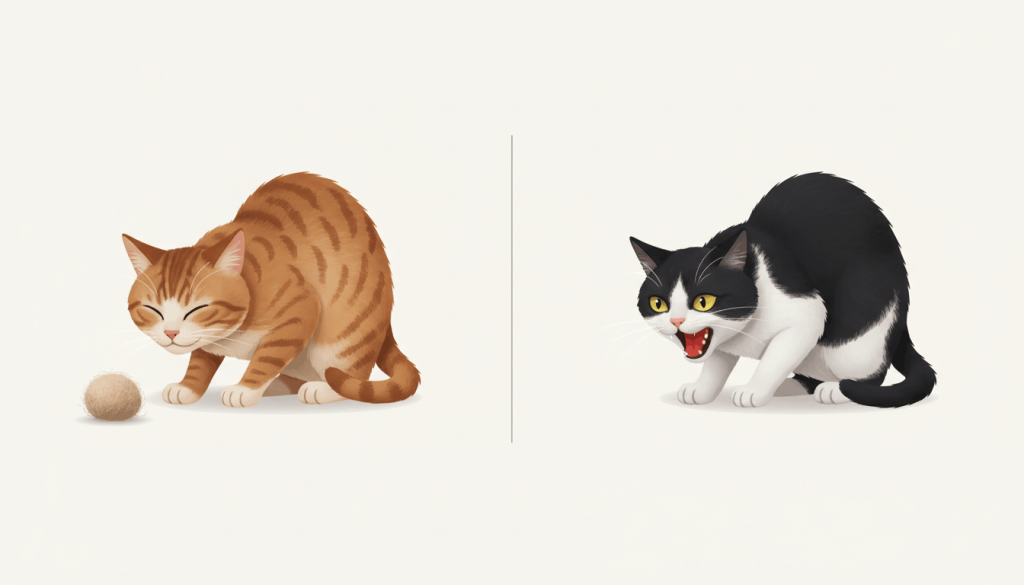
- Brush long-haired cats at least three times weekly
- Maintain consistent feeding schedules to support rhythmic digestion
- Use elevated food and water stations to promote comfortable feeding posture
- Offer daily play sessions to reduce stress-related grooming
- Monitor stool quality as an early indicator of digestive changes
These simple routines help lower the biological triggers behind cat hairballs and vomiting.
Frequently Asked Questions
Is it normal for a cat to vomit hairballs every day?
No, daily hairball vomiting is not considered normal feline behavior. While occasional hairballs (once or twice a month) are common, daily occurrences often indicate reduced gastrointestinal motility, over-grooming due to stress, or underlying digestive sensitivities that require veterinary attention.
When should I be worried about my cat’s hairballs?
You should seek veterinary advice if your cat’s hairballs are accompanied by lethargy, a lack of appetite, or persistent hacking without producing a hairball. These can be signs of a trichobezoar (a hardened mass of fur) causing a physical blockage in the digestive tract.
What is the best way to prevent frequent hairballs in cats?
The most effective prevention involves a three-pronged approach: increasing hydration to lubricate the digestive path, regular brushing to remove loose fur before it is ingested, and providing soluble fiber to support healthy gastric emptying and intestinal movement.
Conclusion
Understanding why does my cat vomit hairballs requires looking beyond fur alone. Hairballs reflect a complex interaction between grooming behavior, hydration, digestive motility, and emotional wellbeing.
Occasional cat hairball vomit is part of normal feline life. However, frequent hairballs in cats should be viewed as a useful digestive and behavioral signal. Recognizing when hairballs are a problem allows owners to support healthier digestion, reduce discomfort, and protect long-term gastrointestinal function calmly and proactively.
References
- Klaus, J. (2016). Gastrointestinal system motility and integrity. Monitoring and Intervention for the Critically Ill Small Animal: The Rule of 20, 267-283.
- Zoran, D. L. (2002). The carnivore connection to nutrition in cats. Journal of the American Veterinary Medical Association, 221(11), 1559-1567.
- Fahey Jr, G. C., Flickinger, E. A., Grieshop, C. M., & Swanson, K. S. (2004). The role of dietary fibre in companion animal nutrition. In Dietary fibre (pp. 295-328). Wageningen Academic.
- Boari, A. (2020). Small intestine: acute disease. In BSAVA Manual of Canine and Feline Gastroenterology (pp. 204-212). BSAVA Library.
- Zoran, D. L., & Buffington, C. T. (2011). Effects of nutrition choices and lifestyle changes on the well-being of cats, a carnivore that has moved indoors. Journal of the American Veterinary Medical Association, 239(5), 596-606.