Why Does My Dog Sit on My Feet? Affection, Security, or Something Else?
Written by MyCern Research & Editorial Team
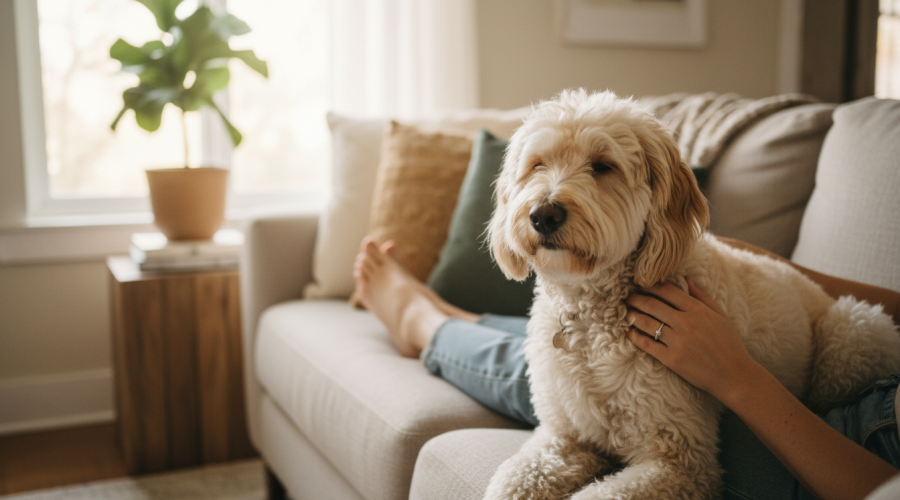
Dogs are full of personality, and sometimes their behavior leaves us scratching our heads. One of the most common, endearing, and slightly puzzling habits is when a dog plops down right on your feet. Is it just affection? Or is there more behind this behavior? Understanding why dogs sit on your feet can strengthen your bond and help you respond appropriately.
This article explores:
- the most common dog sitting on owner behavior
- what it means when dogs and puppies sit by your feet
- psychological and emotional reasons behind this behavior
- when it could be a sign of guarding behavior
Understanding Why Dogs Sit by Your Feet
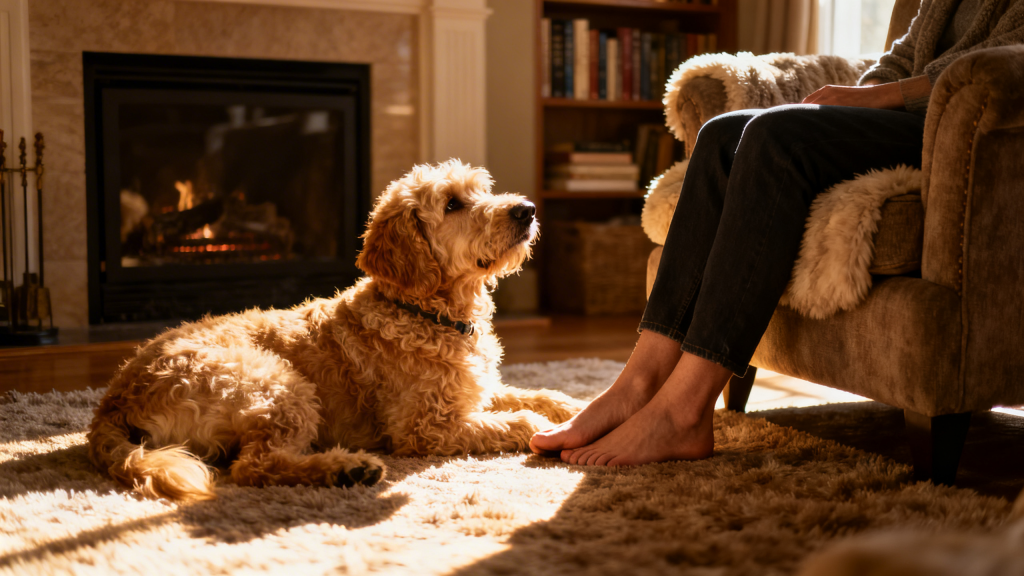
Many dog owners notice their pets choosing to sit directly on or near their feet. The reasons can vary depending on your dog’s personality, age, and environment.
Some of the most common reasons dogs sit on your feet include:
- Seeking comfort and closeness
- Feeling safe and secure
- Showing affection and bonding
Research on canine social behavior suggests that sitting on a trusted human’s feet can be a sign of trust and attachment, especially for dogs that consider their owners part of their “pack.”
1. Affection and Bonding
When dogs sit on your feet, it’s often a simple expression of love. Just like humans like hugs or hand-holding, your dog may feel comforted and connected by physical proximity.
Puppies in particular may sit on your feet as part of learning social bonds. So if you’re asking why do puppies sit on your feet, affection and a desire for warmth and attention are often the main drivers.
2. Security and Comfort
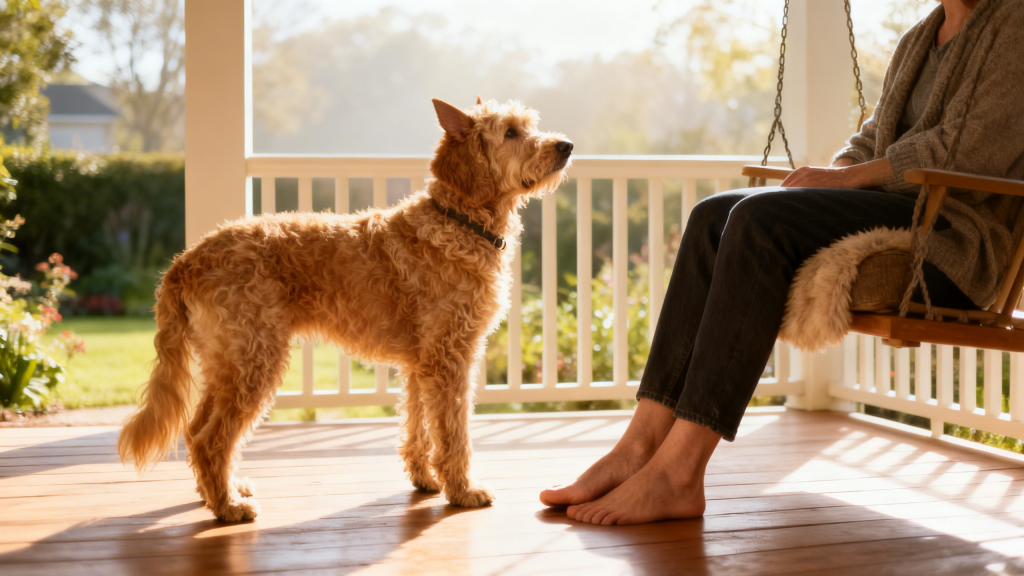
Dogs are naturally protective of themselves and their environment. Sitting on your feet gives them a sense of security:
- They know where you are at all times
- They can quickly detect potential threats
- They feel anchored in a safe, familiar spot
This behavior is especially common in anxious dogs or smaller breeds, who may feel more secure being physically close to their trusted human.
3. Guarding Behavior
Sometimes, dogs sit on your feet as part of instinctual guarding behavior. This is usually harmless but can indicate:
- Territorial instincts
- Protective feelings toward their human
- Monitoring the room or environment
In canine behavior studies, dog guarding behavior meaning often includes subtle signals: direct gaze, alert posture, and positioning near valued resources, including you. Observing your dog’s overall body language helps distinguish affectionate sitting from protective guarding.
4. Attention-Seeking Behavior
Dogs quickly learn that sitting on your feet often gets a reaction—petting, talking, or moving. This can reinforce the habit as a form of attention-seeking, especially if your dog wants to play, eat, or go outside.
5. Temperature and Comfort
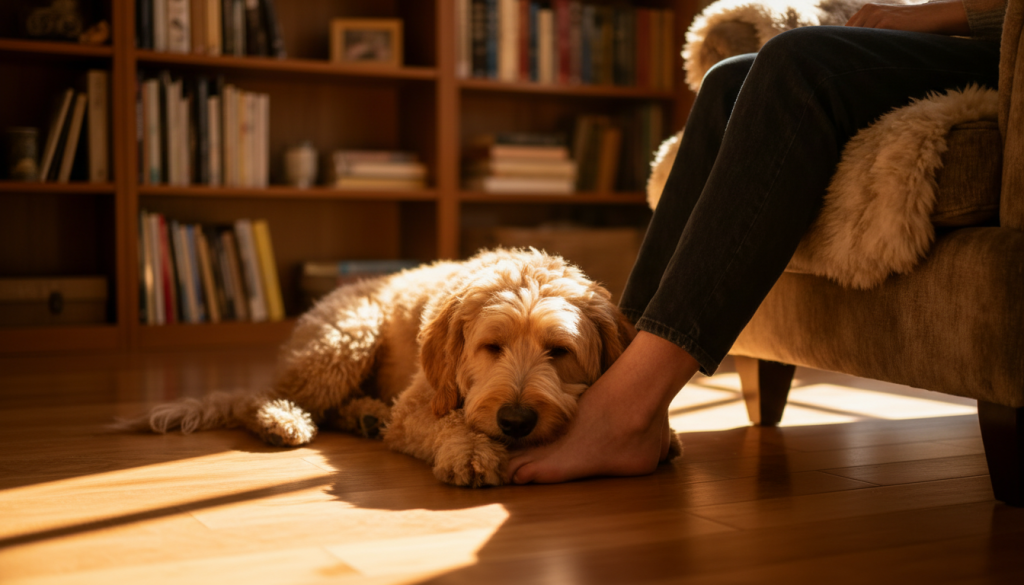
Sometimes the simplest explanation is the most practical: your feet are warm! Dogs love warmth, and your feet provide a cozy, comfortable resting spot especially during cold seasons or in air-conditioned homes.
How to Respond When Your Dog Sits on Your Feet
- Welcome it if it’s affectionate: Gentle petting and soft praise can reinforce trust and bonding.
- Redirect if needed: If you need space, train your dog to move to a nearby mat or bed.
- Observe body language: Signs of stress, tension, or guarding should be monitored to ensure safety for all household members.
- Provide alternative comfort spots: A soft dog bed or blanket near you can satisfy their desire for proximity while giving you some freedom.
Frequently Asked Questions
1. Why do dogs sit by your feet?
They may seek security, warmth, or social closeness. Physical proximity helps them feel safe and bonded with their owner.
2. Is it normal for puppies to sit on your feet?
Yes. Puppies often use feet as comfort spots while learning social bonds and feeling secure.
3. Does sitting on my feet mean my dog is guarding me?
Sometimes. Dogs naturally exhibit guarding behavior, but it’s usually harmless and reflects attachment and alertness.
4. How do I encourage or discourage this behavior?
Allow it if affectionate, or gently redirect to a nearby bed or mat. Positive reinforcement helps guide them without stress.
5. Can sitting on my feet indicate stress or anxiety?
Yes. Dogs may seek proximity when feeling unsure or anxious. Observing their overall body language helps you interpret the behavior accurately.
Key Takeaways
When your dog sits on your feet, it’s usually a sign of affection, trust, or comfort, though guarding instincts or attention-seeking may also play a role. By observing your dog’s behavior and responding thoughtfully, you can strengthen your bond and ensure your pet feels secure and loved.
References
- Prato-Previde, E., Custance, D. M., Spiezio, C., & Sabatini, F. (2003). Is the dog-human relationship an attachment bond? An observational study using Ainsworth’s strange situation. Behaviour, 225-254.
- Kerepesi, A., Dóka, A., & Miklósi, Á. (2015). Dogs and their human companions: The effect of familiarity on dog–human interactions. Behavioural processes, 110, 27-36.
- Carreiro, C., Reicher, V., Kis, A., & Gácsi, M. (2022). Attachment towards the owner is associated with spontaneous sleep EEG parameters in family dogs. Animals, 12(7), 895.
- Konok, V., Kosztolányi, A., Rainer, W., Mutschler, B., Halsband, U., & Miklósi, Á. (2015). Influence of owners’ attachment style and personality on their dogs’(Canis familiaris) separation-related disorder. PloS one, 10(2), e0118375.