Why Is My Dog Scooting on the Floor? Anal Glands, Allergies, and Digestive Causes
Written by MyCern Research & Editorial Team
Seeing your dog suddenly drag their rear across the carpet can be surprising and a little alarming. If you have ever wondered why is my dog scooting on the floor, you are not alone. Search data shows that phrases such as dog scooting, dog butt scooting, and why do dogs scoot on their butt are among the most common behavior-related questions dog owners ask.
While an occasional slide may look harmless, dog scooting on the floor is usually a signal of irritation, pressure, or discomfort around the anal and perineal area.
This article explores:
- what dog scooting really means
- how anal gland problems in dogs contribute to scooting behavior
- how allergies and digestion play a hidden role
- when home care is reasonable and when veterinary care is needed
What does “dog scooting” actually indicate?
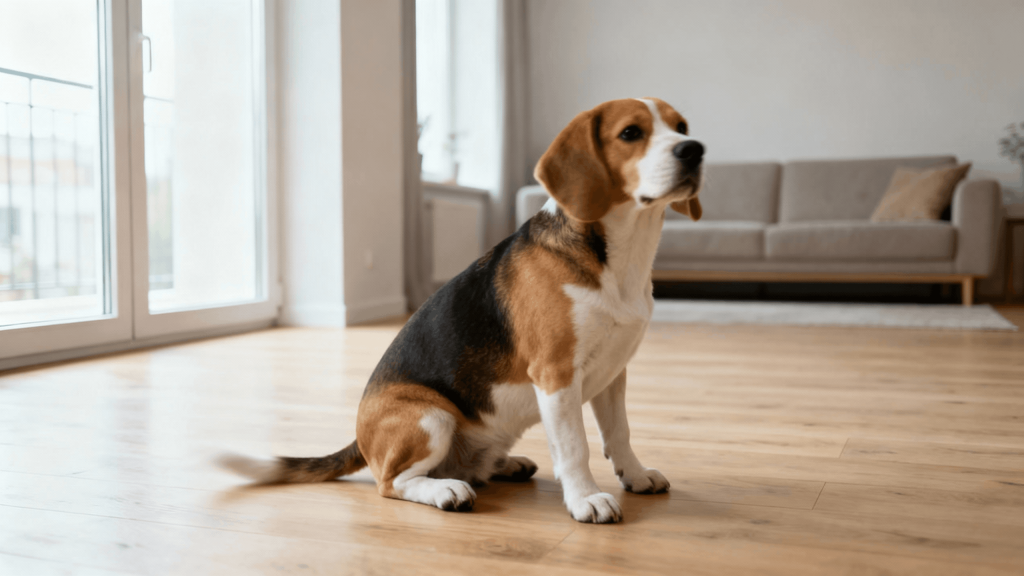
Scooting is a mechanical response. When a dog feels irritation, fullness, or itching around the anus, they may drag their bottom to relieve that sensation.
Owners describe this behavior in many ways, including:
- dog scooting butt on floor
- butt scooting in dogs
- dog scooting butt
- dog butt scooting
Regardless of how it is described, the underlying cause is usually the same: discomfort around the anal region.
If you are asking why is my dog scooting, it is important to understand the three most common contributors.
Anal gland problems in dogs
The most frequent cause of dog scooting on the floor is related to the anal sacs (often called anal glands).
Dogs have two small scent glands located on either side of the anus. These glands normally empty when a dog passes stool. If the glands do not empty properly, fluid builds up and creates pressure and irritation.
This is why anal gland problems in dogs are strongly associated with:
- dog scooting
- licking the rear
- sudden sitting and shifting
- tail chasing
Many owners asking why do dogs scoot on their bottoms are unknowingly observing early signs of anal sac discomfort.
Common contributors to poor gland emptying include:
- soft or poorly formed stools
- obesity and reduced muscle tone
- anatomical differences
- chronic inflammation of the surrounding tissue
If the glands remain full, dogs may repeatedly perform dog scooting butt on floor to relieve pressure.
Allergies and skin inflammation
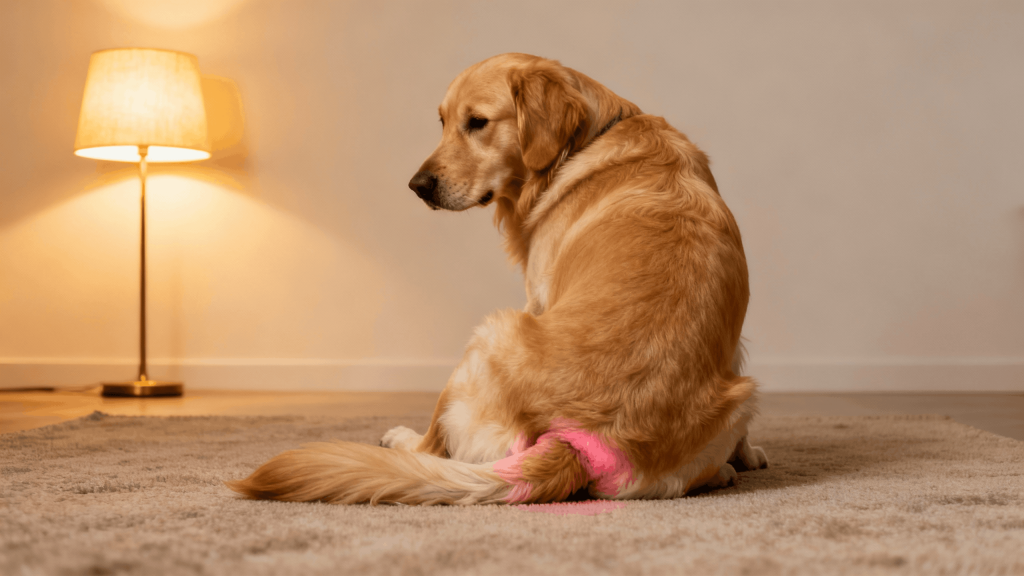
Another major but often overlooked cause of dog scooting on the floor is allergic skin disease.
Environmental allergens and food sensitivities can trigger inflammation around the anus and perineal skin. In these cases, scooting is driven by itch rather than pressure.
This is one reason many owners ask:
- why do dogs drag their bottom even when their glands were just expressed?
Allergic irritation may persist even when the glands are empty.
In dogs with allergies, you may also notice:
- chronic paw licking
- ear irritation
- red or inflamed skin around the anus
If you are repeatedly searching why do dogs scoot their butts, allergies should be considered alongside gland health.
Digestive causes and stool quality
Digestive function plays a surprisingly large role in dog scooting on the floor.
Firm, well-formed stools help apply natural pressure to the anal sacs, allowing them to empty during defecation. When stool is consistently soft, that pressure is reduced.
As a result, digestive imbalance can contribute directly to anal gland problems in dogs.
This is why some dogs develop:
- recurrent dog scooting
- dog scooting butt
- butt scooting in dogs
even when no infection or allergy is present.
Digestive sensitivity, inconsistent fiber intake, and microbiome imbalance may all contribute to stool quality and long-term gland function.
Why do dogs scoot on their butt repeatedly?

If you find yourself asking:
- why do dogs scoot on their butt?
- why do dogs scoot on their bottoms?
- why do dogs scoot?
the answer is often multifactorial.
In many dogs, scooting develops through a combination of:
- mild anal gland congestion
- low-grade skin inflammation
- digestive stool inconsistency
This layered pattern explains why dog scooting on the floor may continue even after one obvious issue appears to be resolved.
Why is my dog scooting her butt more suddenly?
Some owners specifically ask, why is my dog scooting her butt after no previous history. Sudden changes may be associated with:
- diet changes
- new treats
- seasonal environmental allergens
- recent diarrhea or soft stool episodes
Any factor that alters stool texture or skin barrier function can trigger a sudden onset of dog scooting.
Are there safe home remedies for dog scooting?

Searches for home remedies for dog scooting are very common. While home care cannot replace medical treatment, certain supportive steps may help reduce contributing factors when signs are mild.
Supportive strategies include:
- monitoring stool consistency closely
- ensuring adequate hydration
- avoiding sudden diet changes
- maintaining healthy body weight
- gently cleaning the external skin if mild irritation is present
However, repeated or severe scooting should never be treated with home methods alone—especially when discharge, swelling, or pain is present.
When dog scooting should be treated as a red flag
If you notice any of the following alongside dog scooting on the floor, veterinary assessment is strongly advised:
- repeated daily scooting
- foul odor or discharge
- swelling beside the anus
- bleeding
- pain when sitting
- lethargy or appetite changes
In these cases, anal gland problems in dogs such as impaction, infection, or abscess must be ruled out.
Frequently Asked Questions
Why is my dog scooting on the floor after pooping?
This is often related to incomplete anal gland emptying or irritation of the surrounding skin. Stool softness is a frequent contributor.
Why do dogs drag their bottom even when their glands were expressed?
Inflammation from allergies or skin irritation may still be present, causing continued itch and discomfort.
Is dog scooting always caused by anal glands?
No. While anal gland problems in dogs are common, allergies and digestive imbalance are also major causes of dog scooting.
Are home remedies for dog scooting safe?
Home care may support mild cases, but recurring dog scooting on the floor should always be evaluated by a veterinarian.
Conclusion
If you are wondering why is my dog scooting on the floor, the answer usually lies in three interconnected systems: anal gland function, skin and immune responses, and digestive health.
Understanding the true causes behind dog scooting, dog butt scooting, and butt scooting in dogs allows owners to move beyond short-term fixes and focus on long-term comfort.
By supporting stool quality, monitoring allergic triggers, and addressing early signs of anal gland problems in dogs, owners can significantly reduce recurring scooting and improve daily well-being.
References
- German, A. J., Hall, E. J., & Day, M. J. (2003). Chronic intestinal inflammation and intestinal disease in dogs. Journal of veterinary internal medicine, 17(1), 8-20.
- Griffin, C. E., & DeBoer, D. J. (2001). The ACVD task force on canine atopic dermatitis (XIV): clinical manifestations of canine atopic dermatitis. Veterinary immunology and immunopathology, 81(3-4), 255-269.
- Hvitman‐Graflund, K., Sparks, T., & Varjonen, K. (2023). A retrospective study of treatment, outcome, recurrence and concurrent diseases in 190 dogs with anal sacculitis. Veterinary Dermatology, 34(6), 576-585.
- Suchodolski, J. S. (2016). Diagnosis and interpretation of intestinal dysbiosis in dogs and cats. The Veterinary Journal, 215, 30-37.
- Kainz, C. (1999). Obstetric and gynaecological anaesthesia. Anesth Analg, 88, 1340-1345.