
How to Brush a Cat’s Teeth at Home: Simple Steps for Better Dental Health
Written by MyCern Research & Editorial Team
Dental disease is one of the most common yet overlooked health problems in cats. Studies show that the majority of adult cats develop some form of periodontal disease during their lifetime. Learning how to brush a cat’s teeth correctly is one of the most effective ways to reduce plaque buildup, protect gum health, and support long-term comfort.
Many owners assume cats will not tolerate brushing. In reality, most cats can learn gentle routines when the process respects their behavior and physiology. Effective cat dental care at home focuses on consistency, correct tools, and realistic expectations.
This article explores:
- why home brushing matters for feline health
- how to brush a cat’s teeth safely and calmly
- how often should you brush a cat’s teeth for real benefit
- common mistakes that reduce success
Why brushing matters for feline health
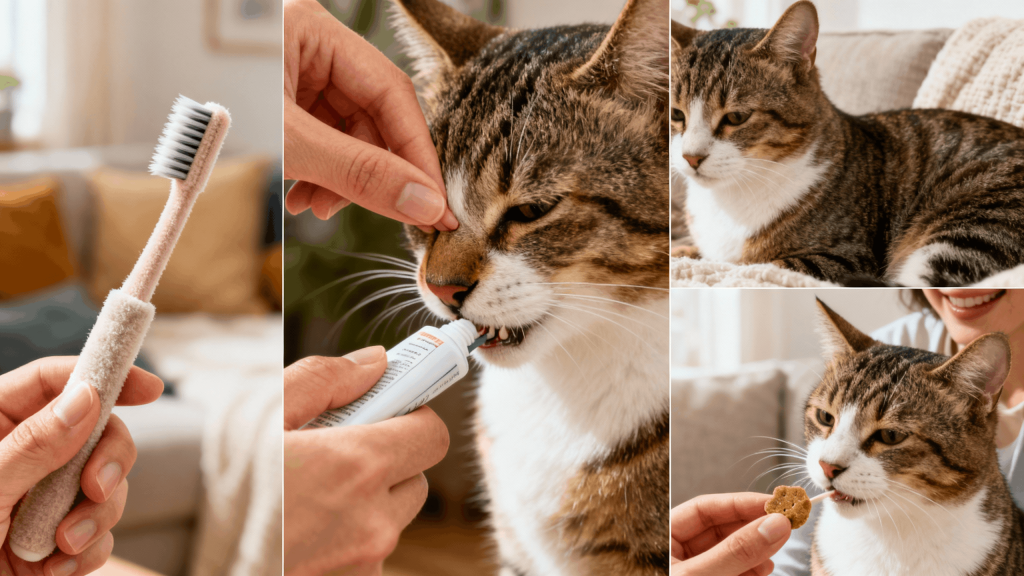
Plaque forms on a cat’s teeth within hours after eating. If not removed, plaque mineralizes into tartar and triggers inflammation of the gums. Over time, this process contributes to gingivitis, periodontal disease, and painful oral lesions.
Inflammation in the mouth is not only a local problem. Research shows that chronic oral inflammation can increase systemic inflammatory burden and may contribute to secondary organ stress. For this reason, proactive cat dental care at home plays an important role in whole-body wellness.
Understanding what makes brushing different for cats
Before learning how to brush a cat’s teeth, it is important to understand a few feline-specific factors:
- Cats have small, delicate gingival margins that are easily irritated
- Stress responses strongly influence cooperation
- Most plaque accumulates on the outer surfaces of the teeth, near the gumline
This means brushing must be gentle, brief, and focused on the visible tooth surfaces.
How to brush a cat’s teeth step-by-step
Step 1 – Choose proper tools
Use only a soft-bristled feline toothbrush or finger brush and veterinary-approved cat toothpaste. Human toothpaste should never be used because it contains ingredients that are harmful when swallowed.
Step 2 – Introduce touch before brushing
Gently lift your cat’s lip and touch the outer surface of a few teeth with your finger. Do this for several short sessions over a few days. This prepares your cat for the brushing motion and reduces defensive reactions.
Step 3 – Apply toothpaste to the brush
Place a small amount of toothpaste on the brush and allow your cat to smell or lick it. This creates a positive association and supports long-term cooperation.
Step 4 – Brush only the outer surfaces
When practicing how to brush a cat’s teeth, focus on the outer tooth surfaces where plaque accumulates most. Use small circular motions along the gumline.
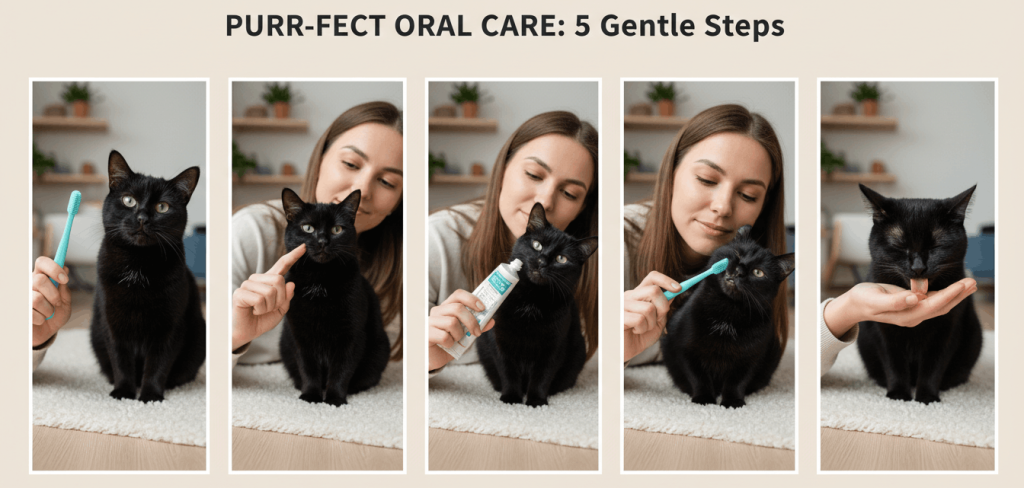
Do not attempt to open the mouth fully or brush the inner surfaces unless your cat is unusually tolerant.
Step 5 – Keep sessions short
Thirty to sixty seconds is sufficient for effective cat dental care at home. Calm praise and a gentle reward after brushing reinforce the routine.
How often should you brush a cat’s teeth?
One of the most common questions owners ask is how often should you brush a cat’s teeth.
From a clinical standpoint:
- Daily brushing provides the best plaque control
- Brushing at least three times per week still delivers meaningful benefit
Because plaque forms rapidly, brushing once every few weeks does not provide adequate preventive value.
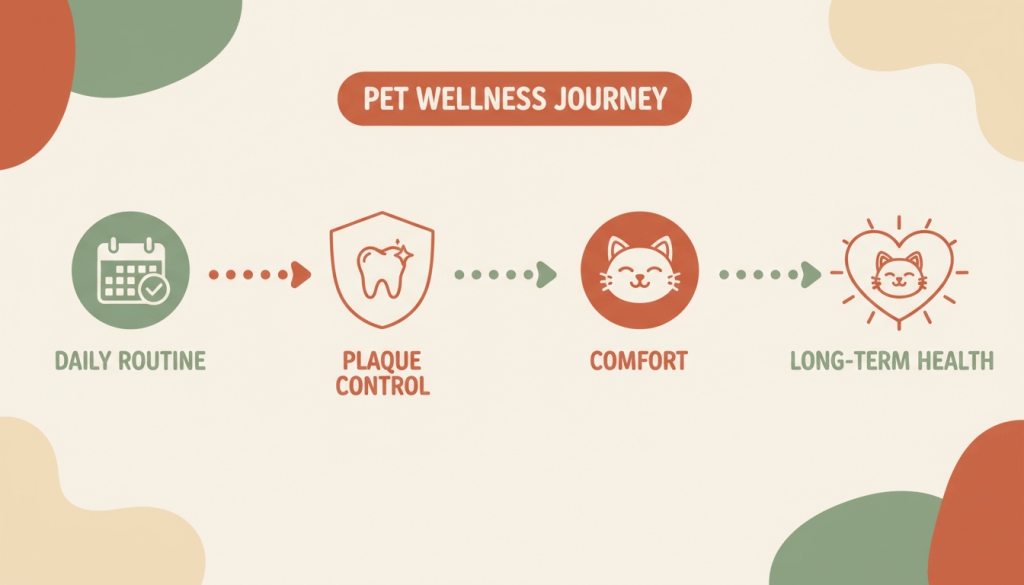
For most households, establishing a realistic routine is more important than perfection. Consistency remains the strongest predictor of success when learning how to brush a cat’s teeth.
Common mistakes that reduce effectiveness
Several well-intended habits can interfere with successful cat dental care at home:
- Using excessive pressure near the gumline
- Forcing the mouth open
- Prolonging sessions when the cat becomes stressed
- Skipping multiple weeks between brushing sessions
Stress during oral handling may cause long-term resistance, making future dental care more difficult.
When brushing is not enough
Home brushing supports plaque control but cannot treat advanced periodontal disease, resorptive lesions, or deep gingival pockets. Signs that require professional assessment include:
- persistent bad breath
- drooling
- pawing at the mouth
- reduced appetite
- visible redness or gum recession
In these situations, learning how to brush a cat’s teeth should complement not replace, professional dental care.
How MyCern supports oral wellness from within
MyCern’s science-based wellness approach recognizes that oral health is closely connected to immune regulation, tissue integrity, and inflammatory balance. While brushing addresses surface plaque, nutritional and cellular support may help maintain resilient oral tissues and healthier inflammatory responses as part of an integrated daily wellness strategy.
Frequently Asked Questions
Can I really brush my cat’s teeth at home?
Yes. With gradual training and gentle technique, most cats can accept brushing. Learning how to brush a cat’s teeth correctly focuses on short sessions and minimal restraint.
How often should you brush a cat’s teeth for real results?
Ideally, daily. At minimum, three times per week is recommended for effective plaque control. This frequency answers the question of how often should you brush a cat’s teeth for meaningful prevention.
What if my cat refuses brushing completely?
In such cases, alternative veterinary dental products and professional guidance can support cat dental care at home, but brushing remains the most effective mechanical plaque removal method.
Is dry food enough to clean a cat’s teeth?
No. Dry food does not reliably prevent plaque accumulation and should not replace brushing.

Conclusion
Learning how to brush a cat’s teeth is one of the most powerful preventive habits owners can build for lifelong comfort and oral health. Gentle technique, realistic expectations, and consistency form the foundation of successful cat dental care at home.
Understanding how often should you brush a cat’s teeth helps owners move from occasional attempts to meaningful daily prevention, protecting not only the mouth, but supporting long-term systemic wellness.
References
- Ingham, K. E., Gorrel, C., & Bierer, T. L. (2002). Effect of a dental chew on dental substrates and gingivitis in cats. Journal of Veterinary Dentistry, 19(4), 201-204.
- Reiter, A. M., Johnston, N., Anderson, J. G., Soltero‐Rivera, M. M., & Lobprise, H. B. (2019). Domestic feline oral and dental diseases. Wiggs’s Veterinary Dentistry: Principles and Practice, 439-461.
- Harvey, C. E., & Emily, P. P. (1993). Small Animal Dentistry. Mosby. Year book, St. Loius, 413.
- Niemiec, B. A. (2008). Periodontal disease. Topics in companion animal medicine, 23(2), 72-80.
- Gorrel, C. (2013). Veterinary dentistry for the general practitioner. Elsevier Health Sciences.