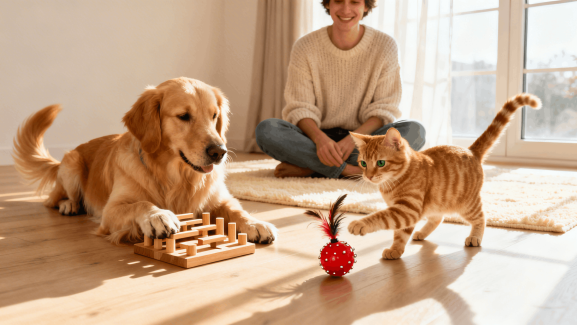
Choosing the Right Toy for Your Pet’s Age, Size, and Play Style
Written by MyCern Research & Editorial Team
Walking down the pet toy aisle can feel overwhelming. Plush squeakers, rope tugs, puzzle feeders, feather wands, and bouncing balls promise endless fun, but not every toy is right for every pet. Choosing an unsuitable toy can lead to boredom, frustration, destructive behavior, or even serious safety risks such as choking, dental damage, or intestinal blockage.
The key to selecting the right toy isn’t variety, it’s suitability. A toy should match your pet’s age, physical size, and natural play instincts. When toys align with these factors, playtime becomes safer, more enriching, and more beneficial for both physical and mental health.
This article explores how to choose toys based on:
- Your pet’s life stage
- Proper size and durability
- Individual play style
- Essential toy safety principles
Age-Appropriate Toy Selection
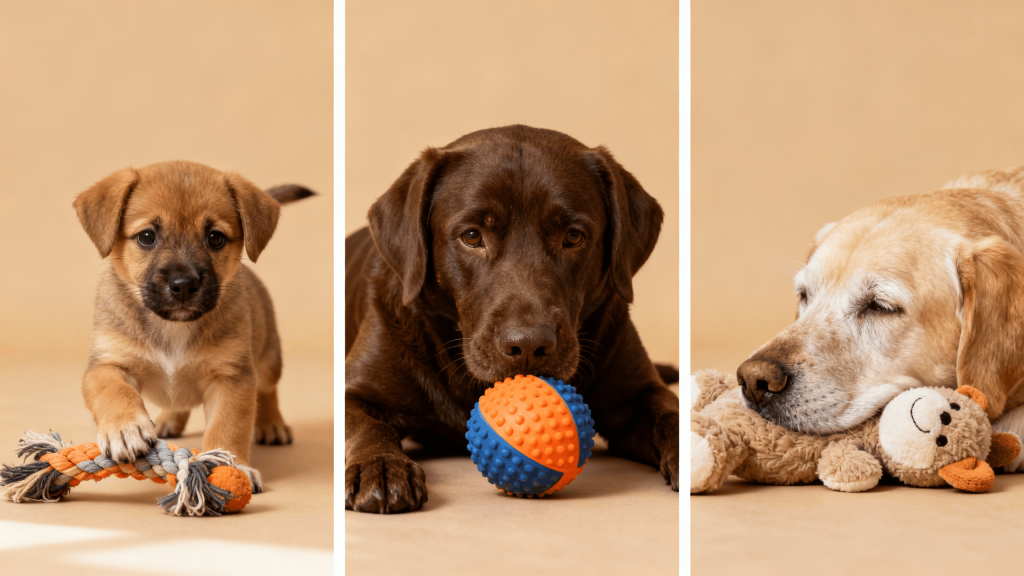
Puppies and Kittens (Birth–1 Year)
Young pets explore the world primarily through their mouths. During teething, their gums and developing teeth are sensitive, making toy choice especially important.
Best options include:
- Soft rubber teething toys
- Lightweight plush toys without buttons or plastic eyes
- Soft rope toys for gentle tugging
- Interactive wand toys for kittens
Avoid:
Hard nylon chews, antlers, toys with small detachable parts, or toys designed for adult “power chewers,” as these can damage developing teeth or pose choking risks.
Adult Pets (1–7 Years)
This is the most active life stage. Adult pets have full jaw strength, higher energy levels, and well-established play preferences.
Ideal choices include:
- Durable rubber toys (Kong-style)
- Rope toys for interactive tug
- Balls sized appropriately for breed
- Treat-dispensing and puzzle toys
- Interactive toys that encourage movement and problem-solving
Toy size should always match adult mouth size to prevent accidental swallowing.
Senior Pets (7+ Years)
Aging pets may experience dental sensitivity, arthritis, reduced stamina, and cognitive changes. Play remains important but should be gentler and more thoughtful.
Best options include:
- Softer rubber or fabric toys
- Low-impact puzzle feeders
- Comfort or companion toys
- Slow-moving balls or treat toys
Avoid:
Very hard chews, high-bounce toys, or toys requiring jumping or rapid movement.
Matching Toys to Your Pet’s Size
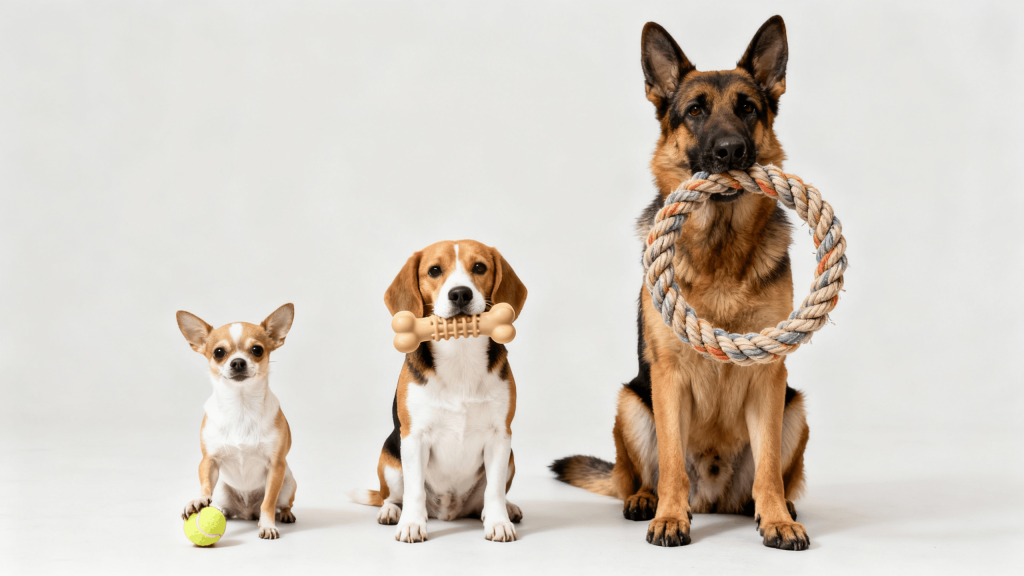
Toy size plays a major role in safety.
- Small pets: Lightweight toys that are easy to carry but too large to swallow
- Medium pets: Standard-sized toys that balance durability and manageability
- Large or giant breeds: Extra-large, reinforced toys designed for powerful jaws
Breeds such as Labrador Retrievers and Golden Retrievers are known for swallowing objects and often require larger toys than their mouth size alone would suggest.
Understanding Your Pet’s Play Style
Chewers
Prefer gnawing and destruction.
Best: Durable rubber or reinforced nylon chew toys
Avoid: Plush or thin rubber toys
Fetchers
Love chasing and retrieving.
Best: Durable balls, floating toys, soft flying discs
Avoid: Sticks or fragile toys
Tuggers
Enjoy interactive pulling games.
Best: Rope toys with handles, rubber tug toys
Avoid: Toys too short or likely to tear
Puzzle Solvers (Dogs & Cats)
Prefer mental challenges.
Best: Treat-dispensing toys, snuffle mats, puzzle feeders
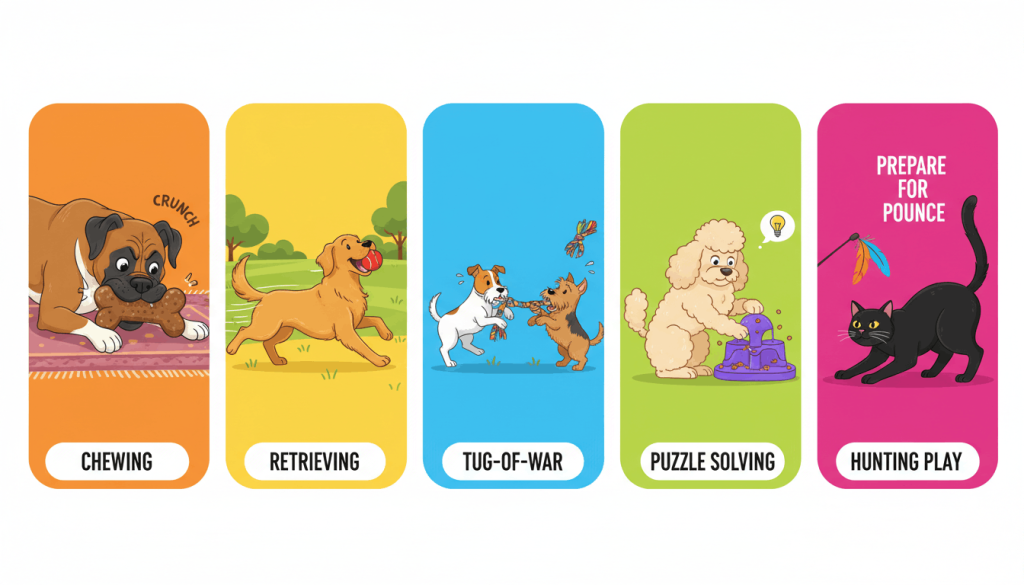
Hunters (Primarily Cats)
Mimic stalking and pouncing behavior.
Best: Feather wands, prey-shaped toys, motion-based toys
Avoid: Laser pointers as the sole play option
Gentle Players
Prefer comfort over destruction.
Best: Soft plush or fabric toys without hard components
Critical Toy Safety Guidelines
- Choose toys too large to swallow
- Avoid detachable parts, loose strings, or exposed squeakers
- Inspect toys regularly and discard damaged ones
- Supervise new toys, especially for aggressive chewers
- Select non-toxic, pet-safe materials only

Conclusion
Choosing the right toy isn’t about quantity, it’s about compatibility. When toys align with your pet’s age, size, and natural play instincts, they support physical health, mental stimulation, and emotional wellbeing. Observe how your pet plays, rotate toys to maintain interest, and always prioritize safety. Thoughtful toy selection strengthens not only enrichment, but the bond you share through play.
References
- Ellis, S. L. H. (2009). Environmental enrichment: Practical strategies for improving feline welfare. Journal of Feline Medicine and Surgery, 11(11), 901–912.
- Herron, M. E., & Buffington, C. A. T. (2010). Environmental enrichment for indoor cats. Compendium: Continuing Education for Veterinarians, 32(9).
- Horwitz, D. F., & Neilson, J. C. (2007). Canine and Feline Behavior. Blackwell Publishing.
- Landsberg, G., Hunthausen, W., & Ackerman, L. (2013). Behavior Problems of the Dog and Cat. Saunders Elsevier.
- Wells, D. L. (2004). The influence of toys on the behaviour and welfare of kennelled dogs. Animal Welfare, 13(3), 367–373.