Interactive Pet Toys Explained: How Mental Stimulation Prevents Boredom and Behavioral Issues
Written by MyCern Research & Editorial Team
Physical exercise is only one piece of a pet’s wellness puzzle. Dogs and cats are cognitively complex animals designed to problem-solve, hunt, explore, and adapt to changing environments. When their mental needs are unmet, boredom can quietly develop often showing up later as behavioral issues that are misunderstood as “bad behavior.” This is where interactive pet toys play an important role.
Unlike passive toys, interactive toys are designed to engage a pet’s brain. They challenge thinking, encourage problem-solving, and provide purposeful activity. When used correctly, they support emotional balance, reduce stress-driven behaviors, and contribute to overall wellbeing.
This article explores:
- What interactive pet toys are and how they work
- Why mental stimulation toys for pets are essential not optional
- How boredom develops and affects behavior
- How interactive toys support boredom prevention for pets
What Are Interactive Pet Toys?

Interactive pet toys are designed to require active participation rather than simple chewing or carrying. These toys respond to a pet’s actions, offer challenges, or provide rewards through problem-solving.
Common categories include:
- Treat-dispensing and puzzle toys
- Toys that move unpredictably
- Scent-based enrichment toys
- Toys that require manipulation (sliding, lifting, rolling)
The defining feature is mental engagement. The pet must think, explore, and adapt in order to interact successfully with the toy.
Why Mental Stimulation Matters for Pets
In natural settings, animals spend a large portion of their day engaging their brains—searching for food, assessing environments, and responding to sensory cues. Indoor lifestyles, while safe, often remove these opportunities.
Without adequate mental stimulation, pets may experience:
- Chronic boredom
- Frustration or restlessness
- Excessive vocalization
- Destructive chewing or scratching
- Attention-seeking behaviors
Mental stimulation toys for pets help recreate cognitive challenges that align with instinctual behaviors, supporting emotional regulation and healthy outlets for energy.
How Boredom Develops in Dogs and Cats

Boredom is not simply “having nothing to do.” It occurs when a pet’s environment lacks novelty, challenge, or meaningful engagement.
Contributing factors include:
- Repetitive daily routines
- Limited environmental variety
- Long periods of inactivity
- Toys that never change or evolve
Over time, boredom can become a stressor. Pets may attempt to self-soothe or release pent-up energy through behaviors that owners perceive as problematic.
Interactive Pet Toys and Behavioral Health
Behavior is closely linked to mental state. When cognitive needs are unmet, behaviors often reflect internal imbalance rather than disobedience.
Interactive pet toys support behavioral health by:
- Providing an outlet for problem-solving instincts
- Reducing excess nervous energy
- Encouraging independent engagement
- Supporting confidence through successful challenges
For anxious or high-energy pets, structured mental engagement can be just as calming as physical exercise sometimes more so.
Types of Interactive Toys and Their Cognitive Benefits
Puzzle and Treat-Dispensing Toys
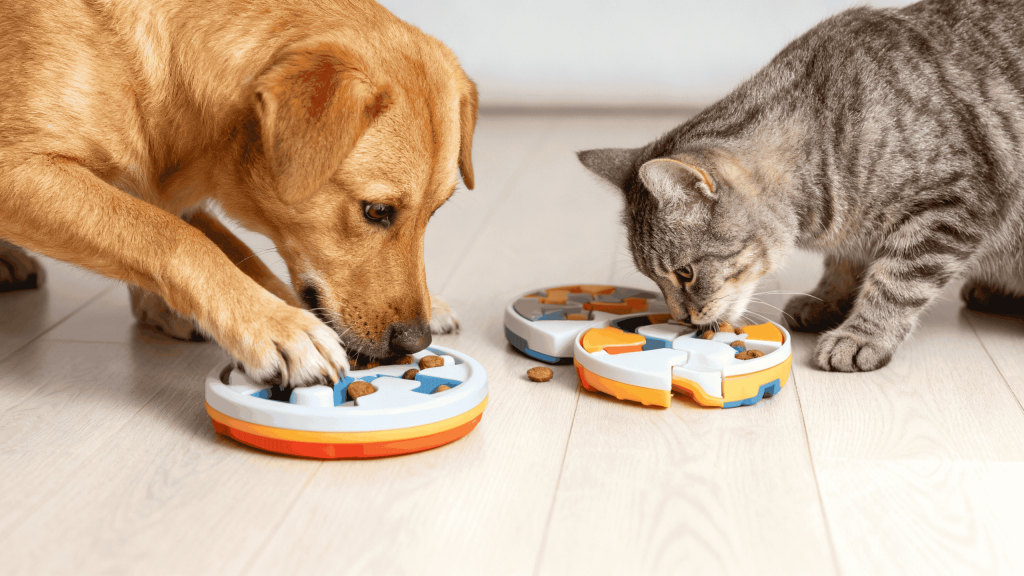
These toys require pets to manipulate components to access food or treats.
They support:
- Focus and persistence
- Slower eating habits
- Food motivation without overfeeding
Puzzle toys are particularly helpful for pets prone to boredom-related behaviors during alone time.
Movement-Based Interactive Toys
These toys roll, spin, or move unpredictably, encouraging tracking and engagement.
They support:
- Predatory sequencing (especially in cats)
- Reaction timing
- Visual focus
Unpredictable movement keeps the brain engaged longer than static toys.
Scent-Based Enrichment Toys
Dogs, in particular, process the world through scent. Toys that encourage sniffing and searching activate powerful neural pathways.
They support:
- Stress reduction
- Natural foraging behaviors
- Cognitive fatigue (which promotes calmness)
Scent work is one of the most effective tools for boredom prevention for pets.
Manipulation and Strategy Toys
These toys involve sliding panels, lifting lids, or rotating compartments.
They support:
- Problem-solving skills
- Memory and pattern recognition
- Confidence through trial-and-error learning
These toys are especially valuable for intelligent breeds and curious personalities.
Interactive Toys for Different Life Stages
- Puppies and kittens: Simple puzzles that build confidence without frustration
- Adult pets: More complex toys with variable challenges
- Senior pets: Low-impact interactive toys that stimulate the brain without physical strain
Mental engagement remains important throughout life, even as physical ability changes.
Avoiding Overstimulation and Frustration
While interactive toys are beneficial, balance matters. Toys that are too difficult or introduced without guidance may cause frustration.
Helpful guidelines:
- Start simple and increase difficulty gradually
- Rotate toys to maintain novelty
- Allow pets to “win” and succeed
- Observe engagement levels and adjust accordingly
Mental stimulation should feel rewarding, not stressful.
Integrating Interactive Toys into Daily Life
Interactive pet toys work best when they are part of a broader enrichment strategy, including:
- Predictable routines
- Physical activity appropriate to the pet
- Social interaction
- Rest and recovery time
Short, purposeful sessions often provide more benefit than constant access.

Conclusion
Interactive pet toys are more than entertainment they are tools for cognitive health, emotional balance, and behavioral support. By providing structured mental stimulation toys for pets, owners help meet instinctual needs that modern lifestyles often overlook.
When used thoughtfully, interactive toys support boredom prevention for pets, reduce stress-driven behaviors, and contribute to a calmer, more fulfilled companion. Mental engagement isn’t optional enrichment, it’s a foundational part of whole-pet wellness.
References
- Ellis, S. L. H. (2009). Environmental enrichment: Practical strategies for improving feline welfare. Journal of Feline Medicine and Surgery, 11(11), 901–912.
- Herron, M. E., et al. (2014). Environmental enrichment for indoor cats. Journal of Veterinary Behavior, 9(4), 189–195.
- Wells, D. L. (2004). The influence of toys on the behaviour and welfare of kennelled dogs. Animal Welfare, 13(3), 367–373.
- Young, R. J. (2013). Environmental enrichment for captive animals. Wiley-Blackwell.