How Much Exercise Does a Dog Need? The Complete Guide for Every Life Stage
Written by MyCern Research & Editorial Team
Every dog needs movement to stay healthy. But how much exercise does a dog need actually depends on age, body structure, breed group, and even mental stimulation, not just long walks.
Many well meaning pet parents unintentionally under exercise their dogs, while others unknowingly push puppies and young dogs too hard. Both can lead to behavior problems, poor conditioning, or joint strain later in life.
This article explores
- how daily dog exercise needs by breed chart thinking helps you plan safer routines
- a simple, vet aligned how much exercise does a puppy need chart you can follow at home
- why age and growth stage matter for joints and long term mobility
- early signs of over exercising a dog every owner should recognize
- how mental exercise for dogs at home and indoor dog exercise for rainy days can replace long walks when needed
Average Daily Exercise Requirements by Breed Group (Herding vs Toy)
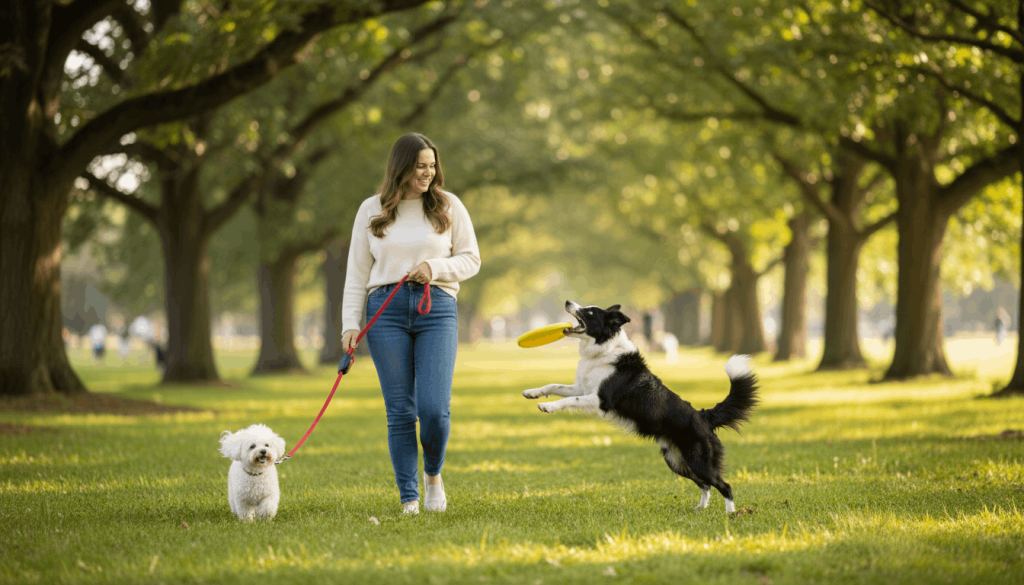
When people ask how much exercise does a dog need, breed group gives the first useful clue.
According to guidance commonly shared by organizations such as the American Kennel Club, dogs were originally bred for very different physical workloads.
A simple comparison helps:
Herding and working groups (Border Collie, Australian Shepherd, German Shepherd type dogs)
- Higher stamina and stronger need for structured activity
- Typically 60 to 120 minutes of combined physical and mental exercise per day
- Best suited to scent games, training sessions, fetch, agility style play
Toy and companion groups (Maltese, Pug, Shih Tzu type dogs)
- Shorter bursts of activity
- Usually 20 to 45 minutes of gentle walks and indoor play
- Benefit greatly from puzzle games and short training sessions
Using a dog exercise needs by breed chart mindset helps prevent two common mistakes: expecting a low energy dog to perform like a working breed, and failing to meet the stimulation needs of high drive dogs.
How much exercise does a puppy need chart
This section follows the most widely recommended developmental approach often called the “5 minute rule”.
It helps protect growing joints, growth plates, and soft tissues.
How much exercise does a puppy need chart
| Puppy age | Structured exercise per session | Sessions per day |
|---|---|---|
| 3 months | 15 minutes | 2 times |
| 4 months | 20 minutes | 2 times |
| 5 months | 25 minutes | 2 times |
| 6 months | 30 minutes | 2 times |
| 7 to 9 months | 35 to 45 minutes | 2 times |
| 10 to 12 months | 45 to 60 minutes | 1 to 2 times |
This chart refers to controlled activity such as walking, light training, and gentle play.
It does not include free movement around the house or yard.
The key idea behind this how much exercise does a puppy need chart is simple
too much forced exercise before skeletal maturity can increase the risk of joint and mobility problems later in life.
Is my puppy getting enough exercise?
A well exercised puppy usually shows
- relaxed body posture after play
- quick settling for naps
- healthy curiosity without constant frantic behavior
An under exercised puppy may show
- chewing and destructive behavior
- excessive barking or attention seeking
- restlessness even after meals
This is where many owners begin looking for mental exercise for dogs at home, which is just as important as physical movement.
Age matters: Adjusting routines for senior dogs

As dogs age, endurance and recovery change.
Senior dogs still need movement to support circulation, muscle tone, and joint health, but intensity must be reduced.
Good senior routines include
- shorter walks split into two sessions
- gentle nose work and slow paced training
- soft surface play indoors
International veterinary wellness guidelines such as those supported by the World Small Animal Veterinary Association emphasize consistent low impact activity to preserve mobility and quality of life.
For older dogs, the goal shifts from distance to consistency and comfort.
Signs of over exercising a dog
This is one of the most overlooked parts of exercise planning.
Common signs of over exercising a dog include
- persistent limping or stiffness after rest
- reluctance to walk the next day
- excessive panting long after activity ends
- irritability or sudden withdrawal
- repeated lying down during walks
In puppies and adolescent dogs, watch carefully for
- slowed movement later in the day
- soreness when standing up
- unusual changes in gait
These signs are early warnings that joints, tendons, or muscles may be under excessive load.
The brain drain: Why mental exercise matters
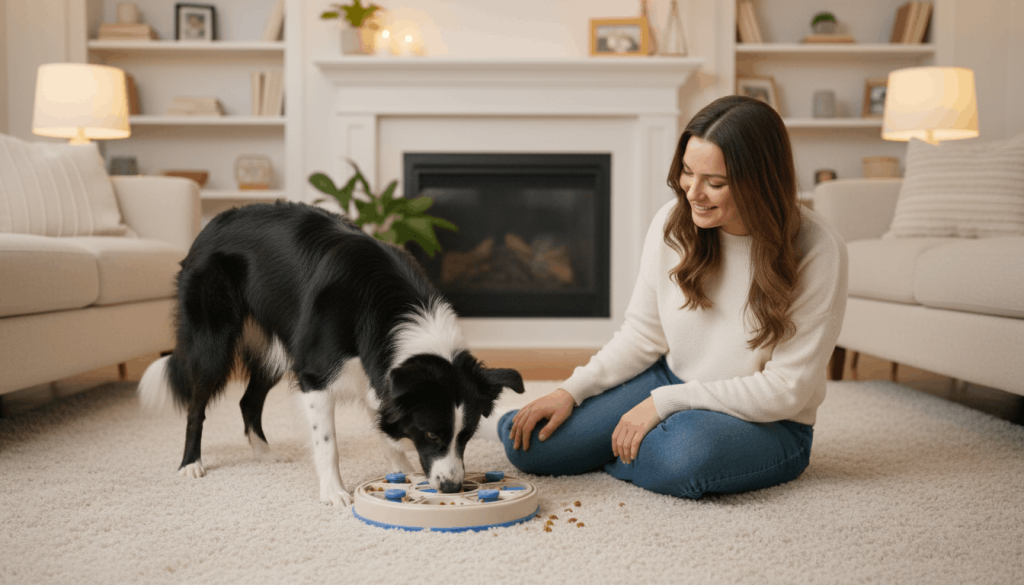
Physical walking alone does not fully meet canine needs.
Research in canine behavior consistently shows that mental challenges significantly improve behavior and reduce frustration related problems.
Adding mental exercise for dogs at home is one of the safest ways to increase daily stimulation without stressing the body.
Examples include
- scent games using hidden treats
- food puzzle toys
- short training sessions focused on new cues
- object discrimination games
For dogs living in apartments or limited outdoor environments, mental work often becomes the main source of enrichment.
How to tire out a high energy dog safely
Many owners search for how to tire out a high energy dog and assume the answer is longer and longer runs.
In reality, short structured activities work better.
Highly effective options include
- “sniffari” walks where the dog is allowed to follow scent trails
- short bursts of tug and retrieve followed by calm training
- obstacle style games using household furniture
- shaping games using positive reinforcement
Combining scent based activities with training is often more effective than adding extra miles.
Indoor dog exercise for rainy days

Bad weather does not have to cancel activity.
Practical indoor dog exercise for rainy days ideas include
- hallway fetch using soft toys
- hide and seek with family members
- scatter feeding across different rooms
- slow balance exercises on cushions for body awareness
These routines protect joints while maintaining daily activity levels.
Practical lifestyle tips for building healthy exercise routines
- Match activity to your dog’s age and breed group rather than social media trends
- Use the how much exercise does a puppy need chart during the first year and adjust gradually
- Mix walking, play, and mental exercise for dogs at home every week
- Rotate activities to avoid repetitive joint stress
- Monitor rest and recovery as closely as activity itself

Conclusion
Understanding how much exercise does a dog need starts with recognizing that dogs are individuals shaped by breed group, age, and daily environment. A simple puppy schedule guided by a clear how much exercise does a puppy need chart, realistic planning using a dog exercise needs by breed chart, awareness of early signs of over exercising a dog, and consistent use of mental exercise for dogs at home create safer and more effective routines for every life stage. With thoughtful movement, indoor alternatives for bad weather, and supportive nutrition such as MyCern Bee Bread Powder, daily activity becomes a long term investment in comfort, mobility, and emotional wellbeing.
References
- Newton, P. M., Mow, V. C., Gardner, T. R., Buckwalter, J. A., & Albright, J. P. (1997). The effect of lifelong exercise on canine articular cartilage. The American journal of sports medicine, 25(3), 282-287.
- Johnson, M. D., Gillick, M. S., & Fox, S. M. (2022). Musculoskeletal disorders and injuries. In Clinical Medicine of the Dog and Cat (pp. 603-646). CRC Press.
- Howell, T. J., King, T., & Bennett, P. C. (2015). Puppy parties and beyond: the role of early age socialization practices on adult dog behavior. Veterinary Medicine: Research and Reports, 143-153.
- Herron, M. E., Kirby-Madden, T. M., & Lord, L. K. (2014). Effects of environmental enrichment on the behavior of shelter dogs. Journal of the American Veterinary Medical Association, 244(6), 687-692.
- Marcellin-Little, D. J., Levine, D., & Taylor, R. (2005). Rehabilitation and conditioning of sporting dogs. Veterinary Clinics: Small Animal Practice, 35(6), 1427-1439.