Cat Anxiety Relief Explained: Gentle Ways to Calm an Anxious Cat Naturally
Written by MyCern Research & Editorial Team
Cats are often seen as independent and self-sufficient, but beneath that calm exterior many cats are highly sensitive to changes in their environment. Anxiety in cats is more common than many pet parents realize and can show up in subtle ways hiding, excessive grooming, vocalization, appetite changes, or litter box avoidance. Understanding cat anxiety relief begins with recognizing that anxiety is not misbehavior, but a stress response rooted in biology and instinct.
Rather than focusing on quick fixes, supporting an anxious cat naturally involves identifying triggers, creating predictability, and gently supporting the nervous system. When approached thoughtfully, natural strategies can help cats feel safer, calmer, and more in control of their surroundings.
This article explores:
- Common causes and signs of anxiety in cats
- How stress affects the feline nervous system
- Gentle, natural ways to calm an anxious cat
- Why consistency and environment matter as much as supplements
Understanding Cat Anxiety: What’s Really Happening
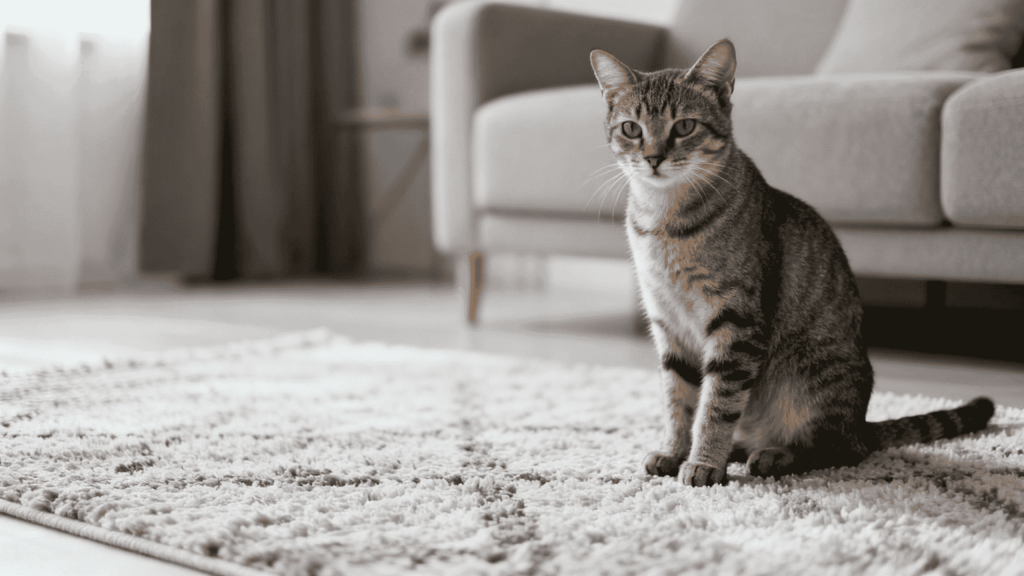
Cats are territorial animals that rely heavily on routine and familiarity. When their sense of control or safety is disrupted, the nervous system can shift into a heightened state of alert. This stress response is driven by hormones like cortisol and adrenaline, which are helpful in short bursts but harmful when elevated long term.
Common anxiety triggers include:
- Changes in routine or household schedule
- New pets, people, or smells
- Loud noises (construction, storms, fireworks)
- Moving homes or rearranging furniture
- Lack of stimulation or environmental enrichment
Because cats often internalize stress, anxiety may go unnoticed until behaviors become disruptive or health concerns emerge.
Signs Your Cat May Be Anxious
Anxiety doesn’t always look dramatic. Many cats show stress through quiet or indirect behaviors.
Common signs include:
- Hiding more than usual
- Over-grooming or hair loss
- Reduced appetite or picky eating
- Increased vocalization, especially at night
- Aggression or withdrawal
- Inappropriate urination or defecation
Recognizing these signs early allows for more effective, gentle intervention.
Why Natural Cat Anxiety Relief Starts With Environment
Before considering products or interventions, the foundation of calming an anxious cat lies in the environment. Cats thrive on predictability and control over their space.
Key environmental supports include:
- Consistent routines for feeding, play, and rest
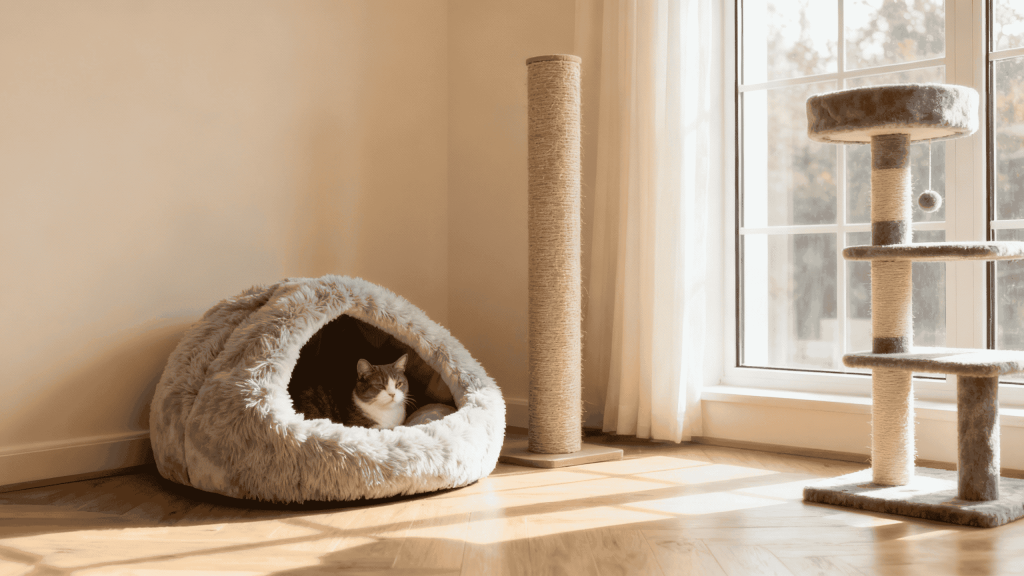
- Safe hiding spaces such as covered beds or quiet corners
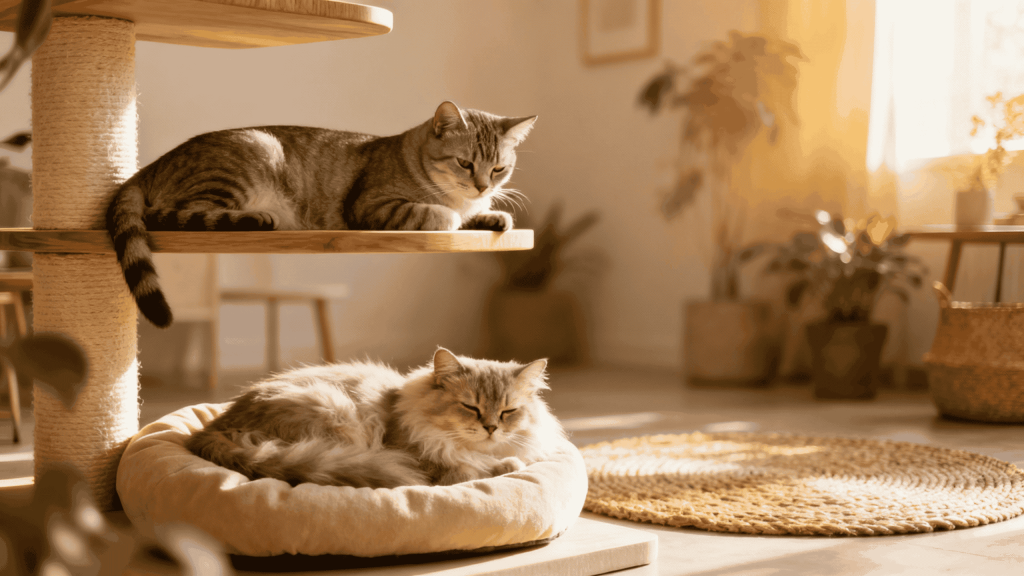
- Vertical territory (cat trees, shelves) to increase confidence
- Separate resources in multi-cat households (litter boxes, bowls)
Even small changes—like feeding at the same time daily or reducing noise—can significantly reduce baseline stress.
Gentle Ways to Calm an Anxious Cat Naturally
Natural anxiety relief focuses on supporting the nervous system rather than suppressing behavior.
1. Predictable Play and Mental Stimulation
Interactive play mimics hunting behavior and helps regulate stress hormones. Short, daily play sessions using wand toys or moving objects allow cats to release nervous energy in a healthy way.
Benefits include:
- Improved mood regulation
- Reduced restlessness and nighttime anxiety
- Increased confidence and engagement
Ending play with a meal can further reinforce a calm, satisfied state.
2. Sensory Support and Safe Scents
Cats are highly sensitive to scent. Familiar, calming smells can help signal safety.
Natural approaches include:
- Maintaining familiar bedding during transitions
- Avoiding strong household fragrances
- Using calming pheromone-based environmental supports
Scent consistency helps anxious cats feel grounded in their territory.
3. Nutritional and Holistic Support
Nutrition plays a subtle but important role in stress resilience. Certain nutrients are involved in neurotransmitter balance and nervous system health.
Holistic calming aids may support:
- Relaxation without sedation
- Healthy stress response pathways
- Emotional balance during changes
These tools are best viewed as supportive—not as standalone solutions—when used alongside environmental and behavioral strategies.
4. Routine and Sleep Regulation
Sleep disruption can worsen anxiety, creating a cycle of stress and restlessness. Cats benefit from predictable day-night rhythms.
Support healthy rest by:
- Scheduling play during daylight or early evening
- Keeping nighttime environments quiet and dim
- Avoiding sudden late-night interactions that stimulate alertness
Restorative sleep supports emotional regulation and overall well-being.
Multi-Cat Homes and Anxiety Dynamics
In homes with multiple cats, anxiety often stems from resource competition or unclear social boundaries. Even cats that coexist peacefully may experience low-grade stress.
Helpful strategies include:
- One litter box per cat, plus one extra
- Multiple feeding stations
- Vertical escape routes and private resting spots
Reducing competition helps each cat feel secure and reduces chronic anxiety.
When Natural Support Is Most Effective
Natural cat anxiety relief works best when:
- Anxiety triggers are identified and reduced
- Support is consistent over time
- Expectations focus on gradual improvement, not instant change
For severe or sudden behavioral changes, veterinary evaluation is important to rule out medical causes that may mimic anxiety.
Conclusion
Cat anxiety relief is not about forcing calm, it’s about creating conditions where calm can naturally return. By understanding stress triggers, supporting the nervous system, and providing a predictable, enriching environment, it’s possible to gently calm an anxious cat without overwhelming interventions.
Natural strategies work best when combined thoughtfully, respecting each cat’s unique personality and needs. With patience, consistency, and informed support, anxious cats can regain confidence and emotional balance leading to a healthier, more harmonious life at home.

References
- Ellis, S. L. H. (2009). Environmental enrichment: Practical strategies for improving feline welfare. Journal of Feline Medicine and Surgery, 11(11), 901–912.
- Stella, J. L., et al. (2013). Effects of stressors on the behavior and physiology of domestic cats. Journal of Feline Medicine and Surgery, 15(9), 807–814.
- Overall, K. L. (2013). Manual of Clinical Behavioral Medicine for Dogs and Cats. Elsevier.
- Hirsch, E. N. (2016). Feline stress. Acta Universitatis Agriculturae Sueciae, (2016: 91).