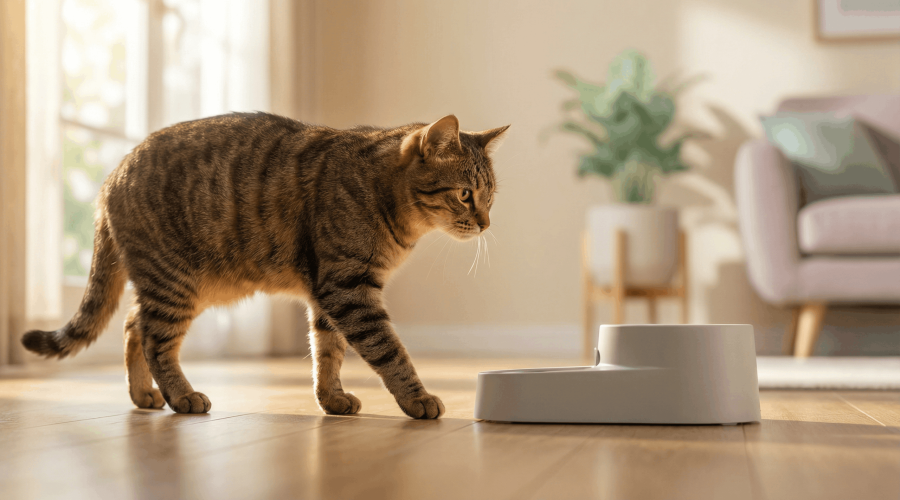
Cat Feeding Tips: How the Right Bowl and Setup Improve Health and Comfort
Written by MyCern Research & Editorial Team
Feeding a cat is not only about what goes into the bowl, but also how, where, and from what they eat. Bowl design, placement, and feeding setup can significantly influence digestion, posture, stress levels, and overall comfort. Small environmental adjustments during mealtime can support healthier eating behaviors and improve long-term wellbeing in cats.
This article explores:
- How feeding setup influences feline health and behavior
- The impact of bowl shape, material, and height
- Common feeding-related discomforts in cats
- Practical tips for creating a stress-free feeding environment
- Simple changes that support digestion and comfort
Why Feeding Setup Matters for Cats
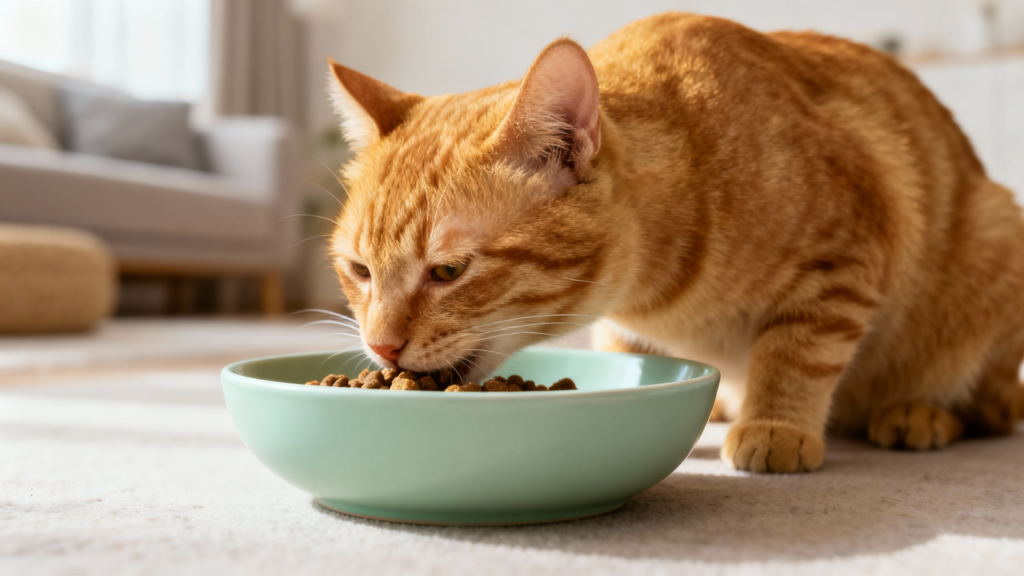
Cats are highly sensitive to their environment, and feeding is a vulnerable activity. An uncomfortable or stressful setup may lead to:
- Reduced appetite or picky eating
- Digestive discomfort or regurgitation
- Increased stress or food avoidance
- Musculoskeletal strain during eating
Feeding posture and environment directly affect how comfortably a cat can eat and digest food.
Quick Tip Box – Signs of an Uncomfortable Feeding Setup:
- Leaving food uneaten despite normal appetite
- Dropping food outside the bowl
- Eating very quickly or hesitantly
- Signs of stress such as tail flicking or tense posture
Bowl Shape, Size, and Material
Bowl Shape
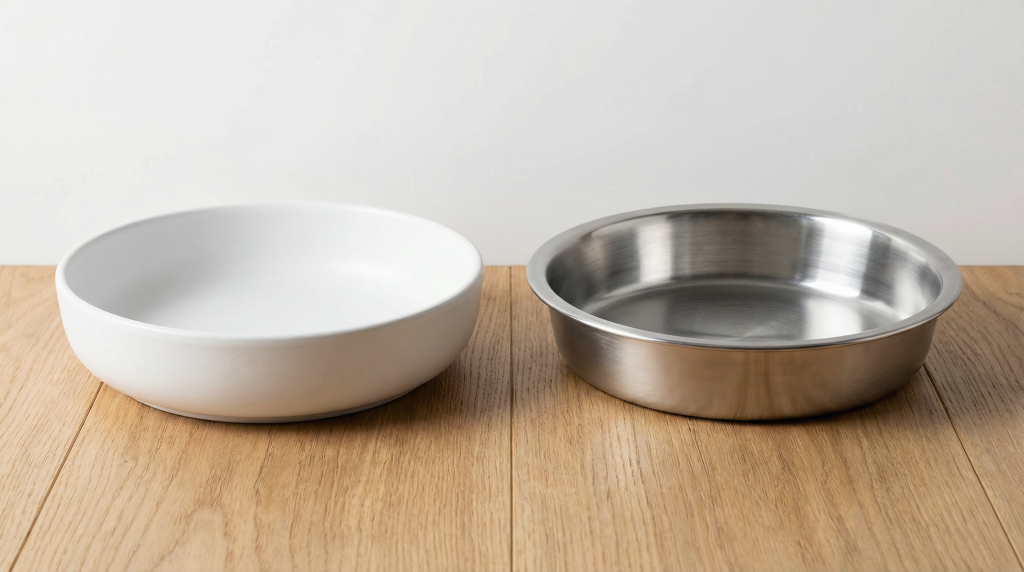
- Shallow, wide bowls reduce whisker fatigue, a sensory overload caused by repeated whisker contact
- Deep or narrow bowls may discourage eating or cause stress
Bowl Size
- Bowls should comfortably hold a full meal without crowding
- Overfilled bowls can lead to messy eating and frustration
Bowl Material
- Ceramic or stainless steel: Non-porous and easy to clean
- Plastic: May retain odors and harbor bacteria, potentially causing aversion
Quick Tip Box – Bowl Selection Essentials:
- Choose wide, shallow bowls
- Avoid strong smells or residues
- Clean bowls daily to reduce bacterial buildup
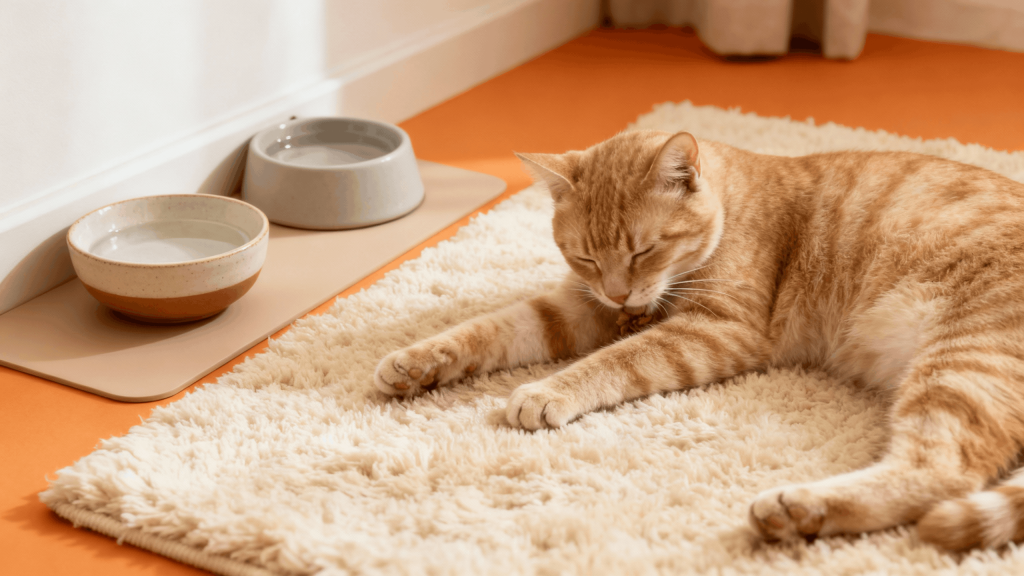
- Use separate bowls for food and water
Feeding Height and Posture
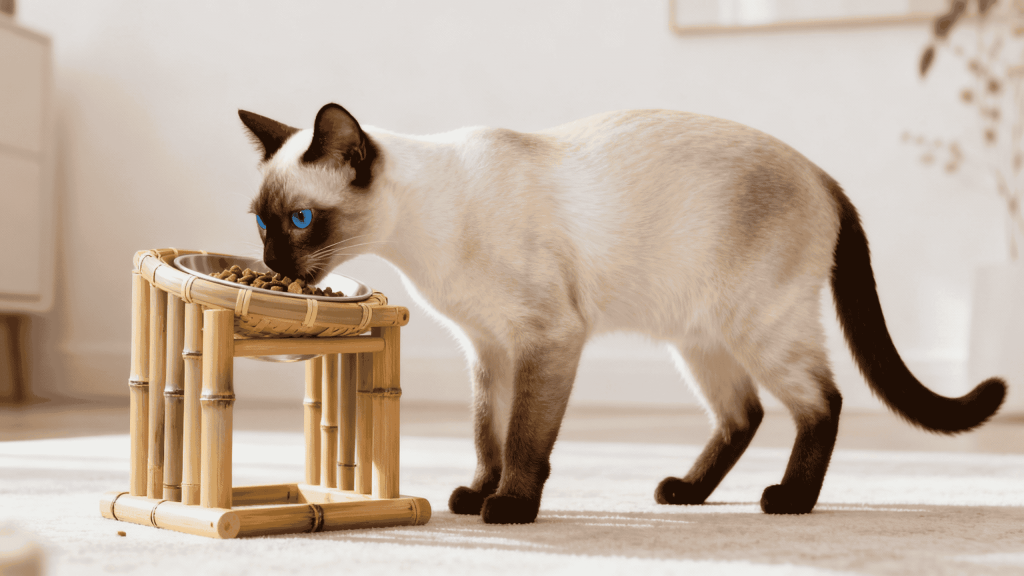
Eating posture affects comfort, digestion, and joint strain:
- Bowls placed too low may strain the neck and joints
- Slight elevation can promote more natural swallowing and reduce regurgitation
- Senior cats or those with arthritis often benefit from raised bowls
Quick Tip Box – Posture-Friendly Feeding:
- Bowl height should allow the neck to stay neutral
- Observe posture during eating—no hunching or stretching
- Adjust height gradually and monitor comfort
Feeding Environment and Placement
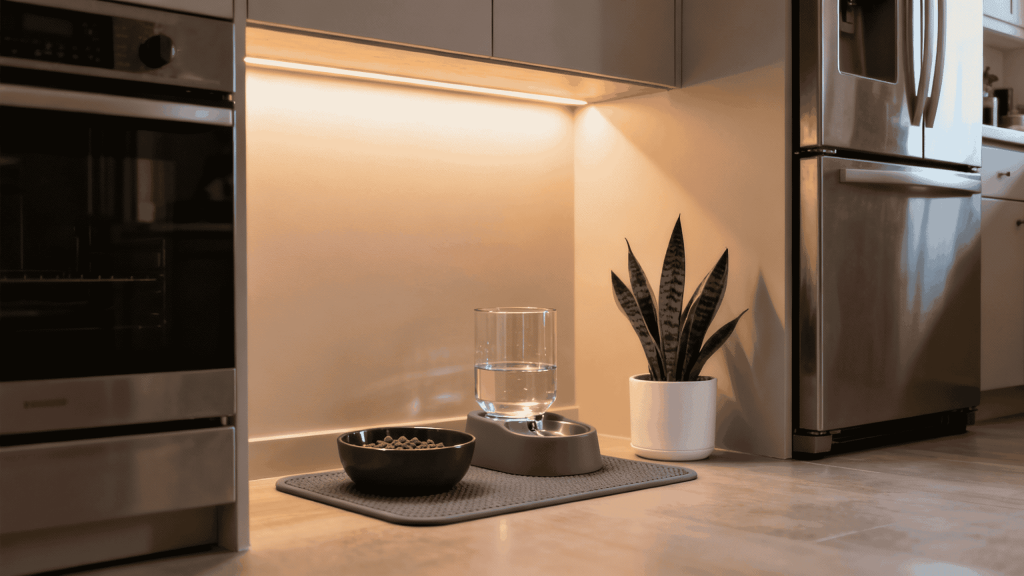
A calm, predictable environment supports relaxed eating:
- Place bowls in quiet, low-traffic areas
- Avoid feeding near litter boxes or noisy appliances
- Maintain consistent feeding locations and schedules
- In multi-cat households, provide separate feeding stations
Stress during feeding can negatively affect digestion and appetite.
Quick Tip Box – Creating a Calm Feeding Zone:
- Choose quiet corners away from distractions
- Use non-slip mats to prevent bowl movement
- Ensure each cat has personal space during meals
- Keep feeding routines predictable
Feeding Setup and Digestive Health
Environmental comfort plays a role in digestion:
- Reduced stress supports healthy gut motility
- Comfortable posture aids swallowing and stomach emptying
- Calm feeding routines may reduce vomiting or hairball frequency
- Consistent setups support appetite regulation
References
- Rochlitz, I. (2005). A review of the housing requirements of domestic cats. Applied Animal Behaviour Science, 93(1–2), 97–109.
- Ellis, S. L. H., et al. (2013). The importance of predictability and control in cat welfare. Journal of Feline Medicine and Surgery, 15(3), 219–226.
- Overall, K. L. (2013). Manual of Clinical Behavioral Medicine for Dogs and Cats. Elsevier.
- Case, L. P., et al. (2011). Canine and Feline Nutrition. Elsevier.
Conclusion
A thoughtful feeding setup supports more than convenience, it influences comfort, digestion, and emotional wellbeing in cats. By selecting appropriate bowls, optimizing feeding posture, and creating calm, consistent environments, cat owners can improve mealtime comfort and support long-term health. Small adjustments in daily routines often yield meaningful benefits for feline wellbeing.