Cat Puzzle Feeder DIY Guide: How to Make a DIY Puzzle Feeder for Cats Using Safe Household Items
Written by MyCern Research & Editorial Team
Although many indoor cats spend most of their day eating from a bowl that requires no effort, cats are natural problem solvers. One of the easiest ways to enrich daily routines and encourage instinctive hunting behavior is through a cat puzzle feeder DIY project. A thoughtfully designed DIY puzzle feeder for cats can increase activity, reduce boredom, and promote healthier feeding habits.
This guide explains how to create a safe homemade feeder, how to introduce it correctly, and why puzzle feeding supports long-term feline wellbeing.
What This Guide Covers
- How to build a safe cat puzzle feeder DIY at home
- Common household materials for a homemade puzzle feeder for cats
- How puzzle feeding improves mental stimulation for indoor cats
- Ways to use feeders as diy cat enrichment activities at home
- Why interactive feeding supports emotional and behavioral balance
Why Puzzle Feeders Are Important for Cats

In natural environments, cats work for their food through stalking, chasing, and problem-solving. Indoor feeding routines often remove this challenge entirely.
Using interactive feeding toys for cats restores movement, decision-making, and sensory engagement. Studies on feline wellbeing show that enrichment-based feeding helps reduce stress-related behaviors and promotes consistent activity levels.
For many households, puzzle feeders are among the most effective diy cat enrichment toys available.
What Makes an Effective DIY Puzzle Feeder for Cats?
A well-designed DIY puzzle feeder for cats should:
- Release food gradually and unpredictably
- Encourage paw use and gentle manipulation
- Remain stable and tip-resistant
- Use only pet-safe, non-toxic materials
A successful slow feeder for cats diy focuses on engagement without causing frustration.
Safe Household Materials for a Homemade Puzzle Feeder for Cats
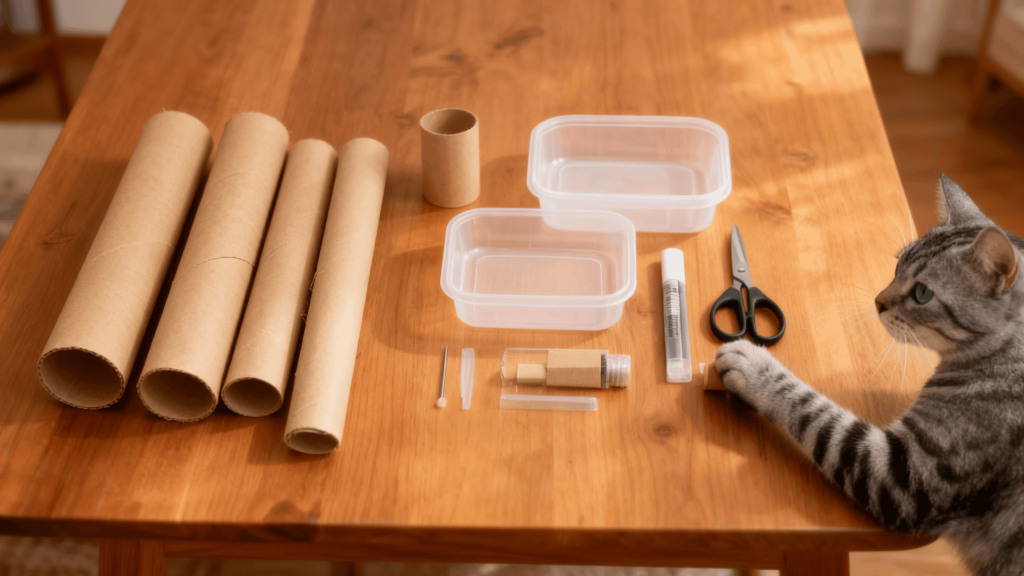
To create a durable and safe homemade puzzle feeder for cats, choose materials that are sturdy, washable, and smooth:
- Empty plastic water bottles
- Rigid food storage containers
- Cardboard paper towel tubes
- Small yogurt containers or plastic cups
- Clean plastic jars with screw-on lids
Avoid soft plastics, thin packaging, tape, string, or materials that shred easily.
Step-by-Step Cat Puzzle Feeder DIY Instructions
This beginner-friendly cat puzzle feeder DIY design works well for most indoor cats.
What You’ll Need
- One sturdy container or clean plastic bottle
- Scissors or a craft knife
- Marker
- Dry cat food or treats
How to Build It
- Wash and fully dry the container
- Mark two to four small holes, about the size of kibble
- Carefully cut holes and smooth any sharp edges
- Add a small amount of food
- Secure the lid tightly
- Place the feeder on a flat surface and let your cat explore
This simple build functions as both a DIY puzzle feeder for cats and a slow feeder for cats diy.
How to Introduce Puzzle Feeding Safely
Not all cats understand puzzle feeders immediately. When starting with a new DIY puzzle feeder for cats:
- Begin with larger holes for easier food release
- Allow sniffing and observation before interaction
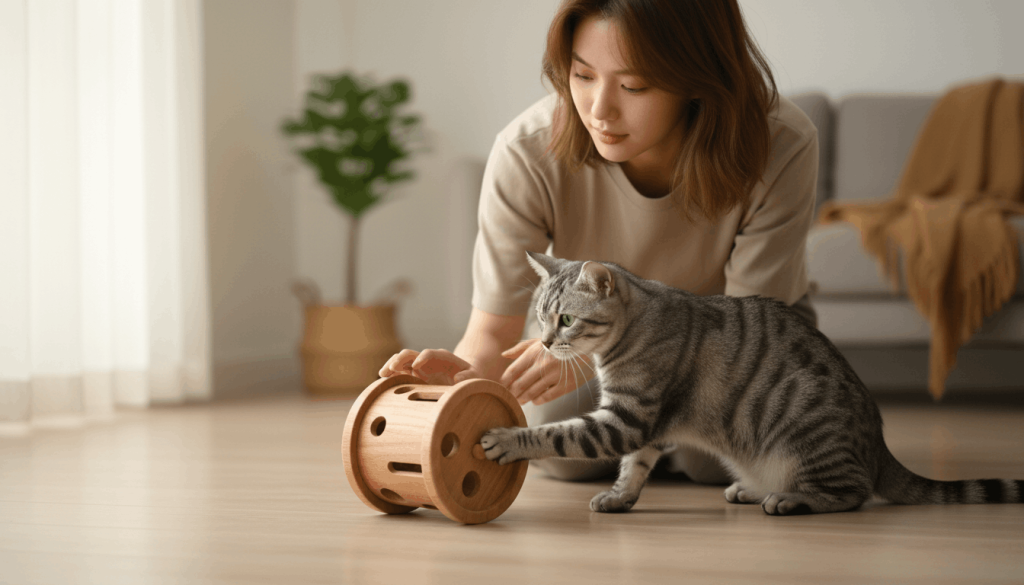
- Gently roll the feeder to demonstrate movement
- Keep first sessions short and positive
This approach builds confidence and reduces frustration during early use.
How Puzzle Feeders Support Mental Stimulation for Indoor Cats
Puzzle feeding plays a key role in mental stimulation for indoor cats by encouraging:
- Problem-solving skills
- Paw–eye coordination
- Exploratory behavior
- Scent processing
Regular use of interactive feeding toys for cats is linked to improved engagement and more balanced daily routines.
Using Puzzle Feeders as DIY Cat Enrichment Activities at Home
The greatest benefits come when a cat puzzle feeder DIY is part of broader diy cat enrichment activities at home.
Try combining feeders with:
- Weekly rotation of puzzle designs
- Placement in different safe locations
- Short play sessions before puzzle feeding
- Vertical climbing spaces near feeding areas
These techniques transform mealtime into stimulating diy cat enrichment toys without overwhelming your cat.
Safety Tips for DIY Puzzle Feeders
To keep your DIY puzzle feeder for cats safe:
- Supervise early feeding sessions
- Inspect regularly for cracks or sharp edges
- Wash feeders frequently
- Remove the feeder if chewing occurs
- Avoid glued or taped components
Safety should always come before complexity.

How MyCern Supports Enrichment-Based Wellness
At MyCern, we emphasize the relationship between environmental engagement, nervous system balance, and daily behavioral resilience. By promoting tools like cat puzzle feeder DIY projects and other diy cat enrichment activities at home, we encourage low-stress routines that support cognitive engagement and emotional wellbeing without medical claims.
Frequently Asked Questions
What is a cat puzzle feeder DIY?
A cat puzzle feeder DIY releases food only when a cat interacts with it, encouraging movement and problem-solving during meals.
Are homemade puzzle feeders safe for cats?
Yes. A properly constructed homemade puzzle feeder for cats using sturdy, smooth, pet-safe materials can be safe when supervised.
Can puzzle feeders replace regular bowls?
Some meals can be served using a DIY puzzle feeder for cats, but many cats prefer a combination of puzzle feeding and traditional bowls.
Do puzzle feeders really provide mental stimulation for indoor cats?
Absolutely. Puzzle feeding is one of the most effective ways to support mental stimulation for indoor cats by mimicking natural foraging behavior.
Can kittens use puzzle feeders?
Yes, but designs should be very simple, and sessions should always be monitored.
Conclusion
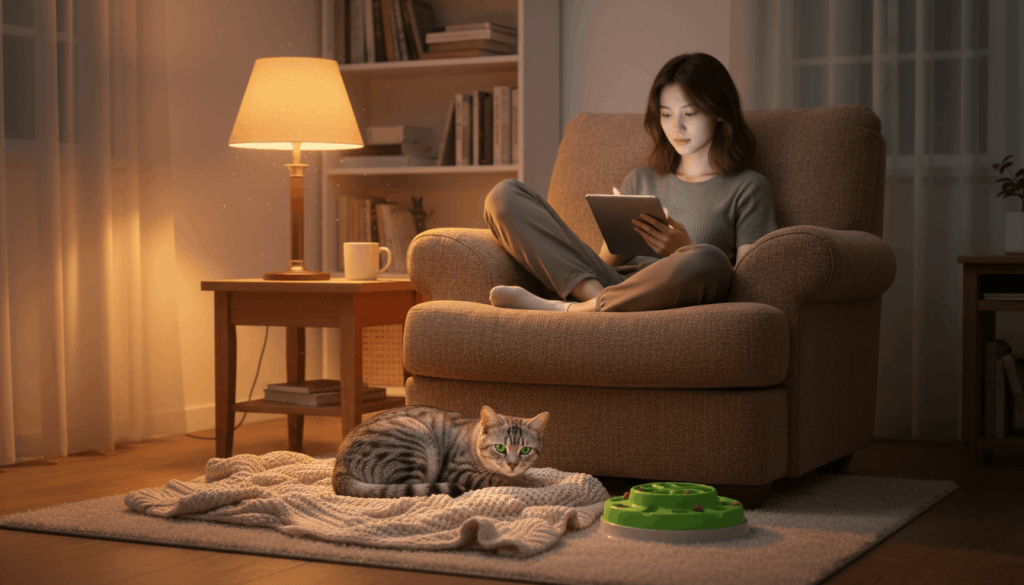
A well-designed cat puzzle feeder DIY project is one of the simplest and most effective ways to add healthy challenge to daily routines. Whether you build a basic DIY puzzle feeder for cats from household items or rotate multiple homemade puzzle feeder for cats designs, puzzle feeding supports natural behavior, engagement, and emotional balance.
When combined with other diy cat enrichment activities at home, puzzle feeders turn mealtime into an opportunity for learning, curiosity, and long-term wellbeing.
References
- Ellis, S. L., Rodan, I., Carney, H. C., Heath, S., Rochlitz, I., Shearburn, L. D., … & Westropp, J. L. (2013). AAFP and ISFM feline environmental needs guidelines. Journal of feline medicine and surgery, 15(3), 219-230.
- Ellis, S. L. (2009). Environmental enrichment: practical strategies for improving feline welfare. Journal of feline medicine and surgery, 11(11), 901-912.
- Buffington, C. T., Westropp, J. L., Chew, D. J., & Bolus, R. R. (2006). Clinical evaluation of multimodal environmental modification (MEMO) in the management of cats with idiopathic cystitis. Journal of feline medicine and surgery, 8(4), 261-268.
- Dantas, L. M., Delgado, M. M., Johnson, I., & Buffington, C. T. (2016). Food puzzles for cats: feeding for physical and emotional wellbeing. Journal of feline medicine and surgery, 18(9), 723-732.
- Gourkow, N., & Phillips, C. J. (2016). Effect of cognitive enrichment on behavior, mucosal immunity and upper respiratory disease of shelter cats rated as frustrated on arrival. Preventive veterinary medicine, 131, 103-110.
- Overall, K. (2013). Manual of Clinical Behavioral Medicine for Dogs and Cats-E-Book: Manual of Clinical Behavioral Medicine for Dogs and Cats-E-Book. Elsevier Health Sciences.