How to Pick the Durable Harness for Dogs: Fit, Comfort, and Safety Guide
Written by MyCern Research & Editorial Team
Choosing a durable harness for dogs should feel simple but with hundreds of styles and brands, it often becomes confusing. You want something that lasts, fits properly, and keeps your dog comfortable and safe on every walk.
Here is the truth most owners learn later: even the most expensive harness can fail if it does not fit your dog’s body or walking style. At the same time, cheap options rarely survive daily use. The real goal is finding durable dog harnesses that combine strong construction, correct fit, and a design that actually supports how your dog moves.
This practical guide explains:
- what makes a harness truly durable
- how to choose the best harness for dogs based on walking behavior and body type
- clear, simple dog harness fitting tips you can use at home
Understanding what makes durable dog harnesses truly durable
A harness becomes durable long before your dog ever wears it.
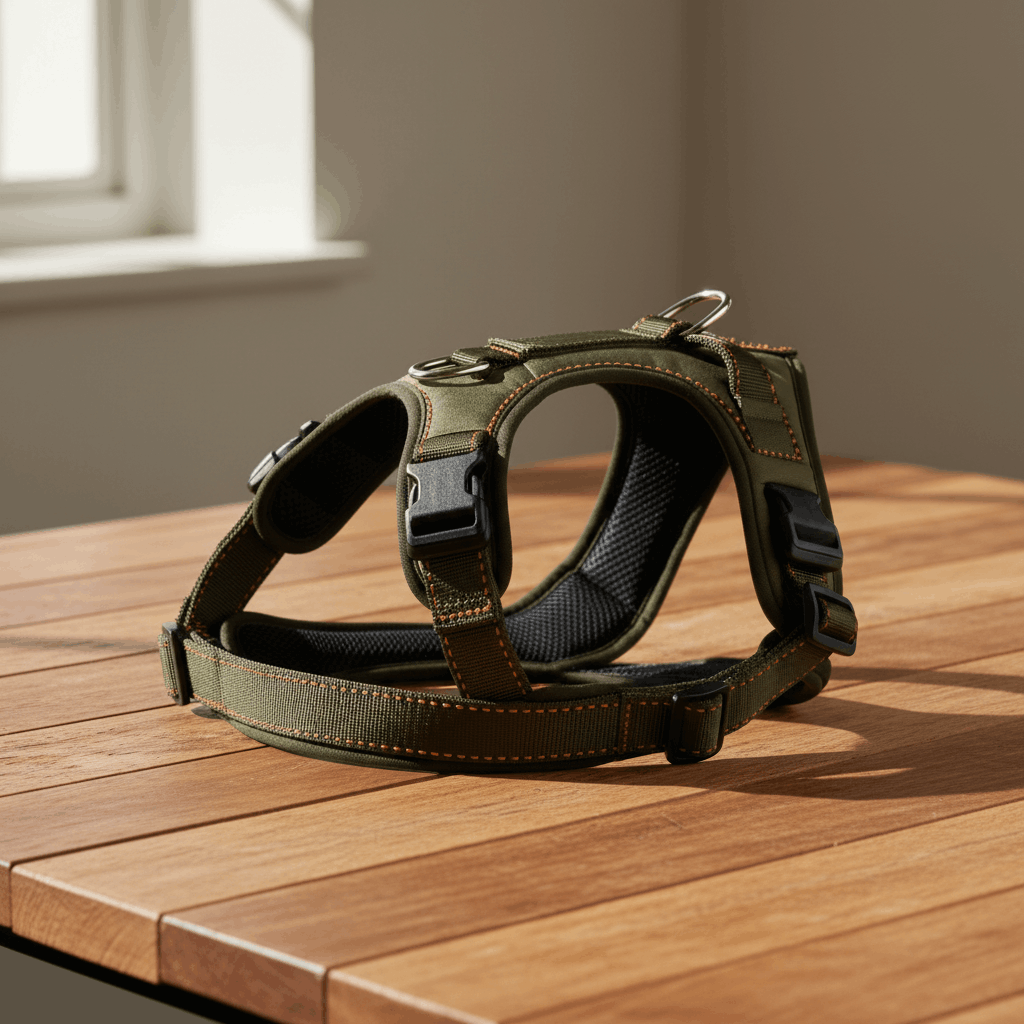
Strong materials and stitching
A high-quality durable harness for dogs should include:
- thick nylon webbing (wider straps for medium and large dogs)
- reinforced or bar-tack stitching at all stress points
- solid metal D-rings and adjusters
- padding that does not flatten after a few weeks
Where most failures happen is the leash attachment point. That small section carries the highest load when your dog pulls. If the stitching there looks thin or uneven, the harness will not last.
Design that spreads force
Good design matters just as much as materials. The most reliable durable dog harnesses spread pulling pressure across the chest and body instead of focusing it on one strap.
Look for:
- more than one adjustment point
- reinforced chest and belly straps
- smooth, coated webbing that resists water and sunlight
If your dog is powerful, design becomes critical. A harness that works perfectly for a small dog may fail quickly on a strong puller.
The best harness for dogs: understanding common harness styles
There is no single best harness for dogs. The right one depends on how your dog walks and how much control you need.
Back-clip harnesses
These attach on the dog’s back. They work well for:
- calm walkers
- small and medium dogs
- dogs with neck or throat sensitivity
Back-clip designs are comfortable, but they give dogs more pulling leverage. For dogs that already pull, training can be harder.
Front-clip harnesses
Front-clip harnesses attach at the chest. When a dog pulls, their body gently turns toward you instead of forward. These are ideal for:
- dogs that pull
- large or strong dogs
- loose-leash training
The key is correct placement. The chest strap must sit on the breastbone, not against the throat and not too low on the shoulders.
Dual-clip harnesses
Dual-clip harnesses offer both a front and back leash attachment. This gives you flexibility during training and everyday walks.
Many trainers prefer this style because you can switch attachment points without changing equipment. In practice, dual-clip models are often among the most versatile and long-lasting durable dog harnesses for households with only one main harness.
No-pull and training harnesses
Some training tools focus on controlling the head or redirecting motion rather than distributing pressure through the body.
Dog harness fitting tips that prevent discomfort and escapes
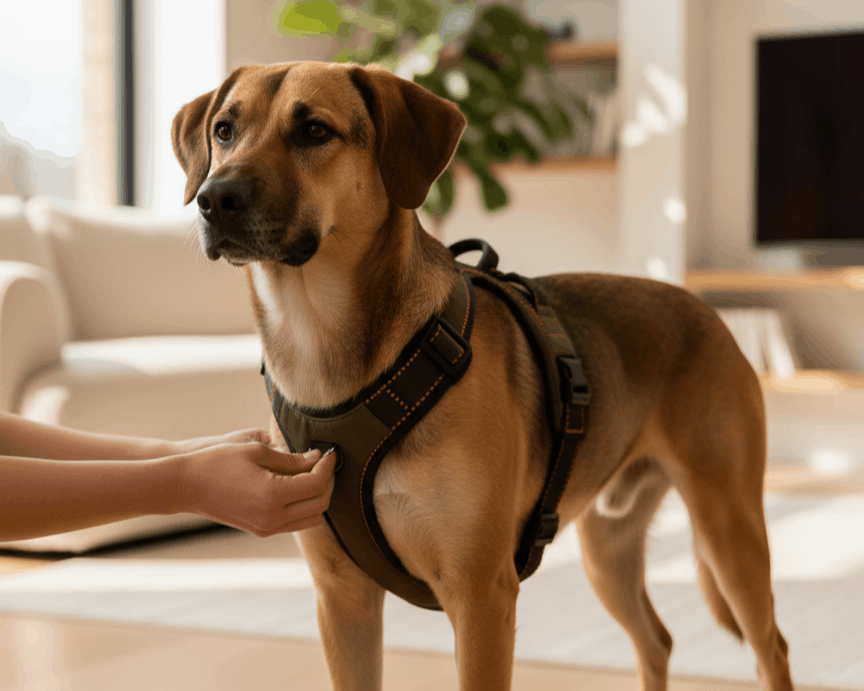
Even the strongest harness becomes unsafe if it fits poorly. These dog harness fitting tips are simple but extremely important.
Step 1: measure correctly
- Chest girth – measure around the widest part of the rib cage, just behind the front legs
- Neck base – measure where the collar normally sits
- Back length (if required by the brand)
Always follow the manufacturer’s size chart. Sizes are not standardized.
When in doubt between two sizes, choose the larger size and adjust it down.
Step 2: apply the two-finger rule
Once the harness is on:
- you should be able to slide two flat fingers between your dog and every strap
- the harness should not shift easily when you gently pull on it
Too loose leads to rubbing and escape risk. Too tight restricts movement.
Step 3: watch your dog move
Ask your dog to:
- walk
- sit
- lie down
Look for:
- free shoulder movement
- no strap rubbing the armpits
- no twisting or rotating on the body
These checks are among the most valuable dog harness fitting tips you can follow.
Common harness fit problems and simple fixes
Harness twists sideways during walks
→ One strap is usually too loose. If tightening does not help, the shape may not match your dog’s body.
Chafing under the front legs
→ Belly strap is too close to the armpit or too loose, allowing movement.
Dog backs out of the harness
→ Fit is too loose or the design is unsuitable for narrow-bodied dogs.
Shortened stride or stiff front movement
→ Chest or shoulder area is too tight.
Correct fit matters just as much as choosing the right durable harness for dogs.
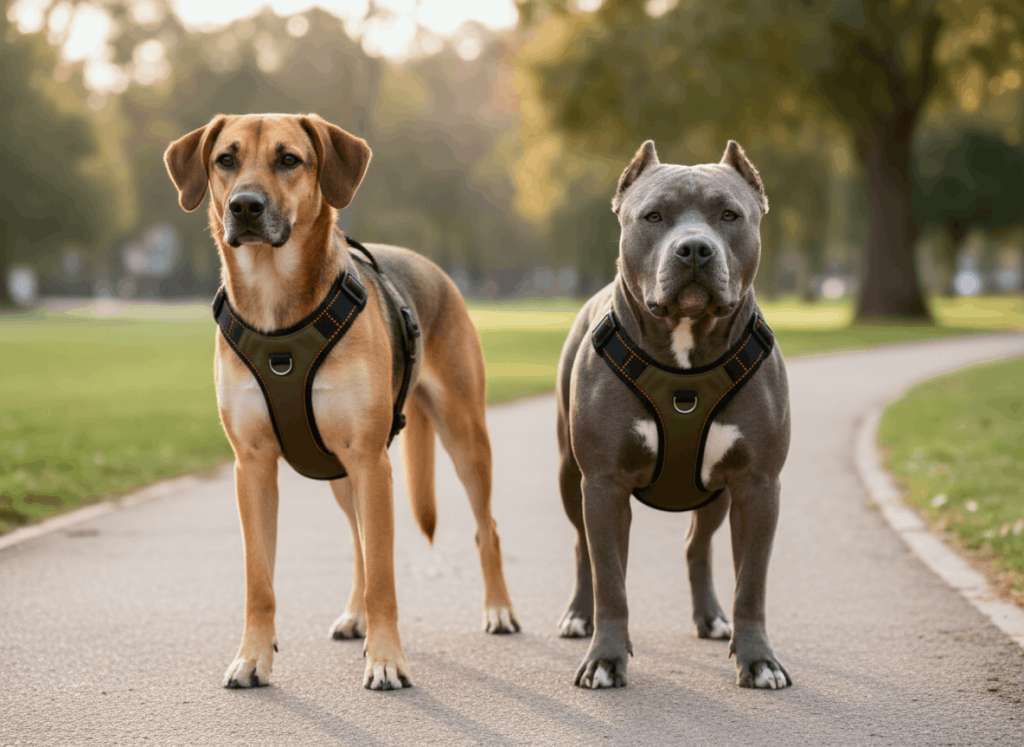
Choosing the best harness for dogs by size and strength
Small dogs
For small dogs, comfort and weight matter most. Look for:
- lightweight but reinforced webbing
- soft padding
- easy-on designs
Small dogs are more vulnerable to throat and neck pressure, making a harness a safer option than a collar.
Medium dogs
Medium dogs need balanced control and comfort. Most harness styles work well if fitted properly.
If your dog pulls, choose a front-clip or dual-clip system.
If your dog walks calmly, a back-clip harness may feel more natural.
Large and strong dogs
For large dogs, a durable harness for dogs must handle real force.
Look for:
- wide webbing
- reinforced chest and belly straps
- metal hardware
- front-clip or dual-clip design
Special body types need special attention
Some dogs simply do not fit standard shapes.
- Flat-faced breeds need wide chest panels and zero throat pressure.
- Deep-chested breeds often need escape-resistant designs.
- Long-backed breeds need better back length proportions.
- Broad, muscular breeds need wider chest plates.
How to evaluate durability before buying
When comparing durable dog harnesses, read reviews carefully. Ignore short comments such as “looks good” and look for details:
- how long the harness lasted
- whether stitching failed
- how it performed in rain and washing
- whether the size matched the chart
Also check return policies. Quality companies usually allow easy exchanges if fit is wrong.
Maintaining your durable harness for dogs
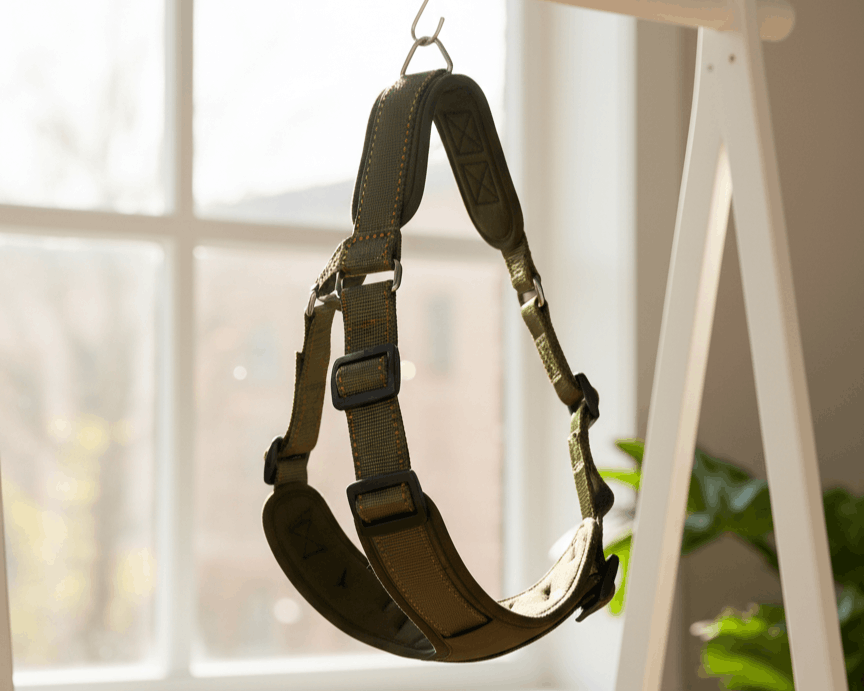
Even the most reliable harness needs care. Wash every two to four weeks if used daily. Use cold water and air-dry.
After washing, inspect:
- stitching at the leash ring
- hardware for cracks or stiffness
- webbing for thinning or fraying
If the structure is damaged, replace it. A harness is safety equipment.
With normal use, most durable dog harnesses last one to three years.
How MyCern supports active, healthy dogs
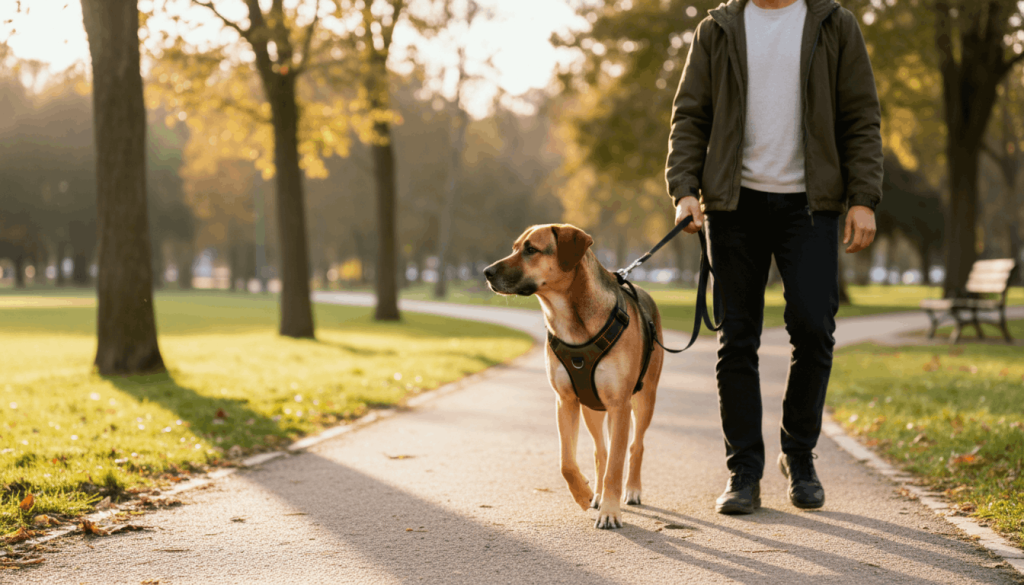
At MyCern, we view walking and outdoor activity as a foundation of long-term wellness. A properly fitted, durable harness supports consistent movement, safer training, and better owner-dog bonding.
While our science-guided approach focuses primarily on nutrition that supports energy, mobility, and overall resilience, we recognize that equipment quality plays a real role in enabling healthy daily routines. Comfortable walking encourages physical activity, mental stimulation, and emotional balance.
Practical guidelines for choosing your harness
- Measure your dog carefully before shopping.
- Match the harness style to your dog’s walking behavior.
- Prioritize fit over brand popularity.
- Invest in higher quality for daily use.
- Apply proper dog harness fitting tips every time you change or replace equipment.
- Re-check fit as your dog grows or changes weight.
- Keep a backup harness at home.
Conclusion
Finding the right durable harness for dogs is not about buying the most expensive product—it is about choosing quality construction, the right design for your dog’s strength and behavior, and following proper fitting practices.
The best harness for dogs is the one that:
- stays secure
- allows natural movement
- distributes pressure correctly
- and holds up to real-world use
Remember, even the strongest materials cannot compensate for poor fit. By selecting well-built durable dog harnesses and applying proven dog harness fitting tips, you protect your dog’s comfort, safety, and long-term walking experience while avoiding frequent replacements and unnecessary frustration.
References
- Schalke, E., Salgirli, Y., Böhm, I., Ott, S., & Hackbarth, H. Comparison of stress and learning effects of three different training methods in dogs.
- Grainger, J., Wills, A. P., & Montrose, V. T. (2016). The behavioral effects of walking on a collar and harness in domestic dogs (Canis familiaris). Journal of Veterinary Behavior, 14, 60-64.
- Pauli, A. M., Bentley, E., Diehl, K. A., & Miller, P. E. (2006). Effects of the application of neck pressure by a collar or harness on intraocular pressure in dogs. Journal of the American Animal Hospital Association, 42(3), 207-211.
- Zink, C., Carr, B. J., & Bockstahler, B. (2025). Locomotion and athletic performance. Canine sports medicine and rehabilitation, 34-60.