Cognitive Changes in Senior Cats: Recognizing Signs of Feline Cognitive Dysfunction
Written by MyCern Research & Editorial Team
As cats age, subtle changes in behavior and awareness can begin to emerge. While aging naturally affects physical health, it can also influence brain function, leading to shifts in memory, learning, and daily routines. Feline Cognitive Dysfunction (FCD) describes age-related cognitive changes that may affect a senior cat’s quality of life. Understanding these changes helps caregivers recognize early signs and support brain health through thoughtful daily care.
This article explores:
- What feline cognitive dysfunction is
- Common behavioral and sleep-related changes in senior cats
- How aging affects the feline brain
- Nutritional elements that support brain function
- Daily habits that help maintain cognitive comfort
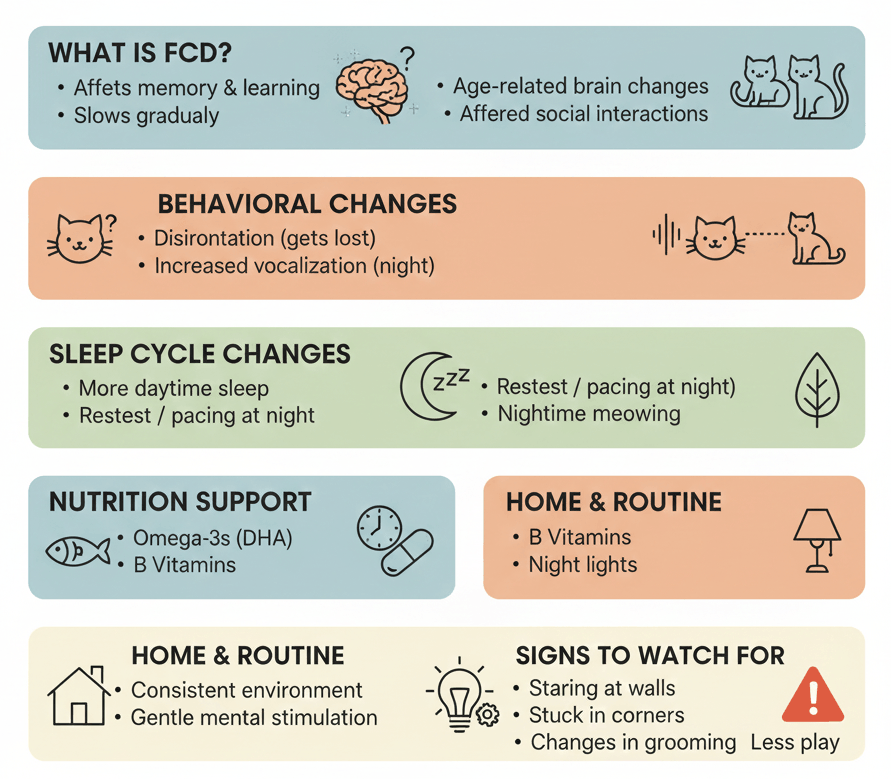
What Is Feline Cognitive Dysfunction?
Feline Cognitive Dysfunction refers to gradual, age-associated changes in brain function. These changes are linked to:
- Altered neural signaling
- Accumulation of oxidative byproducts
- Reduced cerebral blood flow
- Changes in neurotransmitter balance
These shifts may influence how cats perceive their environment and respond to familiar routines.
Quick Tip Box – Why FCD Is Often Missed:
- Changes develop slowly
- Symptoms may be mistaken for “normal aging”
- Cats naturally hide vulnerability
- Behavioral changes can be subtle
Common Cognitive Changes in Senior Cats
Behavioral signs of cognitive change may include:
- Disorientation or appearing “lost” in familiar spaces
- Reduced responsiveness to names or cues
- Increased vocalization, especially at night
- Altered social interactions

Quick Tip Box – Early Signs to Watch For:
- Staring at walls or corners
- Getting stuck behind furniture
- Changes in grooming habits
- Decreased interest in play
Sleep–Wake Cycle Changes
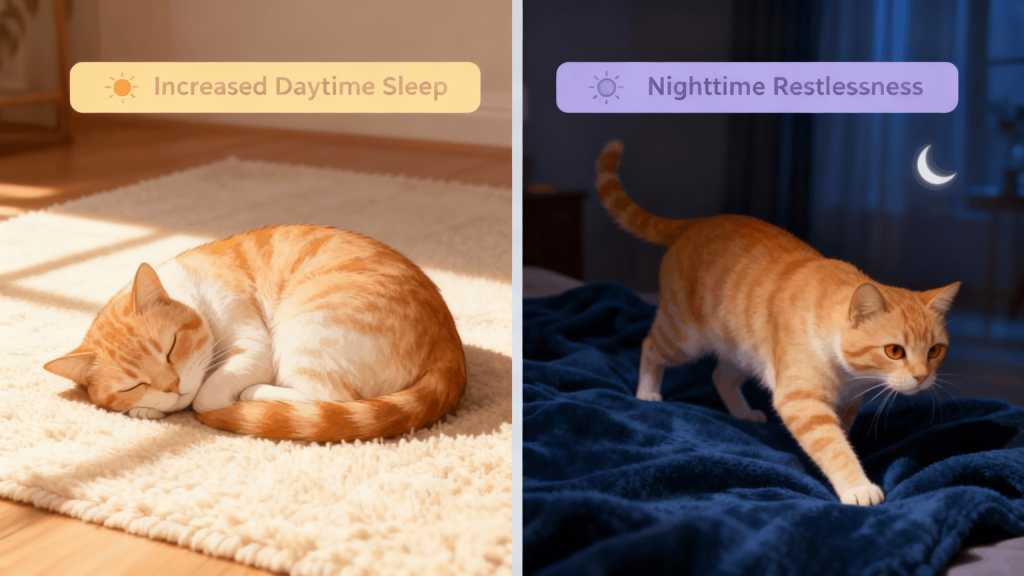
Sleep pattern disruptions are common in cognitively aging cats:
- Increased daytime sleeping
- Restlessness or pacing at night
- Vocalization during evening hours
- Difficulty settling into regular sleep routines
These changes may reflect shifts in circadian rhythm regulation within the brain.
Quick Tip Box – Supporting Healthy Sleep:
- Maintain consistent feeding and play schedules
- Increase daytime activity and enrichment
- Provide comfortable, familiar sleeping areas
- Keep nighttime environments calm and dim
Brain-Supportive Nutrition for Aging Cats

Nutrition plays a supportive role in maintaining brain health:
- Omega-3 fatty acids (DHA): Support neuronal structure
- B vitamins: Involved in energy metabolism and neurotransmitter production
- Antioxidants: Help protect brain cells from oxidative stress
- Amino acids: Serve as precursors for neurotransmitters
Balanced diets help support the brain’s energy needs as cats age.
Quick Tip Box – Feeding Senior Cats Thoughtfully:
- Choose diets formulated for senior life stages
- Maintain consistent feeding routines
- Ensure adequate hydration
- Monitor appetite and weight regularly
Daily Habits That Support Cognitive Comfort
- Keep home layouts consistent to reduce confusion
- Avoid sudden environmental changes
- Provide gentle mental stimulation
- Use familiar scents, bedding, and routines
- Monitor behavior changes and adjust care accordingly
Quick Tip Box – Supporting Aging Minds at Home:
- Use night lights to reduce disorientation
- Place food, water, and litter boxes within easy reach
- Keep walkways clear
- Reinforce routines with calm interaction
References
- Landsberg, G. M., et al. (2012). Cognitive dysfunction syndrome in dogs and cats. Veterinary Clinics of North America: Small Animal Practice, 42(4), 749–768.
- Gunn-Moore, D. A., et al. (2007). Ageing changes in cats and the pathogenesis of cognitive dysfunction. Journal of Feline Medicine and Surgery, 9(4), 261–269.
- Pan, Y., et al. (2018). Nutritional approaches to cognitive health in aging pets. Journal of Animal Science, 96(3), 921–931.
- Overall, K. L. (2013). Manual of Clinical Behavioral Medicine for Dogs and Cats. Elsevier.
Conclusion
Cognitive changes in senior cats can be subtle but meaningful. By recognizing early signs of feline cognitive dysfunction, supporting consistent routines, and providing brain-supportive nutrition and environments, caregivers can help maintain comfort and quality of life. A calm, observant, and science-informed approach allows aging cats to navigate their later years with greater ease and dignity.