Crate Training Puppy Tips: Calm, Reward-Based Techniques for Dogs
Written by MyCern Research & Editorial Team
Crate training is one of the most misunderstood parts of early dog care. When done correctly, it helps puppies feel safe, improves sleep routines, and supports emotional regulation. When done poorly, it can increase stress and resistance to confinement.
This is why crate training puppy tips should always focus on learning science, emotional safety, and consistency rather than force.
This article explores
- what crate training really teaches a puppy’s brain
- practical dog crate training tips that are reward based and stress aware
- tips for kennel training a puppy that fit modern behavior science
- common mistakes that delay progress
- how MyCern can fit into a calm, supportive daily routine for puppies
Understanding crate training through behavioral science

Before using any dog crating tips, it is important to understand what a crate represents to a puppy.
A crate is not a tool for control. It becomes effective only when the puppy learns that the space predicts safety, rest, and emotional calm. From a learning perspective, this happens through positive association and predictable outcomes.
According to guidance published by the American Veterinary Medical Association, confinement tools should support welfare and emotional comfort, especially during early development. Puppies are neurologically sensitive to stress during their socialization period, which makes reward based learning critical.
When a puppy enters a crate voluntarily and consistently experiences calm events such as chewing, resting, and quiet time, the brain begins to categorize the crate as a low arousal zone. This helps reduce overstimulation and supports healthy sleep patterns.
Why puppies struggle with crate training
Many owners assume that resistance means the puppy is stubborn. In reality, most struggles are caused by one or more of the following
- the crate is introduced too suddenly
- the puppy is placed inside when already overstimulated
- confinement is paired with owner frustration or rushed departures
- the puppy has not learned how to self settle yet
Crate resistance is not a personality problem. It is a learning history problem. That is why the best tips for kennel training focus on shaping comfort before expecting duration.
Crate training puppy tips that build calm behavior
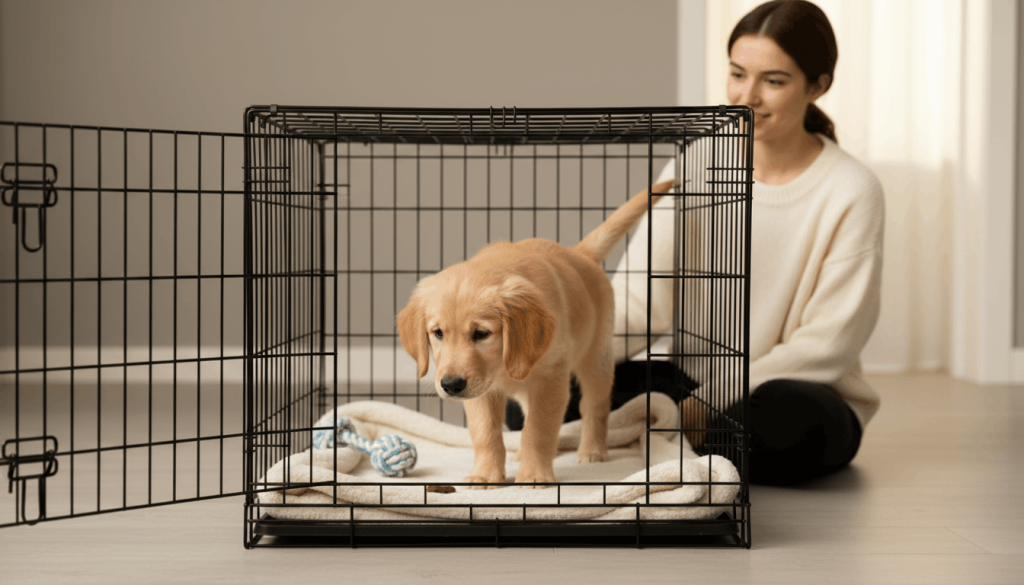
These crate training puppy tips are designed to strengthen emotional safety, not just compliance.
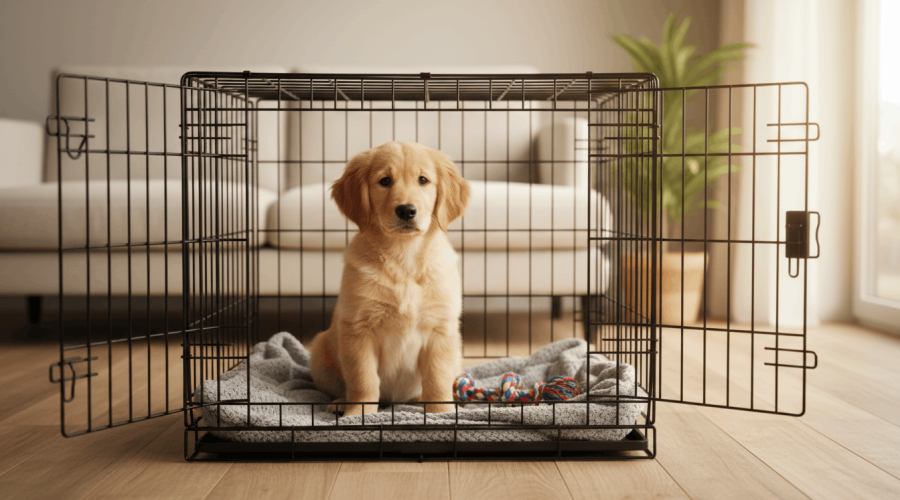
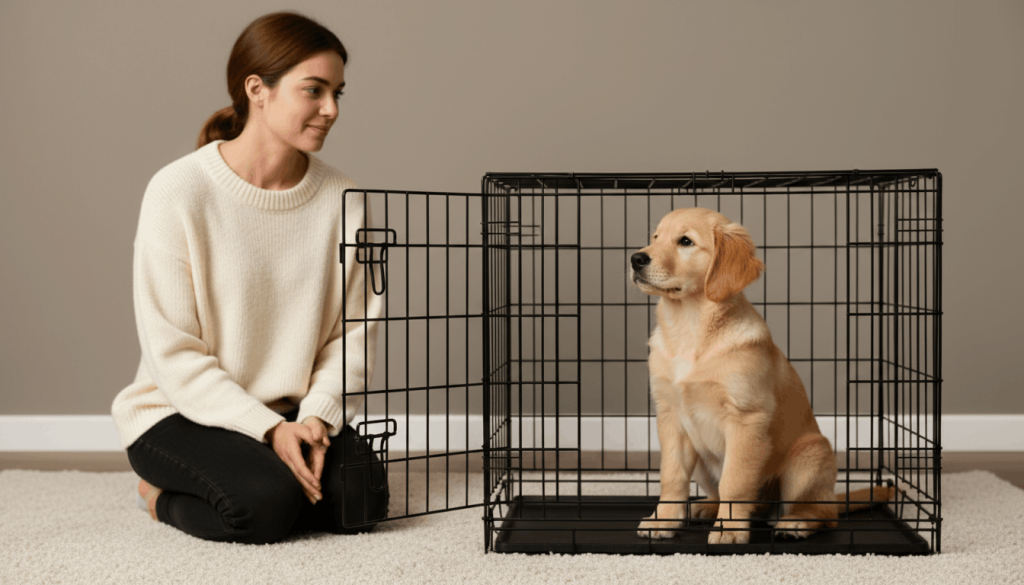
Start by placing the crate in a quiet area of the home where the puppy can still feel socially connected. Keep the door open during early sessions and allow exploration without pressure.
Feed part of your puppy’s daily meals near the crate, then gradually inside the crate. This creates a strong positive association with the space.
Short calm sessions are more effective than long forced ones. Begin with a few seconds of relaxed behavior inside the crate and slowly increase time only when the puppy remains comfortable.
These early stages form the emotional foundation for all future dog crate training tips.
Tips for kennel training a puppy using reward based learning
The most effective tips for kennel training a puppy follow a simple rule. The crate should predict something the puppy enjoys.
Use slow, food based reinforcement such as scatter feeding inside the crate, soft chews, or frozen enrichment toys. Avoid exciting games before crating. Your goal is to pair the crate with nervous system downshifting.
A well known animal welfare organization, the American Society for the Prevention of Cruelty to Animals, emphasizes that voluntary entry and gradual duration are essential for humane and successful crate use.
These same principles also apply when people search for tips for kennel training in adult dogs who missed early crate exposure.
Dog crating tips for everyday home routines
Daily structure plays a large role in how successful crate training becomes.
Helpful dog crating tips include
- using the crate during naturally sleepy periods
- keeping lighting low and noise minimal
- offering a familiar blanket or safe chew
- avoiding emotional greetings immediately after release
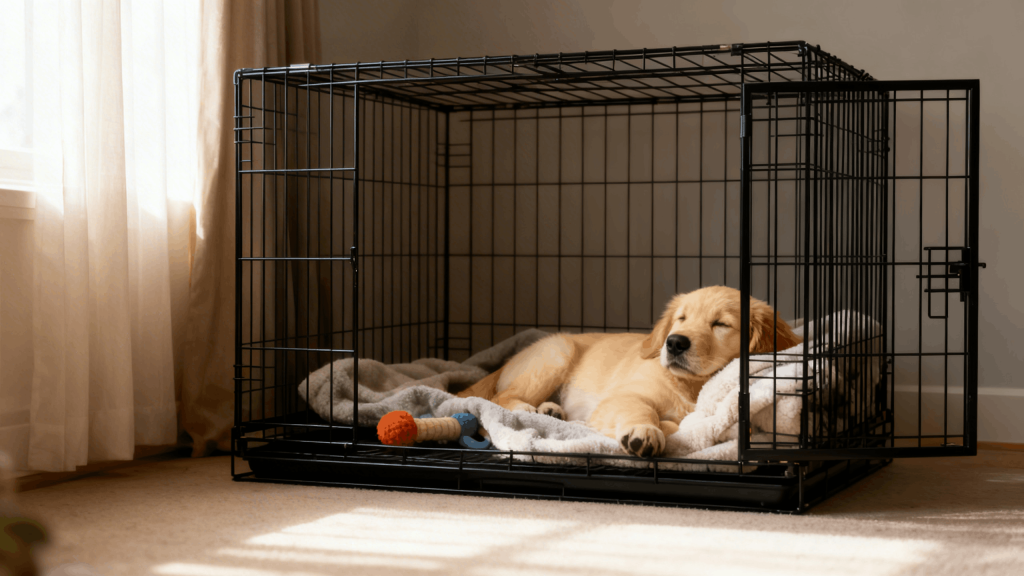
Crates should not replace exercise, play, or social interaction. Instead, they should support rest and recovery between activities.
These routines strengthen emotional predictability, which is one of the strongest contributors to successful confinement learning.
Dog crate training tips for building longer calm stays
Once your puppy is comfortable entering the crate, you can begin shaping longer periods of relaxation.
The most effective dog crate training tips include
- reinforcing quiet behavior rather than vocalization
- opening the door only when the puppy is calm
- briefly stepping away and returning before distress appears
- gradually adding mild distractions such as walking around the room
This method teaches the puppy that calm behavior maintains comfort and access to people. It also builds the emotional skills needed for future independence and alone time.
Tips for kennel training when your puppy vocalizes
Many owners search for tips for kennel training after their puppy begins whining or barking.
Vocal behavior usually appears because the puppy has crossed an emotional threshold. It is not a sign that training has failed.
In these moments
- avoid scolding or tapping the crate
- reduce session length during the next repetition
- return to a level where the puppy can remain relaxed
- reinforce moments of quiet breathing and resting posture
Learning only occurs when the puppy is emotionally able to process outcomes. Lowering difficulty is not regression. It is correct training.
How to crate train dogs without increasing stress
When people ask how to crate train dogs successfully, the most important factor is emotional pacing.
Whether you are working with a young puppy or an adult rescue dog, the same learning sequence applies
- positive association with the crate
- voluntary entry
- short calm stays
- gradual increases in duration and distance
Skipping any of these steps often creates long term resistance.
Successful crate training is not about speed. It is about emotional safety and predictable reinforcement.
MyCern fit: Supporting calm focus during training
At MyCern, we view behavior development through the lens of biological readiness and nervous system balance.
During early learning periods, puppies experience frequent stimulation, novelty, and rapid schedule changes. These factors place additional demands on normal neurotransmitter signaling and stress regulation systems.
MyCern formulations are designed to support healthy neurological function and physiological resilience as part of a broader routine that includes reward based training, enrichment, and rest.
Within a responsible care plan, MyCern can complement crate training puppy tips by supporting
- normal cognitive processing during learning
- healthy stress response pathways
- recovery after mentally demanding training sessions
This supportive approach aligns with our science first philosophy and does not replace training or veterinary guidance.
Lifestyle and environment strategies that improve crate success
Small environmental adjustments can greatly improve crate acceptance.
- maintain consistent sleep and feeding schedules
- avoid intense play immediately before crating
- use gentle enrichment such as sniffing games before rest periods
- rotate chews and toys to prevent overexcitement
- protect rest time from household noise when possible
These habits reduce background arousal and make both dog crating tips and kennel training more effective.

When professional support may be helpful
If a puppy shows persistent panic behaviors such as frantic escape attempts, prolonged vocalization, or refusal to enter the crate even with food reinforcement, professional support can be valuable.
A qualified trainer or veterinary behavior professional can assess whether anxiety or previous negative learning is interfering with progress and adjust the training plan accordingly.
Early support prevents emotional patterns that may later interfere with independence and confinement tolerance.
Conclusion
Crate training puppy tips work best when they are built on patience, emotional awareness, and learning science. Whether you are following tips for kennel training a puppy, refining your dog crate training tips, or learning how to crate train dogs for the first time, the goal is always the same.
Teach the puppy that the crate predicts calm, safety, and comfort.
With structured routines, reward based methods, and supportive daily care, most puppies can learn to relax confidently in their crate. When training respects emotional thresholds and biological readiness, the crate becomes a powerful tool for wellbeing rather than a source of stress.
References
- Overall, K. (2013). Manual of clinical behavioral medicine for dogs and cats-E-Book: manual of clinical behavioral Medicine for dogs and cats-E-Book. Elsevier Health Sciences.
- Landsberg, G., Hunthausen, W., & Ackerman, L. (2012). Behavior problems of the dog and cat. Elsevier Health Sciences.
- Appleby, D. L., Bradshaw, J. W., & Casey, R. A. (2002). Relationship between aggressive and avoidance behaviour by dogs and their experience in the first six months of life. Veterinary Record, 150(14), 434-438.
- McMillan, F. D. (2017). Behavioral and psychological outcomes for dogs sold as puppies through pet stores and/or born in commercial breeding establishments: Current knowledge and putative causes. Journal of Veterinary Behavior, 19, 14-26.
- Serpell, J. A., & Duffy, D. L. (2014). Dog breeds and their behavior. In Domestic dog cognition and behavior: The scientific study of Canis familiaris (pp. 31-57). Berlin, Heidelberg: Springer Berlin Heidelberg.