

Heart Disease in Dogs: Common Types, Risk Factors, and Daily Support
Written by MyCern Research & Editorial Team
Heart disease in dogs often develops gradually and may remain unnoticed until the heart’s ability to pump efficiently begins to decline. Many dogs appear outwardly normal while subtle cardiovascular changes progress beneath the surface. Because the heart supports every organ system, even mild impairment can influence energy levels, breathing, circulation, and overall resilience.
Canine heart disease is not a single condition. It includes several distinct disorders with different causes, progression patterns, and risk profiles. Learning how these conditions affect heart function helps pet owners recognize early changes and support long-term cardiovascular health.
This article explores:
- How heart disease affects the canine cardiovascular system
- The most common types of heart disease in dogs
- Key risk factors, including breed and age
- Early signs that may indicate cardiac stress
- Daily habits that support heart function and overall wellbeing
How the Canine Heart Works
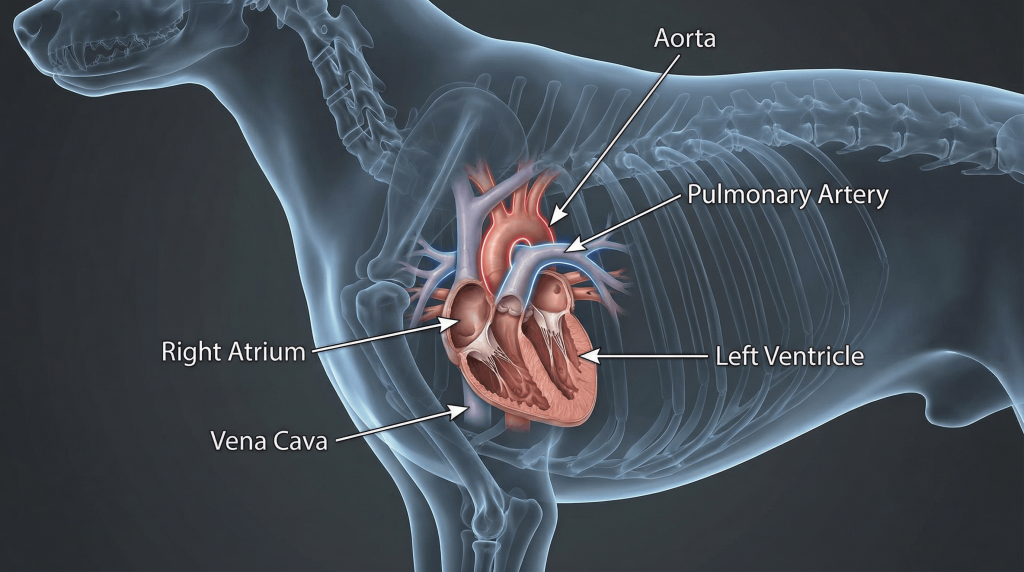
The heart functions as a muscular pump that delivers oxygen and nutrients through the bloodstream while removing metabolic waste. Coordinated electrical signals regulate heart rhythm, while valves ensure blood flows in the correct direction.
When heart structure or function is altered, the body may initially compensate by increasing heart rate or fluid retention. These adaptations can mask early disease, which is why heart conditions often progress quietly.
Mitral Valve Disease: The Most Common Canine Heart Condition
Mitral valve disease is the most frequently diagnosed heart condition in dogs, particularly in small and medium breeds. It involves degeneration of the mitral valve, which separates the left atrium and left ventricle.
As the valve thickens and loses its ability to close tightly, blood leaks backward during contraction. Over time, this inefficiency increases workload on the heart and may lead to chamber enlargement and reduced pumping effectiveness.
Mitral valve disease typically progresses slowly, with early stages producing few outward signs.
Dilated Cardiomyopathy: A Disease of Cardiac Muscle

Dilated cardiomyopathy (DCM) primarily affects the heart muscle rather than the valves. In this condition, the heart chambers enlarge and the muscular walls become thinner and weaker.
As contractile strength declines, the heart cannot pump blood effectively. DCM is more common in large and giant breeds, though it can occur in any dog. Certain genetic and nutritional factors are known to influence risk.
Unlike mitral valve disease, DCM may progress rapidly once functional decline begins.
Risk Factors for Heart Disease in Dogs
Several factors influence a dog’s likelihood of developing heart disease:
- Age, as cardiac tissue undergoes structural changes over time
- Breed predisposition, particularly in small breeds for valve disease and large breeds for DCM
- Genetics affecting valve structure or muscle function
- Body weight and overall metabolic health
These risk factors interact rather than act in isolation, shaping how and when disease develops.
Early Signs of Cardiac Stress
Early heart disease often produces nonspecific signs that are easy to overlook. These may include reduced exercise tolerance, subtle breathing changes during rest, increased fatigue, or mild coughing.
Because these signs overlap with other conditions, they highlight the importance of regular veterinary exams rather than self-diagnosis.

How Heart Disease Affects the Whole Body
As heart function declines, circulation efficiency is reduced. This can influence oxygen delivery, kidney function, and fluid balance.
Over time, compensatory mechanisms that initially help maintain circulation can contribute to congestion or fatigue, further affecting quality of life.
Daily Support for Canine Heart Health
While diagnosis and medical management are guided by veterinary professionals, daily habits play a meaningful role in supporting cardiovascular function.
Consistent, moderate activity helps maintain circulation without overloading the heart. Weight management reduces cardiac workload, while predictable routines minimize stress-related heart rate fluctuations.
Environmental comfort, appropriate exercise pacing, and attentive observation all contribute to long-term stability.
The Importance of Early Detection
Heart disease is most manageable when identified early. Routine physical exams, listening for heart murmurs, and periodic imaging when recommended allow for monitoring before significant decline occurs.
Early awareness supports informed decision-making and more effective long-term care planning.

Conclusion
Heart disease in dogs encompasses several distinct conditions, with mitral valve disease and dilated cardiomyopathy being the most common. Although these disorders differ in cause and progression, both highlight the heart’s central role in whole-body health. Understanding risk factors, recognizing early changes, and supporting daily cardiovascular wellness can help dogs maintain comfort and vitality as they age.
References
- Borgarelli, M., & Buchanan, J. W. (2012). Historical review, epidemiology and natural history of degenerative mitral valve disease. Journal of Veterinary Cardiology, 14(1), 93–101.
- O’Grady, M. R., & O’Sullivan, M. L. (2004). Dilated cardiomyopathy: an update. Veterinary Clinics: Small Animal Practice, 34(5), 1187-1207.
- Atkins, C., et al. (2009). Guidelines for the diagnosis and treatment of canine chronic valvular heart disease. Journal of Veterinary Internal Medicine, 23(6), 1142–1150.
- McCauley, S. R., Clark, S. D., Quest, B. W., Streeter, R. M., & Oxford, E. M. (2020). Review of canine dilated cardiomyopathy in the wake of diet-associated concerns. Journal of Animal Science, 98(6), skaa155.
- Fox, P. R. (2012). Pathology of myxomatous mitral valve disease in the dog. Journal of Veterinary Cardiology, 14(1), 103-126.

