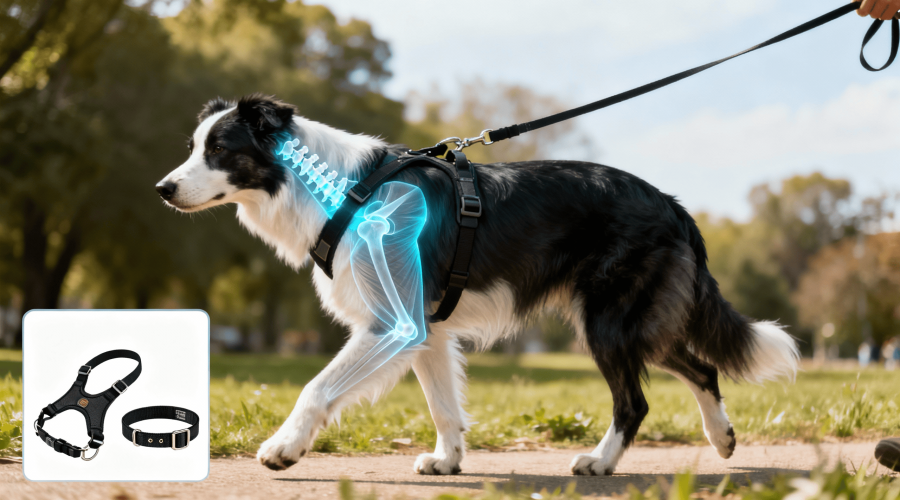
How Leash Equipment Choice Affects a Dog’s Neck, Spine, and Breathing
Written by MyCern Research & Editorial Team
Walking your dog seems simple: leash in hand, collar on neck, and out the door. Yet the type of leash equipment you choose collar, harness, or head halter, can have significant implications for your dog’s neck, spine, and airway health. What feels convenient may inadvertently increase strain, restrict breathing, or contribute to musculoskeletal stress over time.
Dogs rely on structural alignment, airway integrity, and controlled movement to stay safe and comfortable. Misaligned forces from poorly chosen leash equipment can affect these systems subtly, often long before noticeable signs appear.
This article explores:
- How different leash equipment affects biomechanics
- Why collars can strain necks and airways
- How harnesses distribute forces along the body
- The relationship between leash tension and spinal health
- Practical guidance for safe, comfortable walks
The Neck and Spine: Biomechanical Considerations
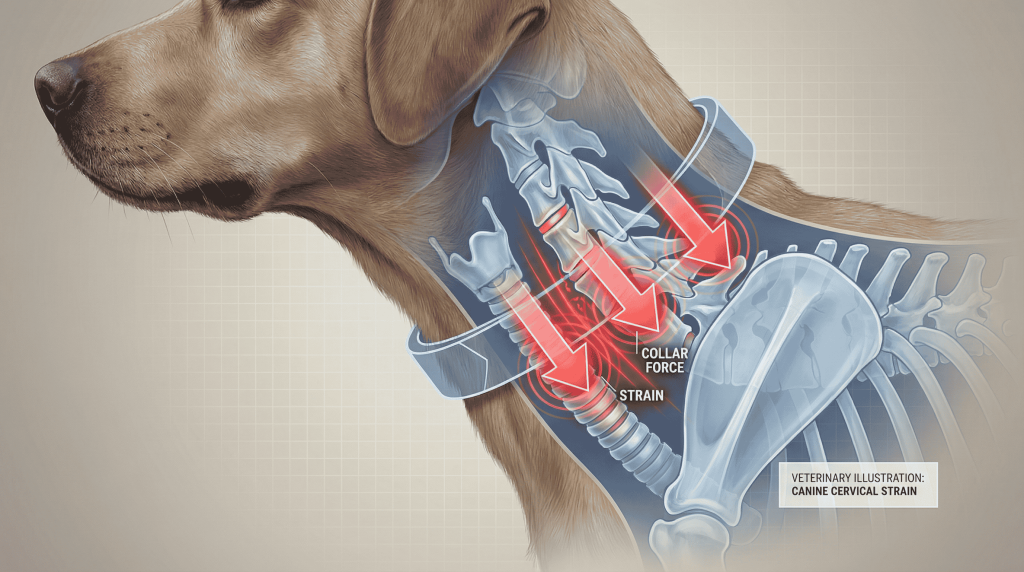
When a dog pulls against a collar, the force is concentrated on the trachea, cervical vertebrae, and surrounding soft tissues. Even small, repeated forces can:
- Compress the trachea, reducing airflow
- Stretch or strain neck muscles
- Increase spinal load, particularly in breeds with long necks or pre-existing conditions
Over time, repeated strain may contribute to chronic discomfort, altered gait, or reduced tolerance for activity.
Airway Safety and Breathing Efficiency
Certain breeds especially brachycephalic dogs like Bulldogs or Pugs have shorter, compressed airways. Collar pressure can:
- Restrict airflow during inhalation
- Increase respiratory effort
- Trigger coughing, gagging, or panic responses
Even dogs without congenital airway differences can experience temporary breathing difficulty if leash tension is high and repetitive.
Collars vs. Harnesses: Force Distribution
Standard Collars
- Apply force directly to the neck
- Increase tracheal and cervical strain when the dog pulls
- Less effective at controlling large or strong dogs safely
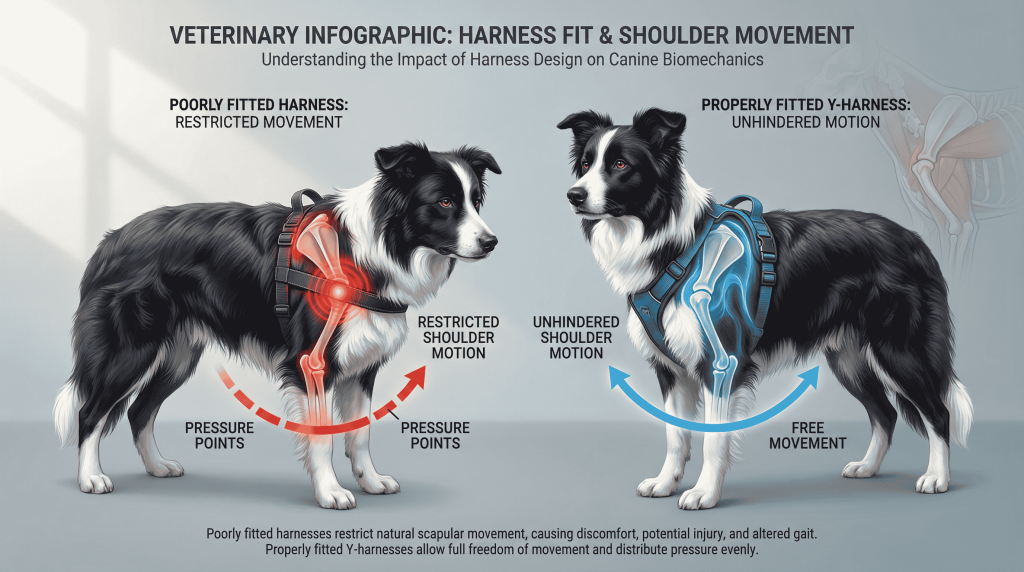
Front-Clip Harnesses
- Redirect forward-pulling force toward the chest
- Reduce cervical load
- Offer better control over directional movement
- May slightly limit shoulder range of motion if poorly fitted
Head Halters
- Place gentle pressure over the muzzle and back of the head
- Reduce pulling intensity
- Can guide movement while sparing the neck
- Require careful acclimation to avoid stress
Choosing equipment that distributes force across larger body areas can significantly reduce neck and airway stress while maintaining control.
Spinal Alignment and Long-Term Musculoskeletal Health
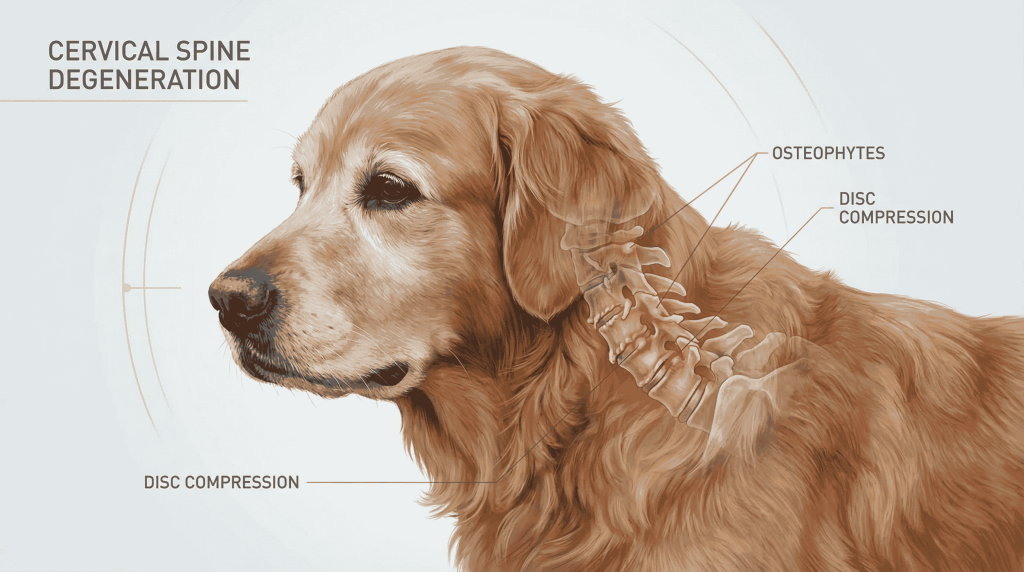
Force from leash pulling is transmitted to the thoracic and lumbar spine. Chronic tension can affect:
- Vertebral alignment
- Muscle balance along the back and shoulders
- Shoulder and limb loading patterns
Dogs with existing joint, disc, or spinal issues are particularly susceptible. Properly fitted harnesses or gentle training approaches minimize repetitive strain and preserve comfort.
Practical Guidelines for Safe Leash Use
- Assess your dog’s breed and body type
- Short-faced breeds: prioritize airway-sparing options
- Long-backed or heavy dogs: distribute forces to chest/torso
- Choose well-fitted equipment
- Adjustable harnesses reduce chafing and movement restriction
- Collars should be snug but allow two fingers of space
- Avoid constant tension
- Use positive reinforcement to encourage loose-leash walking
- Reduce rapid jerks or sudden stops that spike force
- Rotate or vary equipment for long walks
- Alternating between harnesses and collars may reduce repetitive strain
- Monitor for subtle signs of discomfort
- Coughing, gagging, reluctance to move, neck stiffness, or short strides
Conclusion
Leash equipment does more than control a dog, it interacts with neck structure, spinal alignment, and breathing efficiency. Choosing the right tools and using them correctly supports musculoskeletal health, preserves airway function, and improves comfort for everyday walks. Small adjustments in equipment and handling can have long-lasting benefits for a dog’s quality of life.
References
- McLean, C., et al. (2000). Tracheal collapse in dogs: The role of collars in airway stress. Journal of Small Animal Practice, 41(7), 290–296.
- DeHaan, J., et al. (2010). Harnesses and canine biomechanics: Effects on gait and spinal posture. Veterinary Comparative Orthopaedics and Traumatology, 23(4), 265–272.
- Packer, R. M. A., et al. (2015). Brachycephalic airway syndrome: The impact of leash pressure on respiratory function. Journal of Veterinary Behavior, 10(6), 526–534.
- Peham, C., et al. (2013). Influence of different harness types on the biomechanics of canine locomotion. Applied Animal Behaviour Science, 148(1), 50–57.
- Hyytiäinen, H., et al. (2019). Neck and spinal musculoskeletal stress in domestic dogs: Effects of leash training and equipment. Veterinary Record, 185(15), 466–474.