How to Build a Pet First Aid Kit: Dog and Cat Essentials Every Home Should Have
Written by MyCern Research & Editorial Team
Pet owners can maintain their composure during emergencies when they have a complete pet first aid kit which enables them to treat minor wounds and handle sudden health issues and unpredictable events until they can access veterinary services. The correct items need to go into your dog first aid kit or your cat first aid kit or your household first aid kit because this knowledge will enable you to handle daily pet care tasks with increased safety and confidence.
This article explores:
- what belongs in a science-informed pet first aid kit dog and cat owners can rely on
- practical cat first aid kit essentials for common home situations
- how to organize a safe and effective dog first aid kit for daily life
Why a pet first aid kit matters for dogs and cats
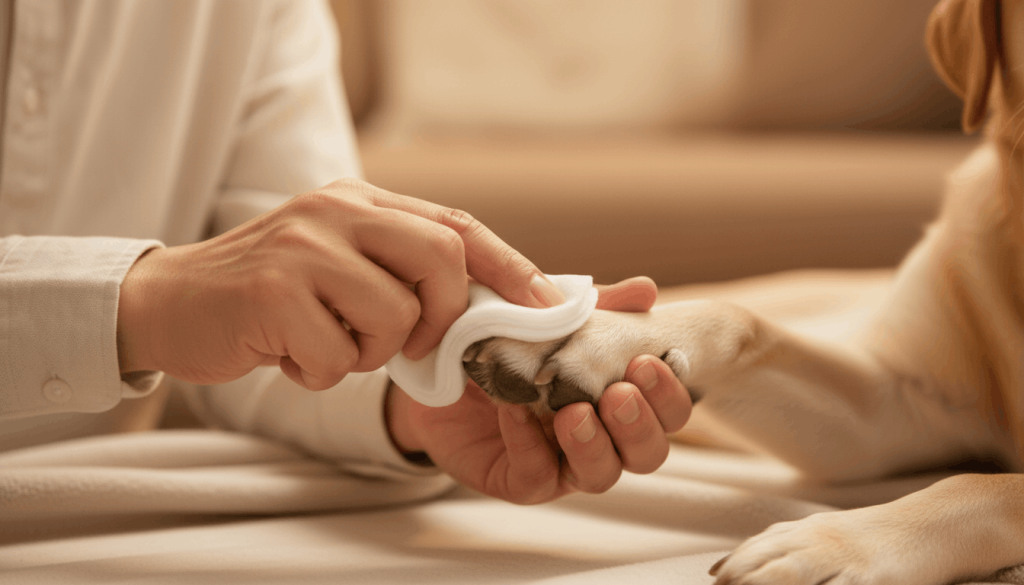
Companion animals frequently experience minor wounds together with mild digestive disturbances and insect stings and accidental scrapes. Research in veterinary emergency medicine shows that basic supportive care which includes wound protection and temperature control and safe restraint should be introduced immediately to reduce complications while professionals address the situation.
A properly stocked pet first aid kit is not meant to replace veterinary treatment. The product enables pet owners to provide immediate medical assistance during common emergencies which require low-risk treatment and helps them respond safely during stressful situations.
Core principles of a safe pet first aid kit
Before listing items, it is important to understand three evidence-based principles:
- use only pet-appropriate materials
- avoid human medications unless specifically advised by a veterinarian
- prioritize infection control and gentle handling
These principles apply equally to a pet first aid kit dog owners prepare and to a dedicated cat first aid kit.
Dog first aid kit essentials
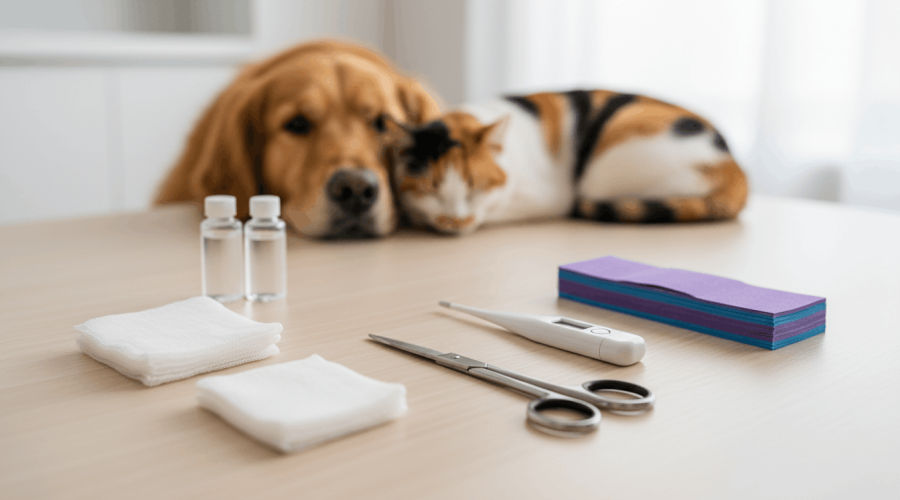
A practical dog first aid kit should include:
Wound and skin care supplies
- sterile saline or wound-flush solution
- non-adherent wound pads
- self-adhesive cohesive bandage wrap
- medical tape
- blunt-ended scissors
These items support temporary protection of small cuts, paw abrasions, and minor skin injuries.
Physical support and safety
- disposable gloves
- soft muzzle or bandage roll for gentle restraint
- digital thermometer (rectal use only, pet-dedicated)
Short-term restraint and temperature monitoring are commonly recommended in veterinary emergency guidelines.
Mobility and comfort
- soft towel or compact blanket
- instant cold pack (wrapped before use)
These help stabilize a limping or anxious dog while waiting for professional guidance.
Cat first aid kit essentials
Because cats differ physiologically and behaviorally, cat first aid kit essentials focus strongly on stress reduction and gentle handling.
A complete cat first aid kit should include:
Gentle wound and eye care
- sterile saline for eyes and minor wounds
- non-stick pads and soft gauze
- cohesive wrap (applied loosely)
Stress-aware handling tools
- soft towel for wrapping and restraint
- small carrier cover or light cloth
Studies on feline handling show that minimizing visual and tactile stress improves short-term outcomes during minor care procedures.
Monitoring tools
- digital thermometer
- notebook and pen for symptom tracking
These items support calm observation following hairline wounds, mild limping, or sudden lethargy.
Shared pet first aid kit items for dogs and cats
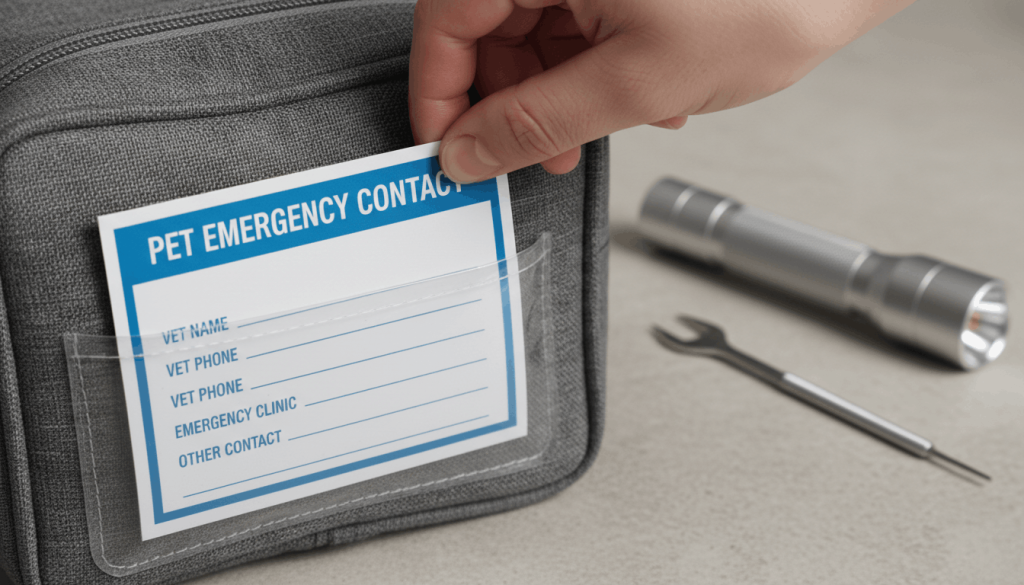
A combined pet first aid kit dog and cat households can share should also include:
- tick remover tool
- disposable syringes (without needles) for rinsing wounds
- emergency contact list (regular veterinarian, emergency clinic, animal poison helpline)
- flashlight
- spare collar and leash
Keeping emergency contacts inside your pet first aid kit is strongly recommended in veterinary preparedness literature.
What should never go in a pet first aid kit
Well-intentioned owners sometimes add inappropriate products. A safe pet first aid kit should avoid:
- human painkillers (e.g., ibuprofen, acetaminophen)
- essential oils applied directly to skin
- alcohol or hydrogen peroxide for routine wound cleaning
These substances are associated with toxicity or delayed healing in dogs and cats.
Organizing your pet first aid kit for real use
How your kit is stored matters as much as what it contains.
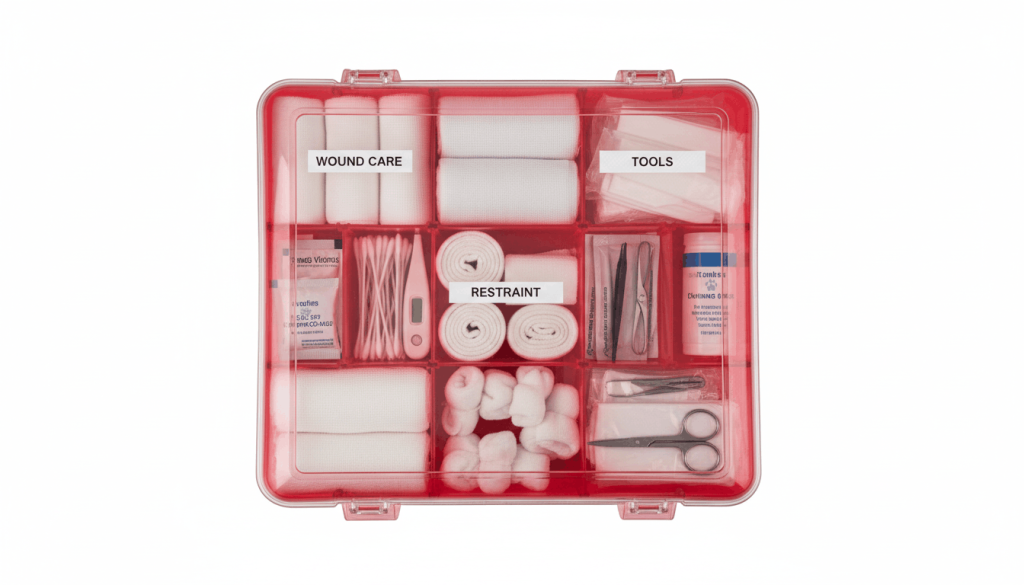
A well-organized dog first aid kit or cat first aid kit should be:
- clearly labeled
- stored away from heat and moisture
- checked every 6 months for expiration dates
Keeping items grouped by purpose (wound care, monitoring, restraint) improves response time during stressful moments.
How MyCern fits into everyday pet preparedness
At MyCern, we promote science-guided wellness awareness and practical home preparedness. A thoughtfully assembled pet first aid kit dog and cat families maintain aligns with proactive lifestyle care by encouraging observation, early response, and low-risk support during minor events.
Our educational focus complements responsible veterinary partnerships and encourages owners to recognize when supportive home care is appropriate and when professional evaluation is essential.
Lifestyle tips for safer homes and better preparedness
- Keep your pet first aid kit in the same location year-round.
- Place a small duplicate kit in your car for travel.
- Learn basic bandaging techniques from certified veterinary or animal welfare programs.
- Record your pet’s normal temperature and behavior patterns in advance for comparison.
These habits improve confidence and reduce unnecessary delays.
Frequently asked questions
What should be in a pet first aid kit?
A basic pet first aid kit should contain wound dressings, saline, gloves, cohesive wrap, thermometer, towel, emergency contacts, and safe restraint tools.
Is a dog first aid kit different from a cat first aid kit?
Yes. A dog first aid kit emphasizes mobility support and restraint tools, while cat first aid kit essentials focus more on gentle handling, stress reduction, and secure wrapping.
Can one pet first aid kit be used for both dogs and cats?
Yes. A shared pet first aid kit dog and cat owners use can be effective when it includes species-appropriate handling tools and excludes unsafe medications.
What are the most important cat first aid kit essentials?
Saline, non-stick pads, cohesive wrap, towel for wrapping, thermometer, and emergency contact information are among the most important cat first aid kit essentials.

Conclusion
Building a well-structured pet first aid kit is a simple but meaningful step toward safer daily life with companion animals. Whether you assemble a dedicated dog first aid kit, a stress-aware cat first aid kit, or a shared household solution, focusing on evidence-based supplies and gentle handling tools helps owners respond calmly to common situations.
Preparedness supports confidence, safety, and more informed communication with veterinary professionals when it matters most.
References
- Drobatz, K. J., Hopper, K., Rozanski, E. A., & Silverstein, D. C. (Eds.). (2018). Textbook of small animal emergency medicine. John Wiley & Sons.
- Mazzaferro, E. M. (Ed.). (2017). Blackwell’s five-minute veterinary consult clinical companion: small animal emergency and critical care. John Wiley & Sons.
- Little, S. E. (Ed.). (2024). The Cat-E-Book: The Cat-E-Book. Elsevier Health Sciences.
- Willemsen, A., Cobbold, R., Gibson, J., Wilks, K., Lawler, S., & Reid, S. (2019). Infection control practices employed within small animal veterinary practices—a systematic review. Zoonoses and public health, 66(5), 439-457.
- Overall, K. (2013). Manual of Clinical Behavioral Medicine for Dogs and Cats-E-Book: Manual of Clinical Behavioral Medicine for Dogs and Cats-E-Book. Elsevier Health Sciences.
- Mathews, K., Kronen, P. W., Lascelles, D., Nolan, A., Robertson, S., Steagall, P. V., … & Yamashita, K. (2014). Guidelines for recognition, assessment and treatment of pain: WSAVA Global Pain Council members and co‐authors of this document. Journal of Small Animal Practice, 55(6), E10-E68.