

How to Clean Dog Ears Safely: Preventing Infections Without Over-Cleaning
Written by MyCern Research & Editorial Team
Ear care is one of the most misunderstood parts of routine dog hygiene. Many owners only think about ear cleaning when their dog starts scratching, shaking their head, or developing odor. However, knowing how to clean dog ears properly and knowing when not to clean, plays a major role in long-term ear comfort and dog ear infections prevention.
The challenge is balance. Cleaning too little allows debris and moisture to accumulate. Cleaning too often can damage the natural protective barrier of the ear canal.
This article explores:
- how a healthy dog ear protects itself
- how to clean dog ears safely without disrupting natural defenses
- how often to clean dog ears based on lifestyle and anatomy
- simple habits that reduce infection risk over time
Understanding the natural defense system of the dog ear

The canine ear canal is long and curved, forming an “L” shape. This structure helps trap debris before it reaches the deeper ear but also makes airflow limited. To compensate, the ear produces wax and antimicrobial secretions that help maintain a stable microbial environment.
Scientific research shows that disruption of this natural ecosystem can contribute to inflammation and microbial overgrowth, increasing susceptibility to otitis externa. This is why correct technique matters as much as frequency when learning how to clean dog ears.
When ear cleaning actually helps
Routine ear cleaning supports:
- removal of excess wax and debris
- reduction of trapped moisture after bathing or swimming
- improved airflow within the outer ear canal
These factors are strongly associated with dog ear infections prevention, particularly in dogs that swim frequently, have heavy ear feathering, or live in humid environments.
However, routine cleaning is not a treatment for underlying allergies, anatomical narrowing, or chronic inflammatory conditions.
How to clean dog ears safely

Proper technique is the foundation of safe ear care.
Step 1: Use an appropriate canine ear cleanser
Choose a veterinary-formulated, pH-balanced ear solution. Human products, alcohol, hydrogen peroxide, or vinegar can irritate the delicate lining of the ear canal.
Step 2: Gently fill the outer ear canal
Lift the ear flap and apply the solution into the opening of the canal. Do not insert the bottle tip deeply into the ear.
Step 3: Massage the base of the ear
Massage the base of the ear for 20–30 seconds. This loosens wax and debris from the canal walls.
Step 4: Allow your dog to shake
Head shaking is helpful. It brings loosened material outward naturally.
Step 5: Wipe only what you can see
Using soft cotton pads or gauze, wipe the visible portion of the ear canal and inner ear flap. Never use cotton swabs inside the canal.
This gentle, surface-focused method is the safest way to approach how to clean dog ears.
Why over-cleaning can increase infection risk
The ear canal lining is protected by a thin lipid layer and beneficial microorganisms. Frequent or aggressive cleaning removes this protective layer and can create microscopic irritation.
Over time, this may:
- increase moisture retention
- disrupt normal microbial balance
- weaken the skin barrier
Ironically, excessive cleaning can raise the risk of inflammation and undermine long-term dog ear infections prevention.
How often to clean dog ears
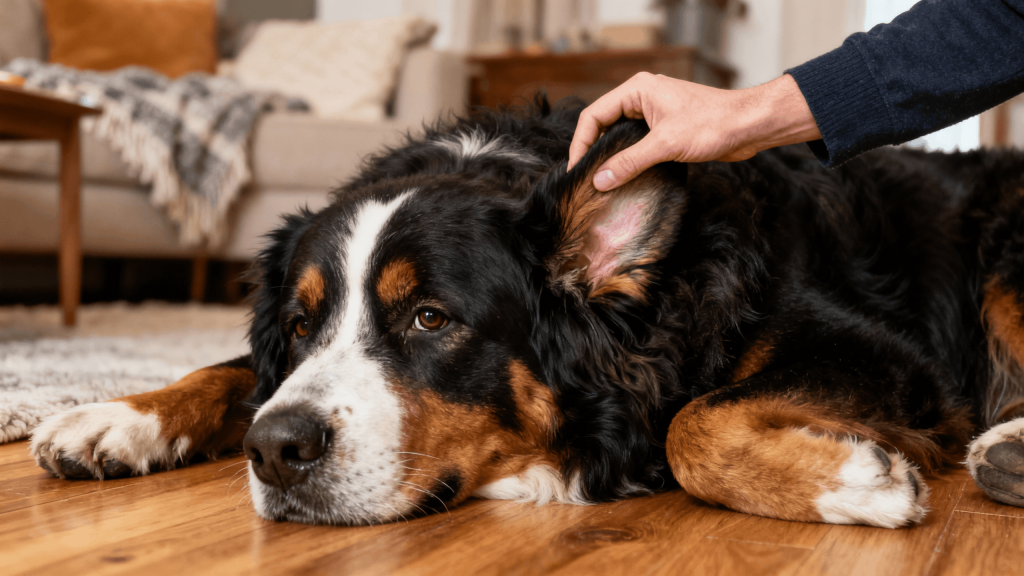
There is no universal schedule. The ideal frequency depends on lifestyle, breed traits, and previous ear history.
In general:
- Dogs with clean, dry, odor-free ears may only need cleaning every 3–4 weeks
- Swimming dogs often benefit from light cleaning after water exposure
- Dogs with heavy ear hair, pendulous ears, or wax buildup may need weekly checks
For most healthy dogs, owners should focus on monitoring rather than strict routines. This individualized approach is the most reliable way to decide how often to clean dog ears safely.
Early warning signs that cleaning alone is not enough
If you notice:
- persistent head shaking
- redness or swelling
- thick discharge
- strong odor
- pain when touching the ear
these may indicate developing infection or inflammation. Cleaning should not be used to mask these signs. Veterinary evaluation is essential when symptoms persist.
The role of nutrition and systemic balance in ear health
Emerging research shows that chronic ear inflammation is frequently associated with systemic immune activity, skin barrier integrity, and oxidative stress.
Supporting whole-body resilience including skin and mucosal surfaces, may help reduce recurring flare-ups that often precede ear problems. Long-term ear comfort is not determined by topical care alone.
Practical lifestyle strategies for dog ear infections prevention
Small habits can make a measurable difference:
- Dry ears gently after swimming or bathing
- Trim excess hair around the ear opening when appropriate
- Maintain regular grooming schedules
- Monitor ears weekly for odor, redness, or discharge
- Avoid unnecessary product changes that may irritate skin
- Maintain consistent nutrition and hydration to support skin barrier function
These practices reinforce the effectiveness of proper cleaning without increasing risk.

Conclusion
Learning how to clean dog ears safely is not about creating a strict routine, it is about protecting the ear’s natural defenses. Gentle technique, appropriate products, and individualized frequency help maintain healthy ear environments while reducing the risk of irritation and imbalance.
By understanding how often to clean dog ears based on your dog’s lifestyle and anatomy, and by supporting overall skin and immune health, owners can strengthen long-term dog ear infections prevention without over-cleaning or unnecessary intervention.
Calm, consistent care remains one of the most reliable tools for preserving everyday ear comfort.
References
- Angus, J. C. (2004). Otic cytology in health and disease. Veterinary Clinics: Small Animal Practice, 34(2), 411-424.
- Cole, L. K., Kwochka, K. W., Kowalski, J. J., & Hillier, A. (1998). Microbial flora and antimicrobial susceptibility patterns of isolated pathogens from the horizontal ear canal and middle ear in dogs with otitis media. Journal of the American Veterinary Medical Association, 212(4), 534-538.
- Griffin, C. E. (1993). Otitis externa and otitis media. Current veterinary dermatology, 245.
- Nuttall, T., & Cole, L. K. (2007). Evidence‐based veterinary dermatology: a systematic review of interventions for treatment of Pseudomonas otitis in dogs. Veterinary Dermatology, 18(2), 69-77.
- Rosser, E. J. (2004). Causes of otitis externa. Veterinary Clinics: Small Animal Practice, 34(2), 459-468.

