
Raising a Happy, Healthy Kitten: Essential Care Tips for New Cat Owners
Written by MyCern Research & Editorial Team
Bringing a kitten into your home is an exciting experience, but early life stages are critical for growth, behavior development, and long-term health. Proper care, nutrition, and environmental support during the first months help kittens build strong immune systems, healthy habits, and a resilient body. Understanding these needs allows new cat owners to provide a nurturing, science-informed start to life.
This article explores:
- Key health and development milestones in kittens
- Nutritional needs during early growth
- Socialization and behavioral enrichment
- Preventive care and hygiene practices
- Daily routines that support lifelong wellbeing
Growth and Development Milestones

Kittens grow rapidly in the first year, with important changes in body systems, coordination, and behavior:
- Eyes and ears fully develop by 2–3 weeks
- Weaning and solid food introduction around 4–6 weeks
- Social and play behaviors peak between 6–12 weeks
- Physical growth continues until 12 months, with larger breeds maturing later
Quick Tip Box – Monitoring Healthy Development:
- Track weight gain weekly during early months
- Observe alertness, playfulness, and coordination
- Consult a vet if growth seems unusually slow or rapid
- Maintain a record of vaccination and health checks
Nutrition for Growing Kittens

Kittens require nutrient-dense diets to support rapid growth and organ development:
- High-quality protein supports muscle and tissue formation
- Healthy fats provide energy and support skin, coat, and brain development
- Calcium and phosphorus are critical for bone and dental health
- Vitamins and antioxidants support immune system development
Quick Tip Box – Feeding Essentials:
- Feed kitten-formulated diets rather than adult cat food
- Offer multiple small meals throughout the day
- Introduce new foods gradually to avoid digestive upset
- Monitor hydration by providing fresh water at all times
Socialization and Behavioral Enrichment
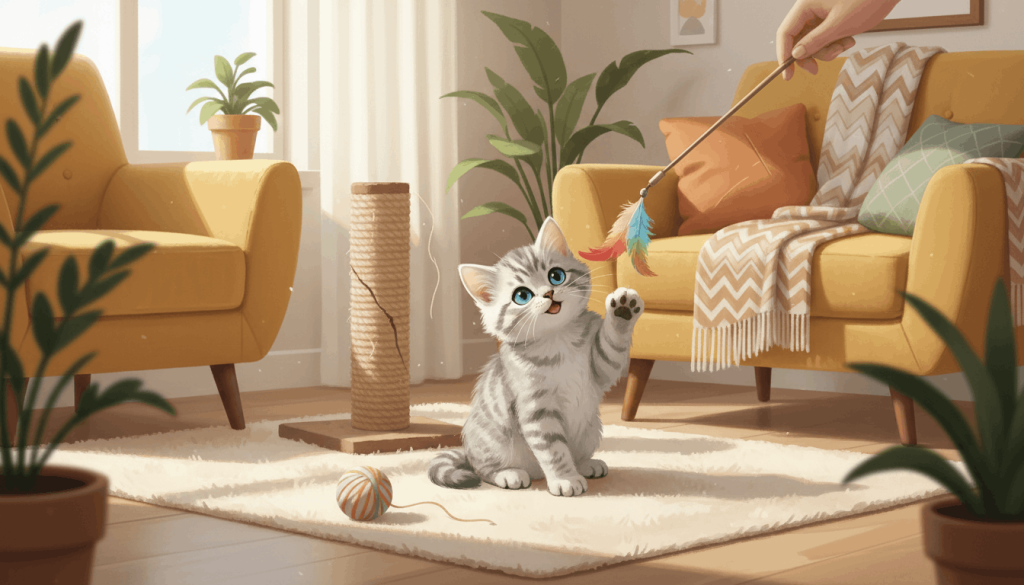
Early experiences shape a kitten’s social skills, confidence, and mental health:
- Gentle handling helps kittens adapt to humans
- Playtime encourages coordination, mental stimulation, and healthy exercise
- Introducing safe new environments, sounds, and textures builds resilience
Quick Tip Box – Enrichment Ideas:
- Use interactive toys like feather wands or balls
- Provide vertical spaces and hiding spots
- Rotate toys to maintain novelty
- Encourage gentle play to prevent aggressive habits
Preventive Health and Hygiene
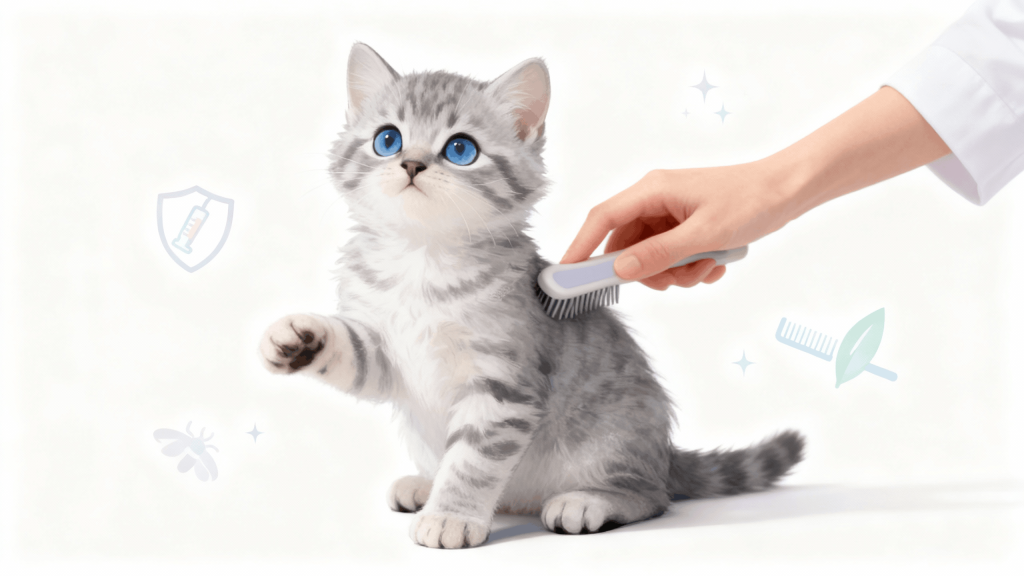
Routine veterinary care and hygiene practices prevent illness and support long-term wellbeing:
- Vaccinations protect against common infectious diseases
- Parasite prevention reduces the risk of fleas, ticks, and worms
- Regular grooming maintains coat and skin health
- Litter training establishes consistent toileting habits
Quick Tip Box – Early Care Habits:
- Schedule veterinary check-ups for growth monitoring
- Use kitten-safe grooming tools
- Keep litter boxes clean and in quiet locations
- Monitor for signs of illness or behavioral changes
Daily Routines That Promote Health and Comfort
Consistency and structure help kittens feel secure and thrive:
- Fixed feeding and play schedules support digestion and behavior
- Quiet, safe sleeping areas promote restorative rest
- Gradual introduction to household routines prevents stress
- Positive reinforcement strengthens desired behaviors

References
- Scarlett, J. M., & Smith, S. (2003). Behavioral development of kittens. Journal of Feline Medicine and Surgery, 5(6), 299–308.
- Case, L. P., et al. (2011). Canine and Feline Nutrition: A Resource for Companion Animal Professionals. Elsevier.
- Buffington, C. A. (2002). Environmental enrichment for kittens: Behavioral considerations. Journal of the American Veterinary Medical Association, 220(6), 791–794.
- Hosie, M. J., et al. (2009). Vaccination and preventive care guidelines for cats. Veterinary Record, 164(21), 655–662.
Conclusion
Raising a kitten involves more than just feeding and play, it requires careful attention to growth, nutrition, socialization, preventive care, and daily routines. By providing a structured, enriched, and science-informed environment, new cat owners can help kittens develop into healthy, confident, and resilient adult cats. A thoughtful approach in the first months sets the stage for a lifetime of wellbeing.