Why Do Dogs Sleep So Much? Normal Sleep Needs by Age and Breed
Written by MyCern Research & Editorial Team
It is completely normal for many pet parents to wonder why do dogs sleep so much, especially when their dog seems to be resting most of the day.
This article explores:
- how many hours dogs sleep at different life stages
- why some breeds naturally need more rest than others
- when “dog sleeping all day” is normal and when it may need attention
- simple daily habits that support healthy sleep and energy
Why do dogs sleep so much compared to humans?
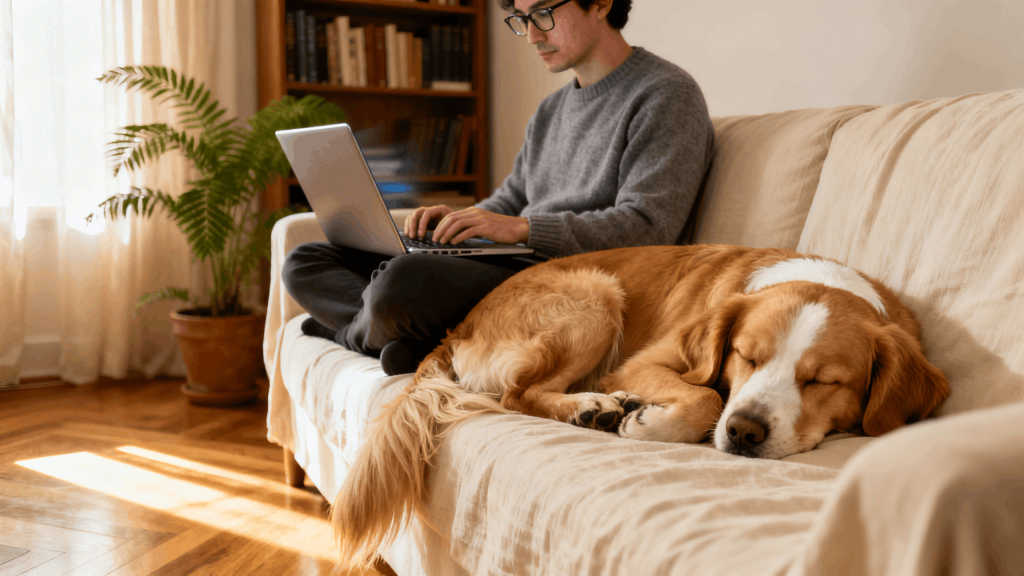
Dogs sleep more than people because their brains and bodies recover differently. While humans often stay active for long, continuous periods, dogs use short bursts of physical and mental activity followed by longer recovery time.
According to guidance commonly shared by the American Kennel Club, dogs naturally follow a polyphasic sleep pattern. This means they rest multiple times across the day and night instead of having one long uninterrupted sleep.
In simple terms, sleep helps dogs:
- restore muscles after walking, running and play
- support learning and memory after training or new experiences
- regulate stress hormones and emotional balance
So if you find yourself asking why can dogs sleep so much, the short answer is that their nervous system is designed to recharge frequently.
How many hours do dogs sleep each day?
One of the most searched questions is how many hours do dogs sleep.
On average:
- Adult dogs sleep about 12 to 14 hours per day
- Puppies can sleep 18 to 20 hours per day
- Senior dogs often sleep 14 to 18 hours per day
This includes nighttime sleep and daytime naps.
Short naps after walks, meals or play sessions are normal and healthy. They help dogs process stimulation and prevent physical overexertion.
Why puppies sleep so much
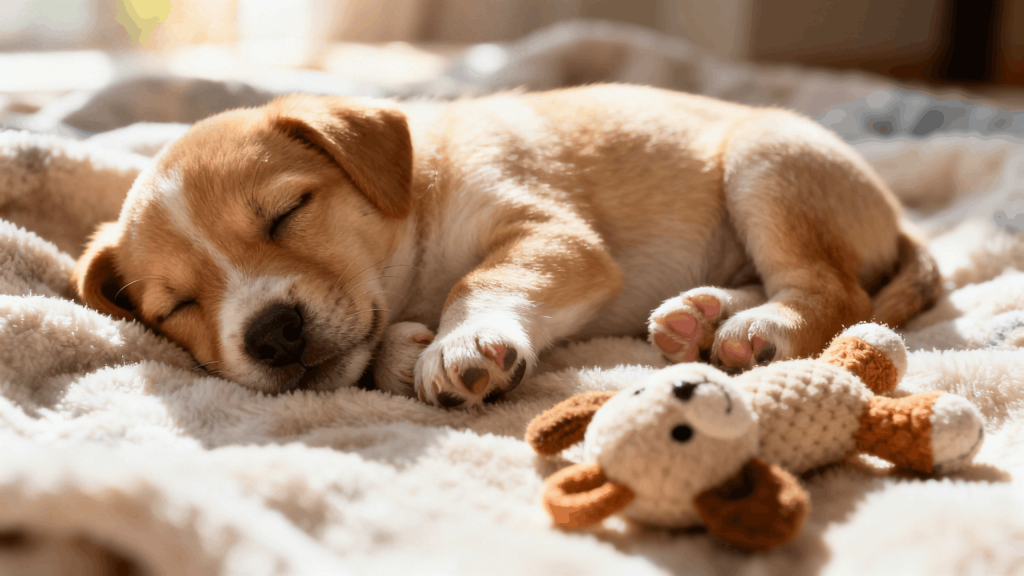
If you live with a puppy, you may feel that your dog is always asleep.
Puppies sleep more because their bodies are growing rapidly and their brains are constantly processing new information. Learning simple skills, social interactions and new environments requires more recovery time than in adult dogs.
Sleep in puppies supports:
- development of joints and muscles
- formation of long term memory
- emotional regulation during early social learning
A well rested puppy is usually calmer, easier to train and less likely to become overstimulated.
Why senior dogs sleep more than before
Many owners become concerned when an older dog begins sleeping longer during the day.
This change is often related to:
- slower metabolism
- reduced muscle mass
- mild stiffness or joint discomfort
- lower tolerance for intense activity
Senior dogs need more frequent rest breaks to avoid fatigue. Longer sleep does not automatically mean illness, especially when appetite, mobility and mood remain stable.
However, it is important to monitor how your dog behaves when awake. Bright eyes, interest in food, and willingness to move are all positive signs.
Dog sleeping all day: when is it normal?
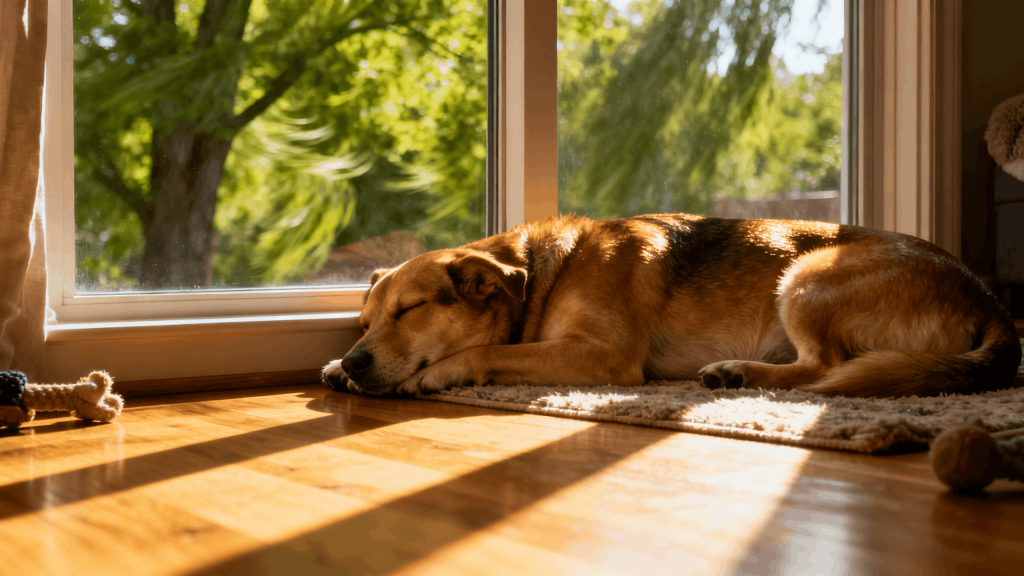
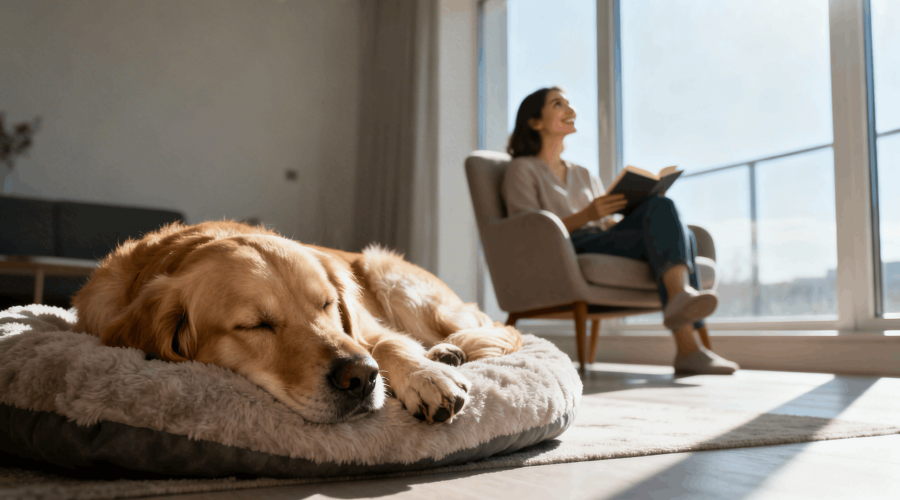
Seeing a dog sleeping all day can be completely normal in some situations, especially:
- after a very active day
- during hot weather
- after emotional excitement such as visitors, travel or training
Dogs also tend to sleep more when their environment is quiet and predictable.
According to clinicians from VCA Animal Hospitals, changes in daily routine, weather and household activity can significantly influence rest patterns in pets.
When excessive sleep may be a concern
While long sleep hours are normal, you should pay attention if your dog shows:
- sudden increase in sleep lasting several days
- low interest in food
- reduced interaction with family
- difficulty standing up or walking
- visible discomfort or restlessness during sleep
In these cases, “dog sleeping all day” may reflect pain, digestive discomfort, emotional stress or underlying health changes.
If these signs appear together, professional veterinary guidance is always recommended.
Why breed and genetics influence sleep needs
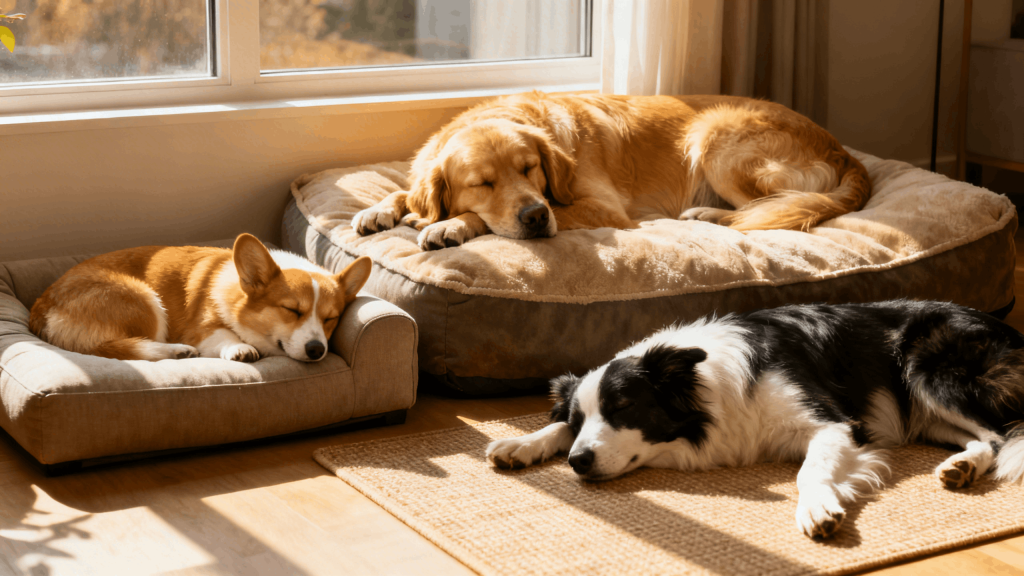
Breed plays an important role in how much rest a dog naturally requires.
Working and high drive breeds often stay alert longer and need structured activity. On the other hand, many companion and giant breeds are known for longer rest periods.
For example:
- herding and sporting dogs often need more stimulation before settling
- toy and giant breeds typically rest more throughout the day
This explains why comparing your dog’s sleep to another household’s pet is not always helpful. Breed tendencies and individual personality both matter.
How daily routine affects dog sleep quality
Dogs sleep better when their day includes balanced stimulation.
A healthy routine usually includes:
- light to moderate physical movement
- short training or play sessions
- social interaction
- calm recovery periods
Dogs who lack mental stimulation may appear sleepy simply because they are bored, not because they are truly tired. This is one of the hidden reasons behind the question why do dogs sleep so much in low activity households.
Practical daily habits that support healthy sleep
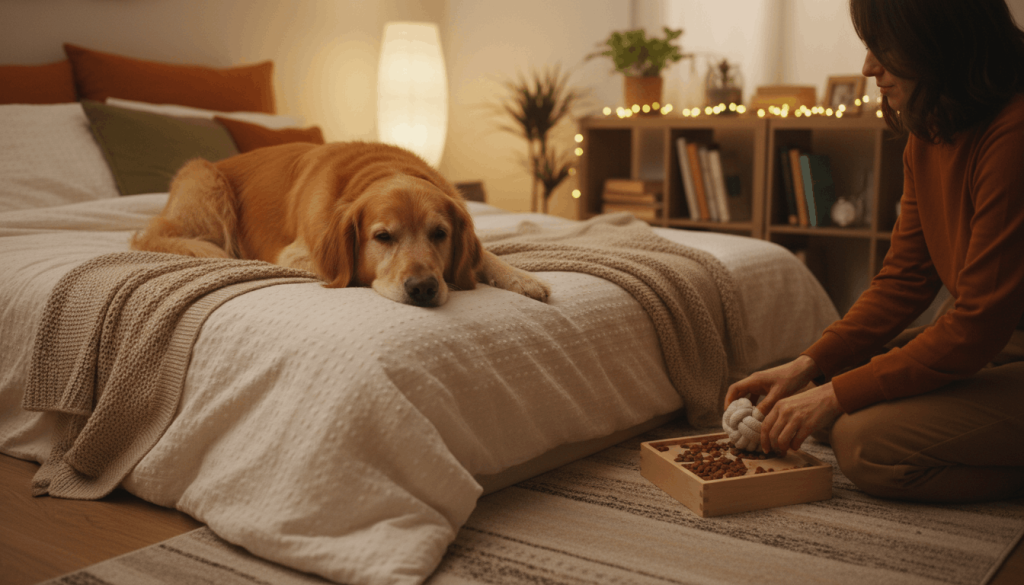
Simple lifestyle habits can make a noticeable difference:
- keep walk times consistent each day
- add short scent games or puzzle feeding
- avoid intense play right before bedtime
- provide a quiet, dim sleeping area at night
- allow undisturbed naps during the day
Balanced activity helps regulate energy levels and supports deeper, more restorative sleep.
Frequently asked questions
Why can dogs sleep so much and still seem energetic later?
Dogs recharge quickly. A few hours of quality rest allows them to return to alert behavior and play, even after long naps.
Is it normal for dogs to nap after meals?
Yes. Digestion increases blood flow to the gastrointestinal system, which naturally promotes relaxation and drowsiness.
Should I wake my dog if they sleep a lot?
In most cases, no. Healthy dogs self regulate their sleep. It is better to focus on activity quality during their awake time.
Conclusion
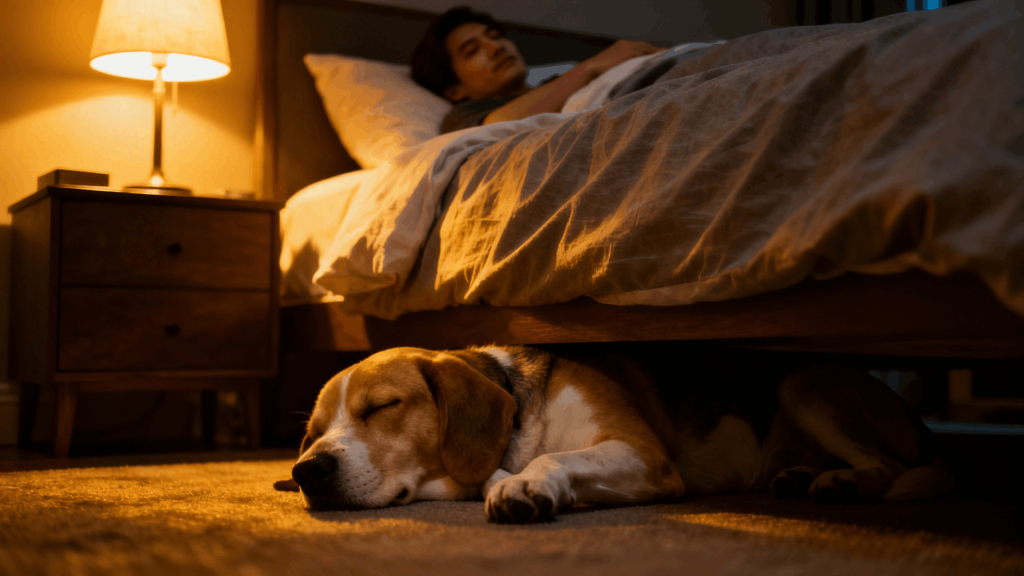
Dogs sleep more than humans because their bodies and brains rely on frequent recovery. Understanding how age, breed and lifestyle influence rest helps explain why dogs sleep so much and why longer sleep is often normal.
By providing consistent routines, gentle stimulation and a calm environment, pet parents can support healthy sleep patterns that contribute to long term comfort, learning and emotional balance.
References
- Siegel, J. M. (2005). Clues to the functions of mammalian sleep. Nature, 437(7063), 1264-1271.
- Zanghi, B. M., Kerr, W., de Rivera, C., Araujo, J. A., & Milgram, N. W. (2012). Effect of age and feeding schedule on diurnal rest/activity rhythms in dogs. Journal of Veterinary Behavior, 7(6), 339-347.
- Overall, K. (2013). Manual of clinical behavioral medicine for dogs and cats-E-Book: manual of clinical behavioral Medicine for dogs and cats-E-Book. Elsevier Health Sciences.
- Chokroverty, S. (2017). Overview of normal sleep. In Sleep disorders medicine: Basic science, technical considerations and clinical aspects (pp. 5-27). New York, NY: Springer New York.
- Houpt, K. A. (2024). Domestic animal behavior for veterinarians and animal scientists. John Wiley & Sons.