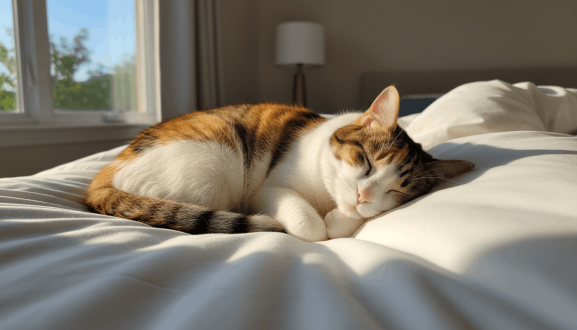
Daytime Activity vs Nighttime Rest: Helping Pets Maintain Healthy Sleep Cycles
Written by MyCern Research & Editorial Team
Many pet parents notice subtle changes in their pet’s sleep patterns long before obvious health issues appear. Restlessness at night, excessive daytime sleeping, early-morning vocalization, or reversed sleep schedules are often dismissed as normal quirks. In reality, these behaviors can reflect disruption of a pet’s circadian rhythm, the internal biological clock that regulates sleep, activity, metabolism, and hormone release.
Just like humans, dogs and cats rely on synchronized cycles of light exposure, movement, feeding, and rest to maintain healthy physiological function. When this rhythm becomes misaligned, the effects extend beyond sleep quality, influencing mood, immune regulation, cognitive function, and long-term vitality.
This article explores how circadian rhythms function in pets, what disrupts them, and how balancing daytime activity with nighttime rest supports overall health.
Understanding the Pet Circadian Clock

Circadian rhythms are approximately 24-hour biological cycles regulated by the suprachiasmatic nucleus (SCN) in the brain. This internal clock responds primarily to light-dark signals, but also integrates information from feeding times, physical activity, and social interaction.
Dogs are considered diurnal-flexible, meaning their rhythms adapt somewhat to human schedules, while cats are crepuscular, naturally most active at dawn and dusk. Despite these differences, both species still depend on predictable cycles to maintain internal stability.
When circadian timing is stable, pets experience:
- Consolidated nighttime rest
- Predictable energy levels during the day
- Balanced cortisol and melatonin rhythms
- Improved emotional regulation
Disruption leads to fragmented sleep, altered stress hormones, and behavioral changes.
Why Daytime Activity Matters for Nighttime Rest

Sleep quality is not determined solely by bedtime routines, it is shaped by how the body is used during the day. Adequate daytime activity provides the physiological signals needed for the brain to initiate restorative rest at night.
Key mechanisms include:
- Adenosine accumulation, which builds during wakefulness and promotes sleep pressure
- Muscle and joint use, reinforcing physical fatigue cues
- Sensory engagement, supporting cognitive satisfaction
Pets that lack structured daytime stimulation may nap excessively, reducing nighttime sleep drive. This is commonly seen in indoor cats, senior dogs, or pets left inactive for long periods.
The Role of Light Exposure

Light is the strongest circadian cue. Exposure to natural daylight suppresses melatonin production during the day and allows for its proper release at night.
Problems arise when pets:
- Spend most daylight hours indoors under artificial lighting
- Are exposed to bright lights or screens late at night
- Experience inconsistent lighting schedules
Even indoor pets benefit from window exposure, outdoor walks, or daylight-aligned routines. Research shows that inappropriate light exposure can shift circadian timing and alter sleep-wake cycles in mammals (Refinetti, 2016).
Nighttime Rest and Hormonal Balance
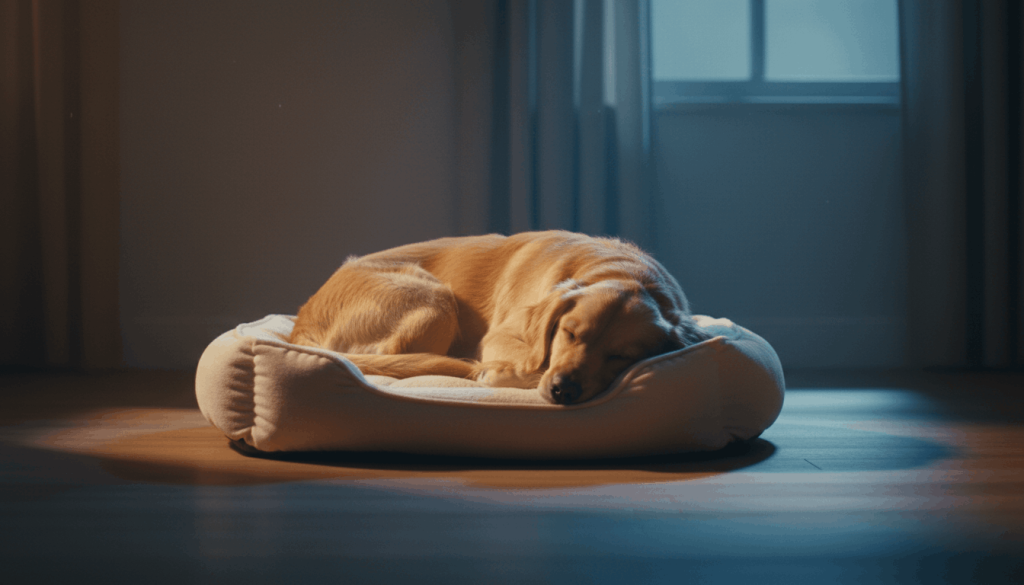
Nighttime sleep is when critical hormonal processes occur. Melatonin release supports:
- Immune modulation
- Antioxidant defense
- Neural repair and memory consolidation
Chronic circadian disruption has been linked to increased oxidative stress and inflammation in animal models (Fonken & Nelson, 2014). In pets, this may contribute over time to cognitive decline, metabolic imbalance, and reduced resilience with aging.
Pets with irregular sleep cycles may also show elevated nighttime cortisol, leading to restlessness, pacing, or vocalization.
Common Causes of Circadian Disruption in Pets

Several modern lifestyle factors interfere with natural sleep-wake rhythms:
- Inconsistent feeding schedules
- Late-night play or stimulation
- Reduced daytime movement
- Artificial lighting after sunset
- Age-related neurological changes
Senior pets are particularly vulnerable due to reduced melatonin production and changes in brain signaling pathways.
Supporting Healthy Sleep Cycles Naturally

Rather than forcing sleep, the goal is to support circadian alignment through predictable environmental cues.
Effective strategies include:
- Establishing consistent feeding and activity times
- Encouraging structured daytime movement
- Limiting high-arousal play close to bedtime
- Dimming lights in the evening
- Preserving a quiet, familiar sleep environment
For cats, scheduling interactive play earlier in the evening followed by feeding can help align natural hunting-rest cycles.
When Sleep Changes Signal Something More
While some rhythm changes are age-related, persistent disruption may indicate underlying issues such as:
- Cognitive dysfunction syndrome
- Hormonal imbalances
- Chronic pain
- Anxiety-related disorders
Sleep pattern changes should always be viewed as biological signals, not just behavioral inconveniences.

Conclusion
Healthy sleep in pets is not accidental—it is the result of well-aligned circadian rhythms shaped by light, movement, routine, and rest. Balancing daytime activity with protected nighttime calm allows the nervous system to regulate itself naturally, supporting long-term physical and emotional health.
By respecting your pet’s internal clock and making small, consistent adjustments to daily routines, you help reinforce one of the most powerful foundations of lifelong vitality: restorative sleep.
References
- Refinetti, R. (2016). Circadian physiology. CRC press.
- Fonken, L. K., & Nelson, R. J. (2014). The effects of light at night on circadian clocks and metabolism. Endocrine Reviews, 35(4), 648–670.
- Landsberg, G. M., Hunthausen, W., & Ackerman, L. (2013). Behavior Problems of the Dog and Cat. Saunders Elsevier.
- Mendl, M., Burman, O. H. P., & Paul, E. S. (2010). An integrative and functional framework for the study of animal emotion and mood. Proceedings of the Royal Society B, 277(1696), 2895–2904.
- Farag, H. I., Murphy, B. A., Templeman, J. R., Hanlon, C., Joshua, J., Koch, T. G., … & Martino, T. A. (2024). One health: circadian medicine benefits both non-human animals and humans alike. Journal of Biological Rhythms, 39(3), 237-269.