Why Does My Cat Flick Her Tail? What Tail Movements Really Mean
Written by MyCern Research & Editorial Team
If you’ve ever wondered why does my cat flick her tail during seemingly calm moments, or noticed rapid tail movements before sudden behavioral changes, you’re observing one of feline communication’s most nuanced systems. Cat tail flicking serves as a sophisticated emotional barometer, reflecting internal states ranging from focused attention to mounting frustration. Unlike dogs whose tail wagging typically signals happiness, cat tail language operates through a complex vocabulary of speed, direction, and intensity patterns.
Understanding cat tail meanings helps owners interpret their cat’s emotional state, anticipate behavioral responses, and respond appropriately to their needs. This knowledge transforms seemingly random movements into readable communication, strengthening the human-feline bond through improved mutual understanding.
This article explores:
- The neurological and muscular mechanisms behind cat tail movement meaning
- Different tail flicking patterns and their corresponding emotional states
- How context and body language modify cat tail flicking meaning
- Environmental and social factors that trigger tail communication signals
The Biology of Feline Tail Communication

Cat tail flicking originates from a complex network of approximately 20 caudal vertebrae controlled by multiple muscle groups. These muscles connect to the spinal cord through abundant nerve endings, creating exceptional mobility and sensory feedback. The tail functions as both communication tool and counterbalance mechanism, with movement patterns reflecting real-time changes in emotional and physiological states.
The autonomic nervous system influences tail positions and movements, linking them directly to emotional processing centers in the feline brain. When a cat experiences arousal—whether positive excitement or negative irritation—neural signals automatically trigger tail responses before conscious behavioral decisions occur. This makes cat tail language an unusually honest communication system, difficult for cats to suppress or fake.
Decoding Different Cat Tail Flicking Patterns
Rapid Tip Flicking: Focus and Mild Irritation
Why does my cat flick her tail at just the tip in quick, isolated movements? This subtle motion typically indicates concentrated attention or mild annoyance. Cats often display tip flicking while watching prey, birds through windows, or when experiencing minor disturbances like being petted slightly too long. The isolated nature suggests the cat remains relatively calm overall, with irritation or excitement contained to low levels.
This cat tail flicking meaning shifts based on duration, brief tip flicks during hunting focus are normal, while prolonged tip twitching during petting suggests building overstimulation requiring a break.
Broad Swishing: Building Agitation

Full tail swishing involving the entire length indicates escalating emotional arousal. When cat tail flicking involves wide, sweeping side-to-side movements, the cat experiences significant stimulation, either negative (frustration, anger) or positive (intense play excitement). The amplitude and speed correlate with intensity; faster, larger swishes signal stronger emotional states.
In conflict situations, this cat tail movement meaning serves as warning communication: “I’m reaching my tolerance limit.” Ignoring these signals often precedes defensive behaviors like swatting, biting, or fleeing.
Thrashing or Whipping: Peak Agitation or Aggression
Violent tail thrashing—rapid, forceful back-and-forth movements that may thump against surfaces—represents maximum arousal and imminent behavioral action. This extreme cat tail flicking pattern appears during serious territorial disputes, predatory attacks, or intense fear responses. The cat’s entire body typically exhibits tension, with dilated pupils, flattened ears, and either crouched or raised posture.
Quivering or Vibrating: Excitement and Scent-Marking
Vertical tail position with fine trembling or quivering motions, particularly near the base, indicates positive excitement or scent-marking behavior. Cats display this during greetings with favored humans, before feeding, or while scent-marking vertical surfaces. This cat tail language signals anticipation and positive emotional engagement rather than negative arousal.

Context and Body Language: Reading Complete Communication
Cat tail meanings cannot be interpreted in isolation, comprehensive understanding requires observing ears, eyes, body posture, and vocalizations simultaneously. A flicking tail combined with forward-facing ears and relaxed body suggests playful excitement, while the same tail movement paired with flattened ears and crouched posture indicates fear or defensive aggression.
Environmental context profoundly affects interpretation. Tail flicking while watching birds represents predatory focus, not irritation with humans. Similarly, tail movements during veterinary visits reflect stress rather than anger toward owners. Understanding situational triggers prevents misreading emotional states.
Social and Environmental Factors Influencing Tail Communication
Multi-cat households generate more frequent and varied cat tail flicking as cats navigate complex social hierarchies and territorial boundaries. Tail communication becomes more pronounced during resource competition, establishing spatial claims, or negotiating social interactions. Cats use tail language to signal intentions and emotional states to other felines, reducing physical confrontations through clear visual communication.
Environmental enrichment affects tail expression patterns. Under-stimulated cats may display more agitation-based tail movements due to boredom or frustration, while adequately enriched environments reduce stress-related flicking. Indoor cats watching outdoor wildlife often show intense tail activity reflecting thwarted hunting instincts.

Human interaction styles significantly impact tail language frequency. Cats living with people who respect feline communication boundaries display fewer warning-level tail flicks, as their signals receive appropriate responses. Conversely, cats whose early warning signs are ignored often escalate quickly to defensive behaviors, having learned subtle communication proves ineffective.
When Tail Movements Signal Wellbeing Concerns
While most cat tail flicking represents normal communication, certain patterns warrant attention. Constant, compulsive tail chasing or biting may indicate neurological issues, parasites, or anxiety disorders rather than communication. Additional concerning signs include:
- Sudden inability to move or control the tail normally
- Visible pain responses when tail is touched or moved
- Tail held consistently limp or at abnormal angles
- Aggressive self-directed tail biting causing injury
- Dramatic changes in typical tail communication patterns
- Tail movements accompanied by vocalization suggesting distress
These patterns may reflect injuries, nerve damage, arthritis affecting caudal vertebrae, or behavioral disorders requiring professional evaluation to distinguish from normal communicative tail language.
How MyCern Supports Stress-Aware, Gut-Aware, and Immune-Aware Wellness

At MyCern, our science-guided wellness philosophy focuses on the biological connection between behavior, digestion, immune signaling, and everyday resilience. By helping pet owners understand cat tail flicking meaning and broader feline communication systems, we encourage environmental and interaction adjustments that reduce stress, honor natural behavioral needs, and support emotional wellbeing.
Recognizing that chronic stress impacts immune function and digestive health, interpreting tail language becomes a tool for early intervention, preventing minor irritations from escalating into sustained anxiety states that affect overall physiological balance.
Simple Lifestyle and Home-Based Support Strategies
- Respect tail warning signals: When cat tail flicking intensifies during interaction, pause petting or play to prevent overstimulation and maintain trust.
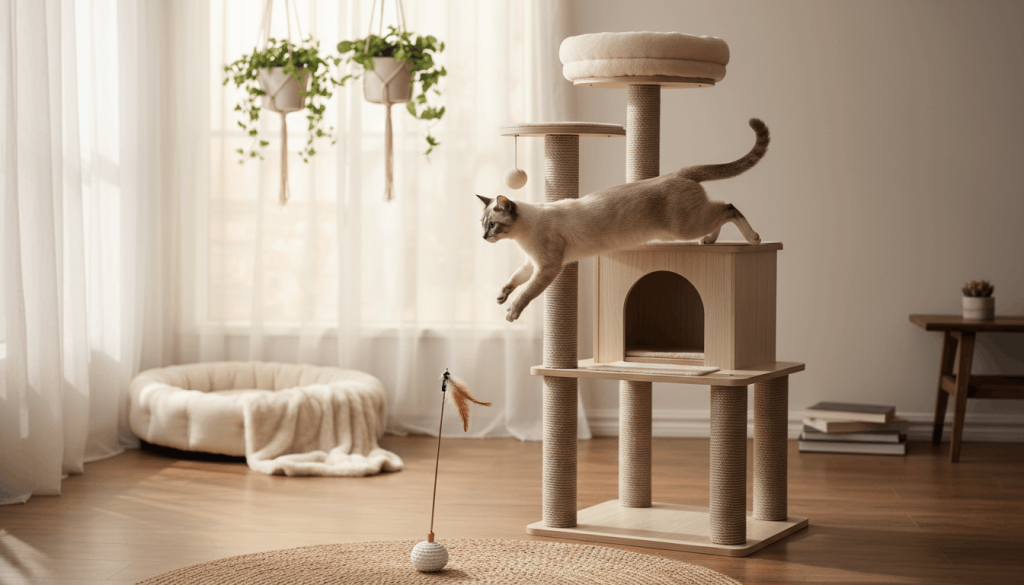
- Provide vertical territory: Cat trees and elevated perches reduce territorial stress in multi-cat homes, decreasing conflict-related tail communication.
- Create predictable routines: Consistent feeding, play, and rest schedules reduce anxiety-based tail movements by establishing environmental predictability.
- Offer appropriate outlets: Interactive toys and hunting-style play satisfy predatory instincts, reducing frustration-driven tail thrashing from unmet behavioral needs.
- Maintain quiet retreat spaces: Access to calm, private areas allows cats to self-regulate arousal levels, reducing sustained agitation reflected in tail language.
- Observe individual baselines: Learn your cat’s typical tail movement patterns to quickly identify unusual changes suggesting discomfort or stress.
- Avoid punishment for communication: Never reprimand cats for tail flicking—it’s involuntary emotional expression, not conscious misbehavior requiring correction.
Frequently Asked Questions
Why does my cat flick her tail when I pet her?
Cat tail flicking during petting typically signals building overstimulation or that you’ve reached their tolerance threshold for physical contact. Cats have sensitive skin with abundant nerve endings; prolonged petting can shift from pleasant to irritating. Brief tip flicks suggest mild tolerance limits, while broader swishing indicates immediate cessation is needed to prevent defensive responses.
What does cat tail flicking mean when my cat is just sitting quietly?
Isolated tail movements during apparent calm often reflect internal processing—the cat may be watching something subtle you haven’t noticed, hearing distant sounds, or experiencing mild irritation from environmental factors like uncomfortable temperature or distant noises. Context observation usually reveals the trigger.
Is cat tail language the same across all cats?
While general cat tail meanings remain consistent across individuals, intensity thresholds and specific patterns vary by personality, breed tendencies, and early socialization. Some cats display more pronounced tail communication, while others show subtler signals. Learning your individual cat’s tail vocabulary patterns improves interpretation accuracy.
Conclusion
Understanding why cats flick their tails reveals sophisticated emotional communication occurring through precise muscular control and involuntary nervous system responses. Cat tail language, when interpreted alongside body posture, facial expressions, and environmental context, provides reliable insight into feline emotional states and behavioral intentions. Respecting these signals, particularly warning-level tail flicking, supports positive human-feline relationships built on mutual understanding and appropriate response to communicated needs and boundaries.
References
- Bradshaw, J. W. S., & Cameron-Beaumont, C. (2020). The signaling repertoire of the domestic cat and its undomesticated relatives. In The Domestic Cat: The Biology of its Behaviour (3rd ed., pp. 67-93). Cambridge University Press.
- Cameron-Beaumont, C., Lowe, S. E., & Bradshaw, J. W. S. (2019). Evidence suggesting preadaptation to domestication throughout the small Felidae. Biological Journal of the Linnean Society, 127(2), 297-311.
- Shreve, K. R. V., & Udell, M. A. R. (2021). Stress, security, and scent: The influence of chemical signals on the social lives of domestic cats. Applied Animal Behaviour Science, 238(1), 105-119.
- Turner, D. C., & Bateson, P. (2020). The domestic cat: Communication and cognition. In Behavioral Biology of the Domestic Cat (pp. 156-182). CABI Publishing.
- Van den Bos, R., & de Vries, H. (2018). Understanding the communication signals of domestic cats: A behavioral and physiological perspective. Animal Cognition, 21(4), 445-461.