Why Some Dogs Overheat Faster Than Others even in Mild Weather
Written by MyCern Research & Editorial Team
It’s easy to assume that overheating is only a risk on hot summer days. Yet many dogs show signs of heat stress during mild weather, short walks, or even indoor play. For some dogs, temperature regulation is far more challenging, not because of fitness or age alone, but due to biological differences in how their bodies dissipate heat.
Dogs do not regulate temperature the same way humans do. Their cooling systems rely on specific anatomical and physiological mechanisms that vary widely by breed, body structure, and coat type. Understanding why certain dogs overheat faster helps owners recognize risk earlier and adapt daily routines for safety and comfort.
This article explores:
- How dogs regulate body temperature
- Why some dogs struggle with heat dissipation
- The role of coat type and body composition
- How airway structure affects cooling efficiency
- Practical implications for daily activity and care
How Dogs Regulate Body Temperature
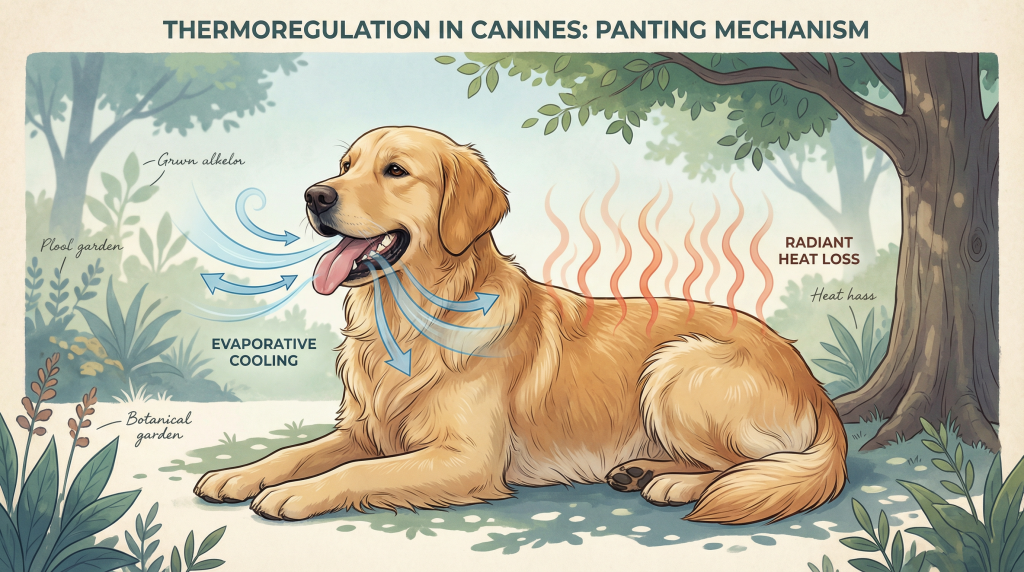
Dogs maintain body temperature primarily through panting and limited heat exchange through the skin. Unlike humans, they have very few sweat glands, and those are confined mainly to the paw pads.
Key thermoregulation mechanisms include:
- Evaporative cooling through panting
- Heat exchange via blood flow to the skin and tongue
- Behavioral regulation (seeking shade, resting)
When these systems are inefficient or overwhelmed, body temperature can rise rapidly—even without extreme environmental heat.
Panting: An Efficient but Fragile Cooling System
Panting allows dogs to evaporate moisture from the tongue and upper airways, releasing heat from circulating blood. This process depends on:
- Open, unobstructed airways
- Efficient airflow across moist tissues
- Adequate hydration to support evaporation
Any factor that restricts airflow or increases respiratory effort reduces cooling efficiency and raises the risk of overheating.
Airway Structure and Heat Vulnerability

Dogs with shortened skulls and compressed airways commonly known as brachycephalic breeds, are particularly prone to overheating.
Structural challenges may include:
- Narrow nostrils
- Elongated soft palate
- Reduced airway diameter
- Increased breathing resistance
Because panting is less effective, these dogs generate more heat simply by breathing harder, creating a cycle where cooling becomes progressively less efficient.
Coat Type and Thermal Insulation
A dog’s coat plays a complex role in temperature regulation. While fur can provide insulation against heat, certain coat characteristics increase heat retention.
Factors influencing thermal load include:
- Dense undercoats that trap warm air
- Dark pigmentation that absorbs radiant heat
- Thick or matted fur that limits airflow to the skin
Double-coated breeds may struggle to release internal heat efficiently, especially during humidity or low airflow conditions.
Body Size, Shape, and Heat Exchange

Body surface area relative to mass affects how easily heat dissipates. Dogs with compact builds or higher body fat percentages have less surface area available for heat release.
Additional considerations include:
- Excess body weight increasing metabolic heat production
- Shorter limbs reducing convective cooling
- Thick musculature generating more heat during activity
These structural factors help explain why some dogs overheat despite moderate exertion.
Mild Weather Does Not Mean Low Risk
Heat stress is influenced by more than air temperature. Humidity, solar radiation, wind, and ground surface temperature all affect cooling capacity.
In mild weather:
- Humidity can reduce evaporative cooling
- Still air limits heat dissipation
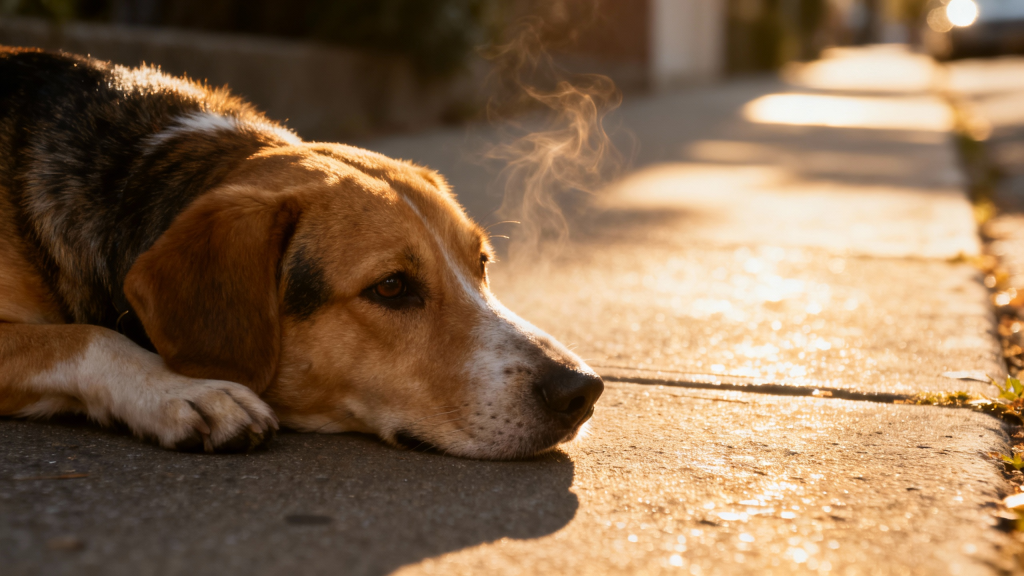
- Asphalt and concrete radiate heat upward
Dogs with compromised cooling mechanisms may accumulate heat faster than expected under these conditions.
Early Physiological Signs of Heat Stress
Overheating often begins subtly, before dramatic symptoms appear. Early physiological responses include:
- Rapid or labored panting
- Increased heart rate
- Reduced coordination or willingness to move
- Seeking cool surfaces or lying down abruptly
Recognizing these early signs allows intervention before heat stress escalates.
Supporting Safe Thermoregulation in Daily Life
Thermal tolerance varies widely among dogs. Supporting cooling efficiency focuses on prevention rather than endurance.
Helpful strategies include:
- Adjusting activity timing to cooler hours
- Allowing frequent rest breaks
- Ensuring access to fresh water
- Avoiding high-intensity exercise during humidity
- Being especially cautious with at-risk breeds
Heat tolerance is not a measure of toughness—it is a biological constraint.

Conclusion
Some dogs overheat faster than others because their bodies are built differently. Airway structure, coat characteristics, body composition, and cooling physiology all shape how effectively a dog can regulate temperature even in mild weather.
By understanding these biological differences, pet owners can make informed decisions that protect comfort, performance, and safety. Heat awareness isn’t seasonal, it’s a year-round aspect of responsible care.
References
- Bruchim, Y., et al. (2006). Pathophysiology of heatstroke in dogs. Journal of Veterinary Internal Medicine, 20(1), 38–46.
- Hall, E. J., et al. (2019). Brachycephalic obstructive airway syndrome: Current perspectives. Veterinary Medicine: Research and Reports, 10, 43–51.
- McNicholl, J., et al. (2016). An assessment of thermal stress in dogs. Journal of Veterinary Behavior, 16, 47–55.
- Speakman, J. R., & Król, E. (2010). Maximal heat dissipation capacity and the evolution of endothermy. Journal of Experimental Biology, 213(22), 383–396.
- Kwon, C. J., et al. (2020). Environmental and physiological risk factors for heat-related illness in dogs. Animals, 10(6), 1087.