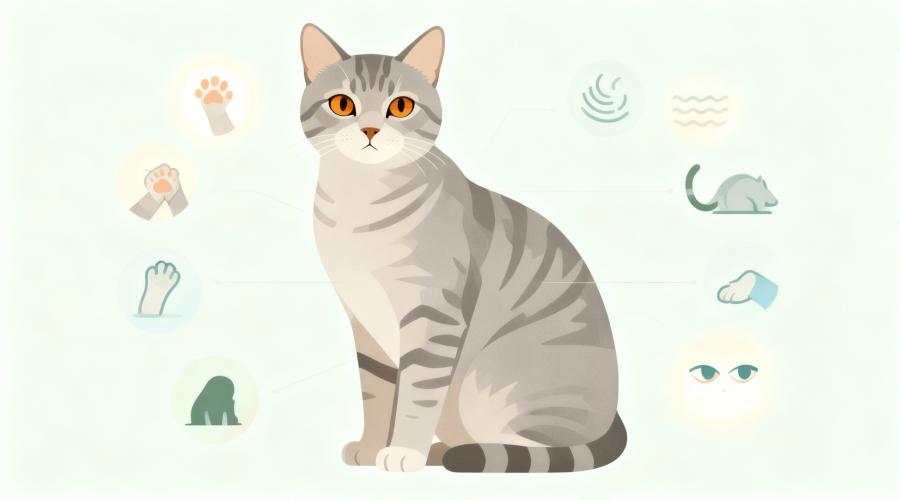
Decoding Your Cat’s Behavior: What Their Actions Really Mean
Written by MyCern Research & Editorial Team
Cats communicate primarily through behavior rather than words, and understanding their signals is key to maintaining their wellbeing and strengthening the human-animal bond. Many common feline behaviors scratching, purring, hiding, or kneading reflect instincts, emotional states, or environmental needs. Decoding these signals helps cat owners respond appropriately and provide supportive environments.
This article explores:
- Common feline behaviors and what they indicate
- How body language reflects mood and needs
- Environmental and social factors influencing behavior
- Strategies to promote positive behaviors and reduce stress
- Practical tips for observing and responding to your cat
Understanding Common Cat Behaviors

Cats express themselves in ways that often go unnoticed or misinterpreted:
- Purring: Can indicate contentment, relaxation, or sometimes mild discomfort
- Kneading: Reflects comfort, early nursing behaviors, or territory marking
- Scratching: Maintains claw health and marks territory
- Hiding: Indicates stress, illness, or a need for quiet
- Tail positions: Upright tail shows confidence; twitching tail can signal irritation
Quick Tip Box – Observing Signals:
- Note context: time of day, environment, or interactions
- Combine cues (ears, tail, eyes, posture) for accurate interpretation
- Avoid punishing instinctive behaviors; provide outlets instead
Why Behavior Reflects Health and Wellbeing
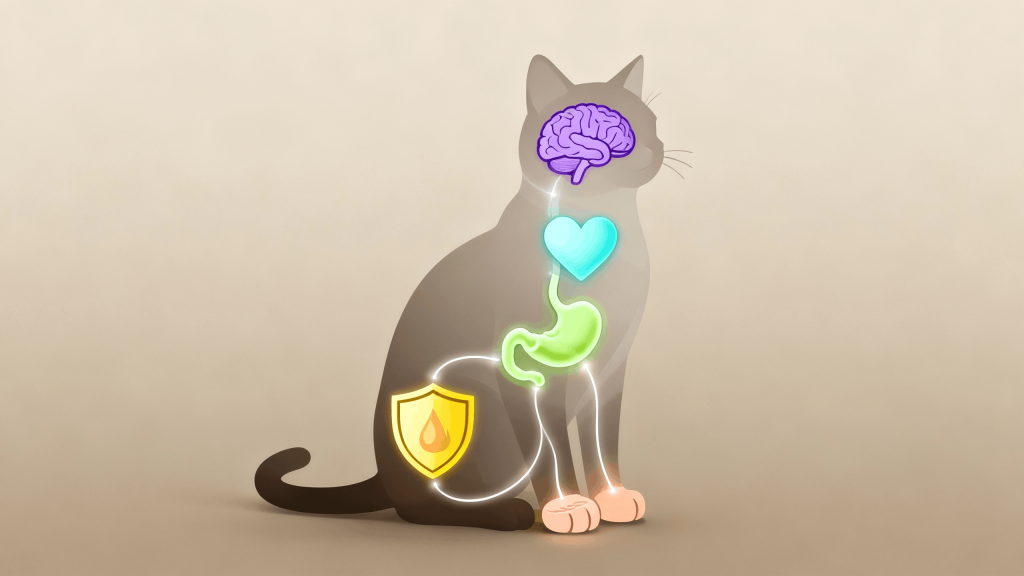
Feline behaviors often reveal underlying physiological or emotional states:
- Grooming patterns reflect coat and skin health; over-grooming may indicate stress or irritation
- Appetite and activity changes can signal digestive or systemic issues
- Vocalizations (meowing, hissing) communicate need, discomfort, or stress
- Play behavior provides mental stimulation, coordination, and stress relief
Quick Tip Box – Behavior as a Health Indicator:
- Track changes in routines, interactions, and litter box habits
- Observe signs of stress such as excessive hiding or aggression
- Consult a veterinarian if behavioral changes are sudden or persistent
Environmental and Social Influences
A cat’s behavior is shaped by surroundings and interactions:
- Safe spaces: Cats need access to quiet areas and vertical spaces
- Routine: Predictable feeding and play schedules reduce stress
- Enrichment: Toys, scratching posts, and interactive play support mental stimulation
- Social interactions: Some cats enjoy socialization, others need gradual introductions
Quick Tip Box – Supporting Positive Behavior:
- Rotate toys to maintain interest and engagement
- Provide multiple litter boxes in multi-cat households
- Use scratching posts near resting and play areas
- Offer perches or hiding spots to satisfy natural instincts
Practical Observation Strategies
Regular observation allows owners to understand their cat’s unique personality and preferences:
- Keep a simple log of daily behaviors, including sleep, play, and interactions
- Note triggers for stress or aggression
- Reinforce positive behaviors through reward and gentle guidance
- Avoid punishment that may worsen fear or stress
References
- Overall, K. L. (2013). Manual of Clinical Behavioral Medicine for Dogs and Cats. Elsevier.
- Mills, D. S., et al. (2010). Feline Behavior and Welfare: Insights from Research. Journal of Feline Medicine and Surgery, 12(5), 362–373.
- Ellis, S. L. H. (2009). Environmental enrichment for cats. Veterinary Clinics of North America: Small Animal Practice, 39(2), 311–325.
- Buffington, C. A., et al. (2006). Stress and feline behavior: Practical guidance for owners. Journal of Feline Medicine and Surgery, 8(6), 389–398.
Conclusion
Cats communicate through subtle yet meaningful behaviors that reflect health, emotions, and environmental needs. By observing body language, understanding instinctual actions, and providing supportive routines and enrichment, owners can foster wellbeing, reduce stress, and strengthen their bond with their feline companions. A science-informed approach allows cats to thrive in both comfort and confidence.