
Mental Stimulation for Dogs: Why Enrichment Is Just as Important as Exercise
Written by MyCern Research & Editorial Team
While physical activity is essential for a dog’s health, mental stimulation is equally critical. Dogs are intelligent animals whose cognitive engagement impacts behavior, mood, and overall wellbeing. Lack of mental enrichment can lead to boredom, anxiety, and destructive behaviors. Providing structured cognitive challenges alongside daily exercise supports a dog’s brain, emotional health, and long-term vitality.
This article explores:
- How mental stimulation benefits canine health
- Common signs of boredom and under-stimulation
- Types of enrichment activities for dogs
- Integrating cognitive challenges into daily routines
- Practical tips to balance mental and physical exercise
Why Mental Stimulation Matters
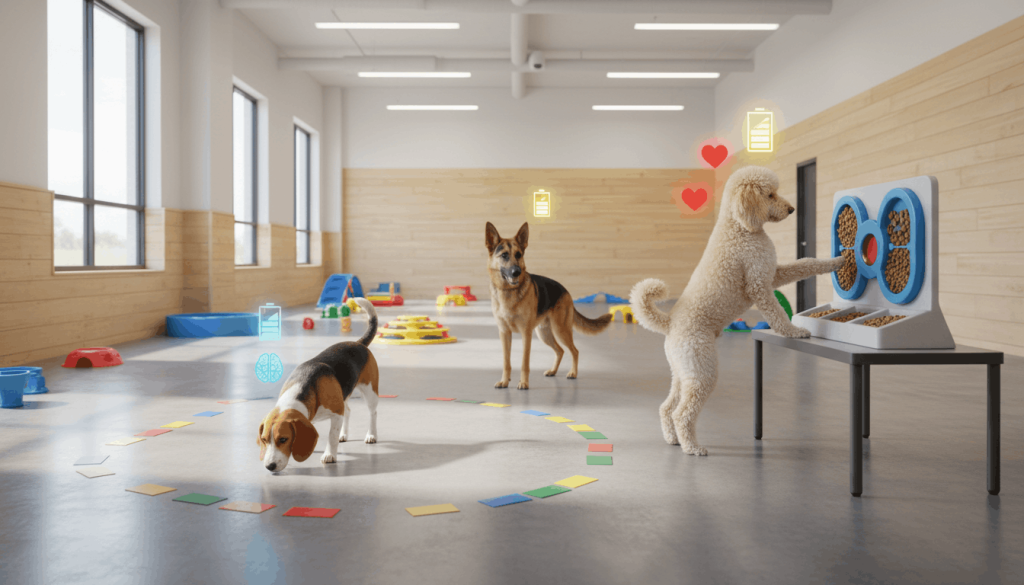
Cognitive engagement affects multiple systems in a dog’s body:
- Behavioral health: Reduces destructive tendencies and anxiety
- Brain function: Encourages problem-solving, memory, and learning
- Emotional wellbeing: Supports confidence and adaptability
- Physical health: Mental engagement can complement physical exercise, supporting metabolism and endurance
Quick Tip Box – Signs Your Dog Needs Enrichment:
- Chewing furniture or other destructive behaviors
- Excessive barking or pacing
- Restlessness or difficulty settling
- Lack of interest in games or interaction
Types of Mental Enrichment
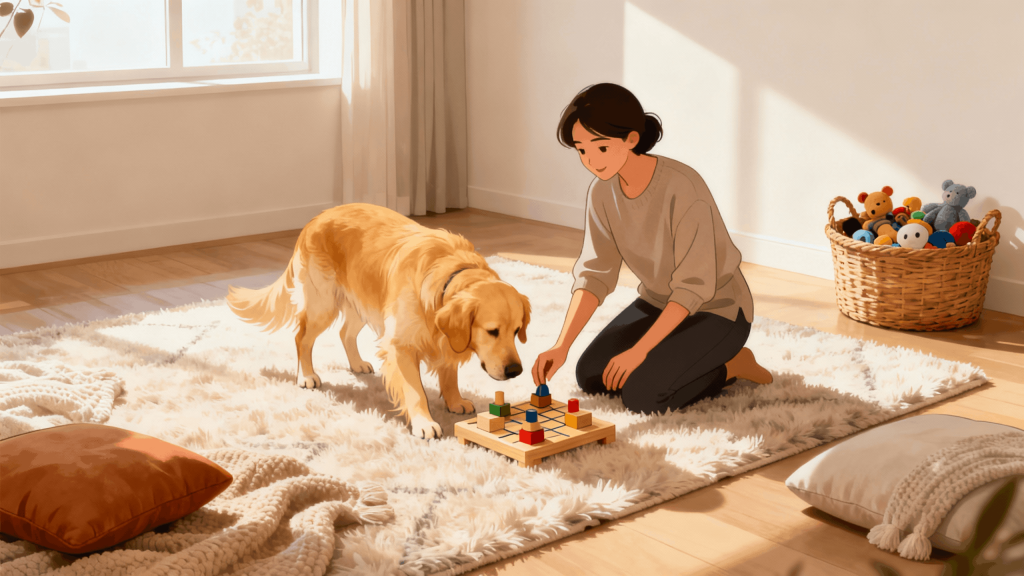
Mental stimulation comes in many forms, from interactive play to scent-based challenges:
- Puzzle toys: Encourage problem-solving to access treats
- Scent games: Hide treats for dogs to find using their natural olfactory skills
- Training sessions: Reinforce commands and introduce new tricks
- Novel objects and environments: Introduce new textures, toys, or safe outdoor exploration
- Social interaction: Structured play with other dogs or humans
Quick Tip Box – Balancing Mental and Physical Stimulation:
- Rotate toys and challenges to maintain novelty
- Combine short mental exercises with walks or playtime
- Adjust difficulty to match age, breed, and skill level
- Observe frustration levels—keep tasks challenging but achievable
Daily Routine Integration

Incorporating cognitive enrichment into daily life helps create predictable, engaging routines:
- Start with short, frequent sessions throughout the day
- Include mental challenges during feeding using puzzle feeders
- Schedule training sessions before or after walks to reinforce learning
- Use environmental enrichment like scratching mats, chew toys, or scent trails
Quick Tip Box – Routine Ideas:
- 10–15 minutes of puzzle play in the morning
- Scent games during indoor downtime
- Short training refreshers before mealtime
- Rotating enrichment activities every few days
Mental Stimulation Supports Lifelong Health
Regular cognitive engagement can:
- Delay age-related cognitive decline
- Reduce anxiety and stress in sensitive or high-energy breeds
- Strengthen the bond between owner and dog
- Complement physical exercise for overall vitality

References
- Horowitz, A. (2009). Inside of a Dog: What Dogs See, Smell, and Know. Scribner.
- Bennett, P. C., & Rohlf, V. I. (2007). Owner–dog interactions and canine behavior problems. Applied Animal Behaviour Science, 105(3–4), 223–245.
- Blackwell, E. J., et al. (2008). Environmental enrichment for dogs: Cognitive and behavioral benefits. Journal of Veterinary Behavior, 3(3), 89–98.
- Chapagain, D., et al. (2020). Cognitive enrichment and mental stimulation in companion dogs. Animals, 10(12), 2290.
Conclusion
Mental stimulation is as vital as physical exercise for dogs, supporting cognitive function, emotional wellbeing, and behavior. By integrating enrichment activities into daily routines, providing novel challenges, and observing responses, owners can promote a balanced, healthy, and fulfilled life for their dogs. Cognitive engagement strengthens the bond between dogs and humans while laying the foundation for long-term health and vitality.