How a Cat’s Sense of Smell Influences Stress, Appetite, and Mood
Written by MyCern Research & Editorial Team
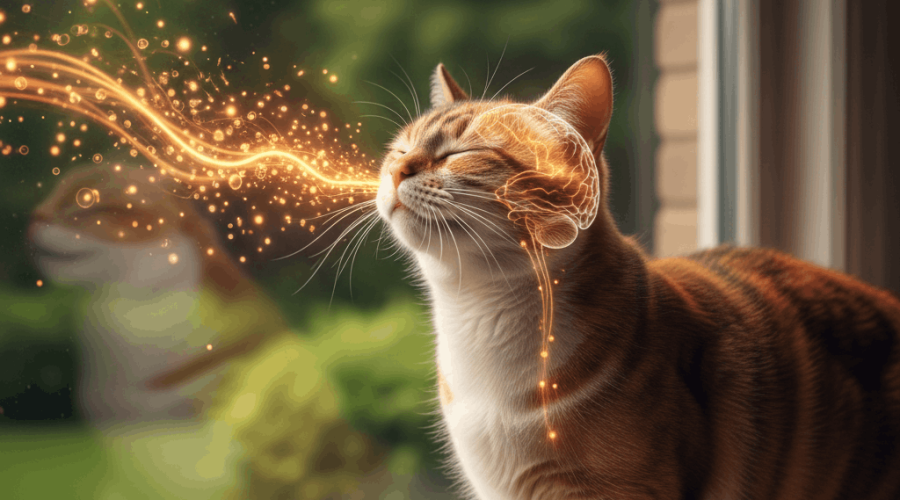
For cats, smell is not just a sense, it is a primary regulatory system. Long before taste, vision, or sound, olfaction shapes how cats interpret safety, food quality, territory, and emotional state. A cat’s nose is deeply wired into brain regions responsible for appetite, stress response, and mood regulation.
Because this system operates largely outside conscious awareness, disruptions to smell can quietly reshape behavior and wellbeing.
This article explores:
- Why smell dominates feline perception
- How the olfactory system connects to stress and appetite
- The neurological link between scent and emotional regulation
- How environmental odors influence mood and feeding
- Why subtle smell disruption can have outsized effects
The Feline Olfactory System: Built for Sensitivity
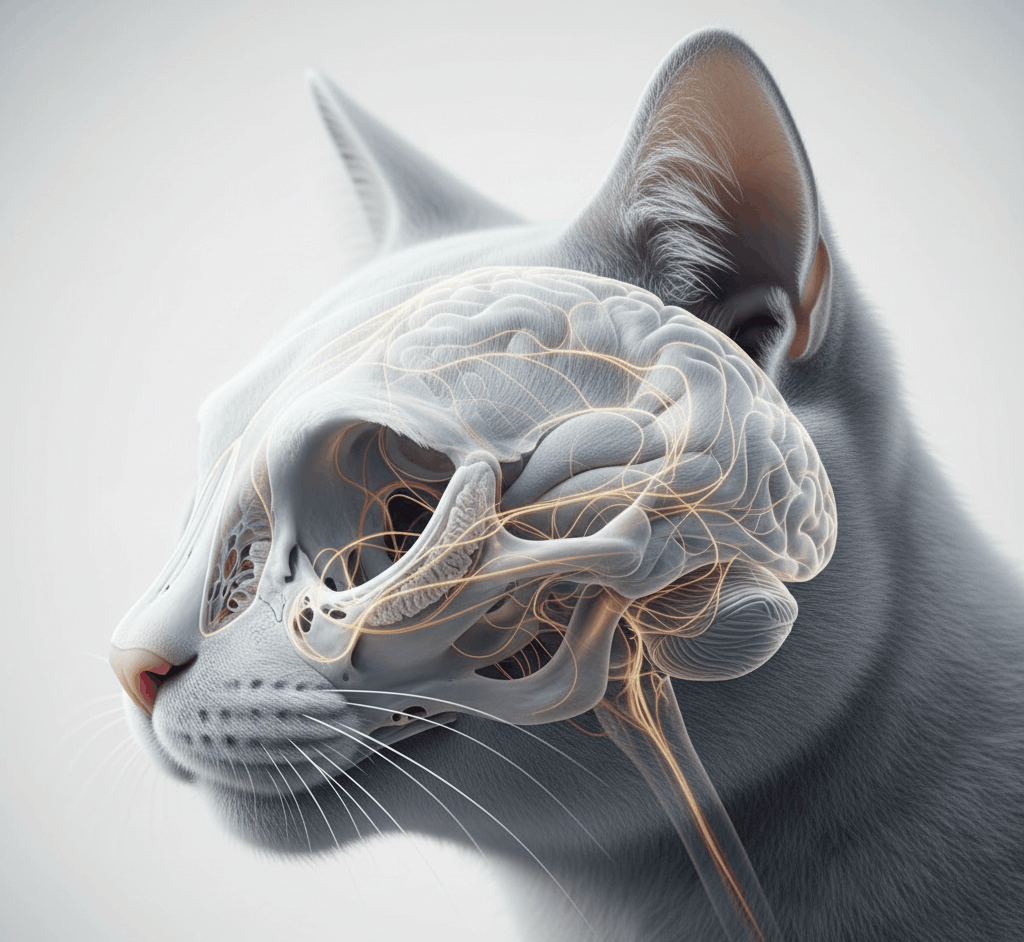
Cats possess a highly developed olfactory apparatus, including:
- A large olfactory epithelium relative to skull size
- Direct neural pathways to the limbic system
- A functional vomeronasal (Jacobson’s) organ
This design allows scent information to bypass rational processing and directly influence emotional and physiological responses.
Smell and Appetite: An Inseparable Link
In cats, appetite initiation depends heavily on olfactory input. If food does not smell “right,” it may not be recognized as food at all.
Even mild nasal congestion, environmental odor overload, or unfamiliar scents near feeding areas can suppress appetite without affecting hunger hormones. This explains why cats may refuse nutritionally adequate food under certain conditions.
Olfaction and the Stress Response
Scent cues are deeply tied to safety assessment. Unfamiliar or strong odors—cleaning agents, perfumes, other animals, can activate stress pathways through the amygdala.
Chronic olfactory stress may contribute to:
- Hypervigilance or withdrawal
- Reduced appetite
- Changes in sleep behavior
- Increased grooming or hiding
These reactions are physiological, not emotional overreactions.

Mood Regulation Through Scent Memory
Cats form strong scent-based memories. Positive or negative associations with specific smells can persist long after the original event, influencing mood and behavior subconsciously.
This explains why some cats become uneasy in environments that appear unchanged to humans but smell different to them.
Why Smell Disruption Is Often Missed
Because cats compensate visually and behaviorally, subtle olfactory disruption often goes unnoticed. Appetite changes, irritability, or withdrawal may be misattributed to personality when the root cause is sensory overload or impairment.
Supporting Olfactory Comfort
Respecting a cat’s sensory world involves minimizing unnecessary scent changes, maintaining consistent feeding environments, and recognizing that smell is foundational to emotional stability, not a minor preference.
Conclusion
A cat’s sense of smell is a central regulator of appetite, stress, and mood. By understanding olfaction as a neurological and emotional pathway not just a sensory feature, owners can better interpret behavior changes and support a calmer, more resilient feline environment.
References
- Bradshaw, J. W. S. (2016). The behaviour of the domestic cat. CABI Publishing.
- Dielenberg, R. A., & McGregor, I. S. (2001). Defensive behavior in rats. Neuroscience & Biobehavioral Reviews, 25(7–8), 597–609.
- Houpt, K. A. (2018). Domestic animal behavior for veterinarians and animal scientists. Wiley-Blackwell.
- Miyazaki, T., et al. (2017). Neural circuits of olfactory emotion. Nature Neuroscience, 20(11), 1586–1594.