
Why Do Dogs Chase Their Tails? Play, Boredom, or Behavioral Signals
Written by MyCern Research & Editorial Team
If you have ever watched your dog suddenly spin in circles, you have probably smiled—and then wondered if something is wrong. Dog tail chasing is one of the most common and confusing behaviors dog owners notice. Sometimes it is harmless fun. Other times, it can be a sign of stress, boredom, or even a medical problem.
The key is knowing when tail chasing is normal and when it is not.
This article explores:
- why do dogs chase their tails and when it is simple play
- the real dog chasing tail psychology behind repeated spinning
- medical and emotional causes you should not ignore
- how to recognize dog tail chasing compulsive behavior early
Understanding normal dog tail chasing

Puppies and body discovery
For young puppies, chasing the tail is often just learning how their body works. That moving object behind them looks exciting and new. In most cases, this type of chase tails behavior:
- lasts only a few seconds
- happens during play
- stops easily when the puppy gets distracted
Most puppies grow out of this naturally as coordination improves.
Playful energy and excitement
Adult dogs may also spin during moments of high excitement before a walk, during play, or when you arrive home. In these moments, the dog is relaxed and happy. The behavior looks light, bouncy, and brief.
A simple way to tell it is play:
If you call your dog and they stop easily, the spinning is likely harmless.
Why do dogs chase their tails? The psychology behind the behavior
Understanding why do dogs chase their tails means looking at what is happening in your dog’s daily life.
Boredom and lack of stimulation
One of the most common reasons a dog is chasing tail repeatedly is boredom. Dogs need physical exercise and mental challenges. Without them, they invent their own activities.
This is especially common when dogs:
- spend many hours alone
- receive short or irregular walks
- have limited toys or training activities
Boredom-based tail chasing often improves quickly when you add more walks, training games, and enrichment toys.
Attention-seeking patterns
Dogs are excellent at learning what works. If tail chasing gets laughter, talking, or treats, your dog may repeat it on purpose.
You may even notice your dog glance at you while spinning. In this case, the behavior is not emotional distress, it is learned communication.
This is a simple but powerful part of dog chasing tail psychology.
Anxiety and emotional stress
For some dogs, spinning becomes a coping tool. It helps release nervous energy or distract from uncomfortable feelings.
Stress-related tail chasing often appears:
- after being left alone
- during household changes
- during loud events such as fireworks or storms
In these moments, the dog’s body language looks different. The dog may appear tense, pace before spinning, or struggle to relax afterward.
Medical causes behind dog tail chasing

Sometimes the answer to why do dogs chase their tails has nothing to do with behavior.
Skin irritation, allergies, and discomfort
Itchy or painful skin near the tail can trigger chasing and biting. Common causes include:
- flea allergy reactions
- food or environmental allergies
- hot spots or infections
- anal gland discomfort
In these cases, dogs usually try to lick or bite the tail after spinning.
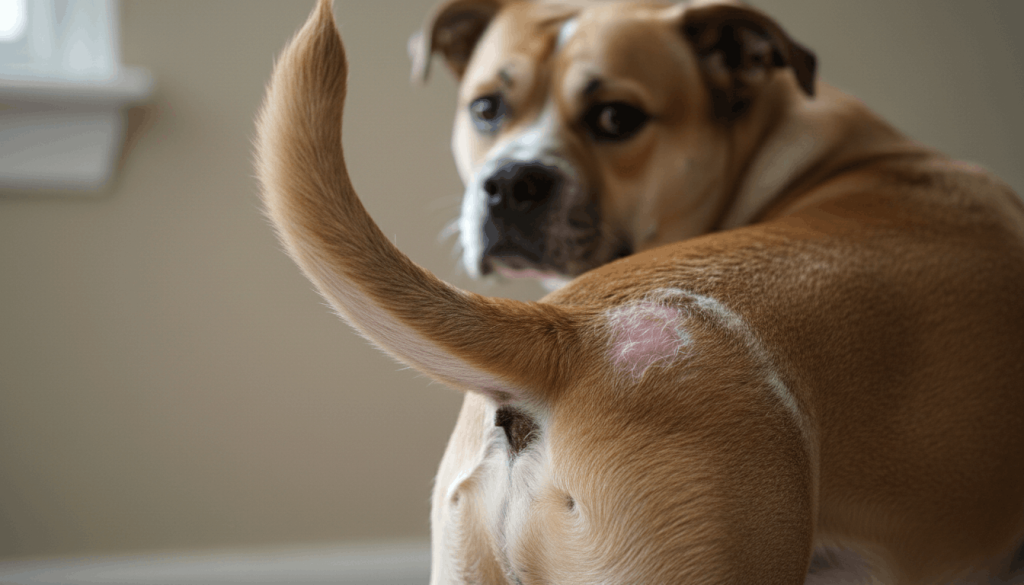
Look for signs such as redness, hair loss, scooting, or strong odor around the tail area.
Pain and past injury
A dog that once injured its tail may continue checking it even after healing. This can create a habit of spinning and focusing on the tail.
Neurological concerns
In rare situations, dog tail chasing compulsive behavior can be linked to neurological conditions. These cases often look unusual. The dog may appear confused, unable to stop, or suddenly wake up and begin spinning.
If your dog seems disconnected, unresponsive, or shows coordination problems, veterinary assessment is essential.
When dog tail chasing becomes compulsive
What does compulsive tail chasing look like?
Dog tail chasing compulsive behavior is different from playful spinning. It usually shows several of the following signs:
- episodes last many minutes or longer
- the behavior happens many times every day
- your dog struggles to stop even when called
- spinning causes wounds, hair loss, or exhaustion
- tail chasing replaces normal activities such as eating or resting
This is not simply bad behavior. It reflects a loss of control over the action.
How compulsive behavior develops
In many dogs, compulsive spinning begins in a much simpler way:
- initial tail chasing caused by boredom, anxiety, or discomfort
- repetition brings brief relief or stimulation
- the behavior becomes a habit
- over time, the habit turns into a compulsion
Early support can prevent this progression.
Red flags: when to take dog tail chasing seriously
You should investigate further if:
- your dog spins for several minutes or more at a time
- the behavior appears suddenly in an adult dog
- injuries appear on the tail or hindquarters
- your dog becomes frustrated or aggressive when interrupted
- tail chasing increases instead of fading
These signs suggest the behavior is no longer normal play.
How to reduce and manage dog tail chasing
Rule out medical causes first
Before changing training or routines, your veterinarian should examine your dog for skin problems, pain, allergies, and anal gland issues. Treating physical discomfort often reduces tail chasing quickly.
Increase daily activity and enrichment
For boredom-related chase tails behavior, structured activity is one of the most effective tools:
- daily walks appropriate for your dog’s energy level
- short training sessions that teach new skills
- food puzzles and interactive toys
- scent games and search games inside the home
Many owners see improvement within days when enrichment becomes consistent.
Avoid reinforcing the behavior
If tail chasing gets attention, calmly redirect instead.
Offer:
- a toy
- a cue your dog already knows
- a short game or walk
Reward the alternative behavior not the spinning itself.
Reduce stress and build emotional safety
When anxiety is a trigger, focus on:
- predictable routines
- quiet resting areas
- gentle exposure to stressors rather than sudden challenges
- relaxation training and calm reinforcement
In more severe cases, working with a veterinary behaviorist may be necessary.
Professional support for compulsive tail chasing

If home strategies do not improve the situation or if your dog is already showing dog tail chasing compulsive patterns, professional guidance is important.
Behavior professionals create structured plans that combine:
- environmental changes
- behavior modification
- emotional regulation training
- and, in some cases, medication
Clinical guidance for tail chasing and spinning is discussed in detail in
Manual of Clinical Behavioral Medicine for Dogs and Cats.
Long-term improvement is very possible, but early support leads to better outcomes.
How MyCern supports canine behavioral wellness
At MyCern, we view behaviors such as dog tail chasing as signals of overall wellness. Physical comfort, emotional security, daily stimulation, and healthy routines all work together.
While nutrition alone cannot resolve behavioral disorders, supporting your dog’s foundational health—such as digestive balance, immune function, and stress resilience—creates a stronger base for learning, emotional regulation, and behavior improvement.
True behavioral wellness always combines:
- physical care
- mental enrichment
- emotional stability
- and informed professional guidance
Practical steps you can start today
- Track when your dog spins and what happens just before and after.
- Increase structured play and mental challenges each day.
- Redirect spinning calmly and consistently.
- Schedule a veterinary check if the behavior is new, intense, or persistent.
- Reduce stressors and improve predictability in daily routines.
- Seek behavioral help early if spinning becomes frequent or difficult to stop.

Conclusion
Seeing your dog spin can be entertaining but understanding what it truly means is far more important.
In many homes, dog tail chasing is simply play, excitement, or short-term boredom. In others, it reflects deeper emotional stress, learned attention-seeking, physical discomfort, or developing compulsive behavior.
By learning why do dogs chase their tails, recognizing key patterns in dog chasing tail psychology, ruling out medical causes, and responding early when dog tail chasing compulsive signs appear, you protect both your dog’s physical health and emotional wellbeing.
With proper care, enrichment, and timely support, tail chasing can remain a harmless quirk—rather than a behavior that interferes with your dog’s quality of life.
References
- Luescher, A. U. (2003). Diagnosis and management of compulsive disorders in dogs and cats. Veterinary Clinics: Small Animal Practice, 33(2), 253-267.
- AA, M. F. (1999). Veterinary models of compulsive self-grooming: parallels with trichotillomania. Trichotillomania, 63-92.
- Overall, K. (2013). Manual of clinical behavioral medicine for dogs and cats-E-Book: manual of clinical behavioral Medicine for dogs and cats-E-Book. Elsevier Health Sciences.
- Martin, D., & Shaw, J. K. (Eds.). (2023). Canine and feline behavior for veterinary technicians and nurses. John Wiley & Sons.