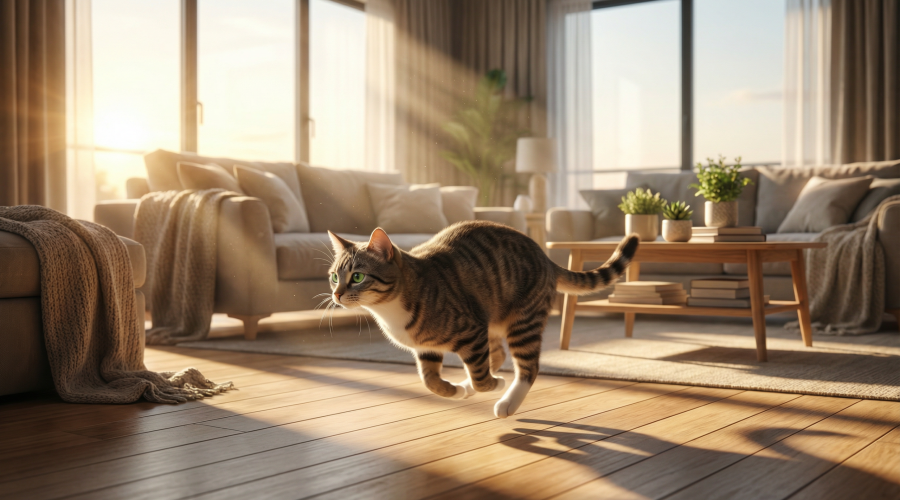
Why Cats Experience Energy Bursts at Dawn and Dusk
Written by MyCern Research & Editorial Team
If your cat suddenly races through the house at sunrise or becomes intensely playful just as evening settles in, you’re not alone. These predictable energy bursts aren’t random or attention-seeking, they’re rooted in feline biology. Cats are naturally crepuscular, meaning their internal rhythms are tuned for activity during dawn and dusk.
Understanding why these energy peaks occur helps owners support healthier routines, reduce nighttime disruption, and align care with a cat’s natural instincts.
This article explores:
- What crepuscular behavior means in cats
- The biological reasons behind dawn and dusk activity
- How hormones, vision, and hunting instincts interact
- Why indoor cats may show exaggerated energy bursts
- Practical ways to channel this energy constructively
What Does “Crepuscular” Mean?
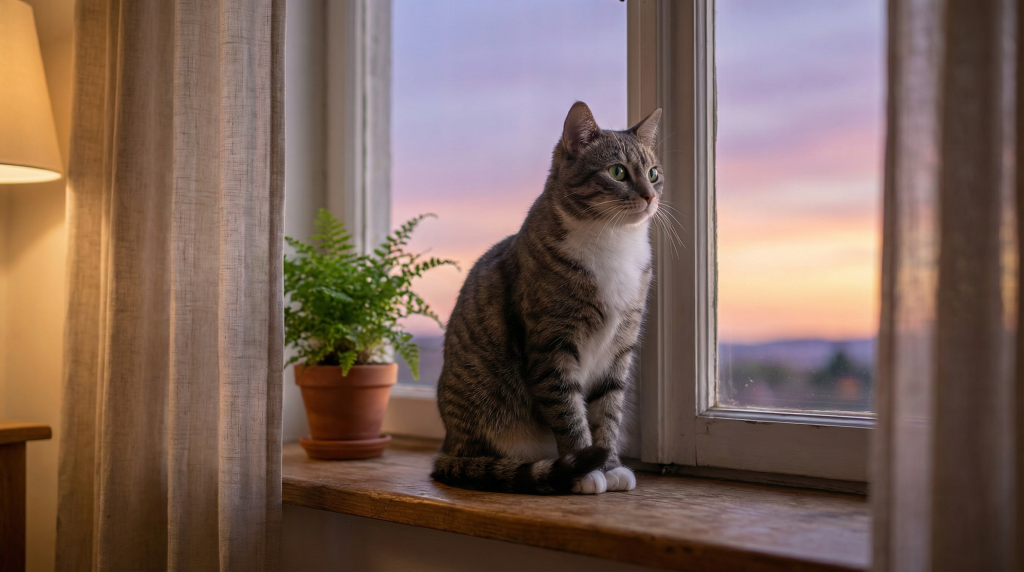
Crepuscular animals are most active during:
- Dawn (early morning light)
- Dusk (low-light evening conditions)
This activity pattern differs from:
- Diurnal (active during the day)
- Nocturnal (active at night)
Cats evolved to hunt small prey like rodents and birds, that are also most active during these twilight hours.
The Biology Behind Dawn and Dusk Zoomies
1. Hormonal Rhythms
Cats’ circadian rhythms regulate:
- Cortisol (alertness hormone)
- Melatonin (sleep-regulating hormone)
At dawn and dusk:
- Melatonin levels drop
- Cortisol and alertness rise
This hormonal shift primes cats for movement, focus, and exploration.

2. Visual Advantage in Low Light
Cats’ eyes are uniquely adapted for twilight conditions:
- High rod cell density improves motion detection
- The tapetum lucidum reflects light, enhancing night vision
- Pupils dilate dramatically in dim environments
These features make dawn and dusk ideal times for hunting behavior.
3. Neuromuscular Readiness
During crepuscular periods:
- Reaction time improves
- Muscle coordination increases
- Sensory awareness heightens
This combination produces the sudden bursts of running, jumping, and stalking many owners recognize.
Why Indoor Cats Often Show Stronger Energy Bursts
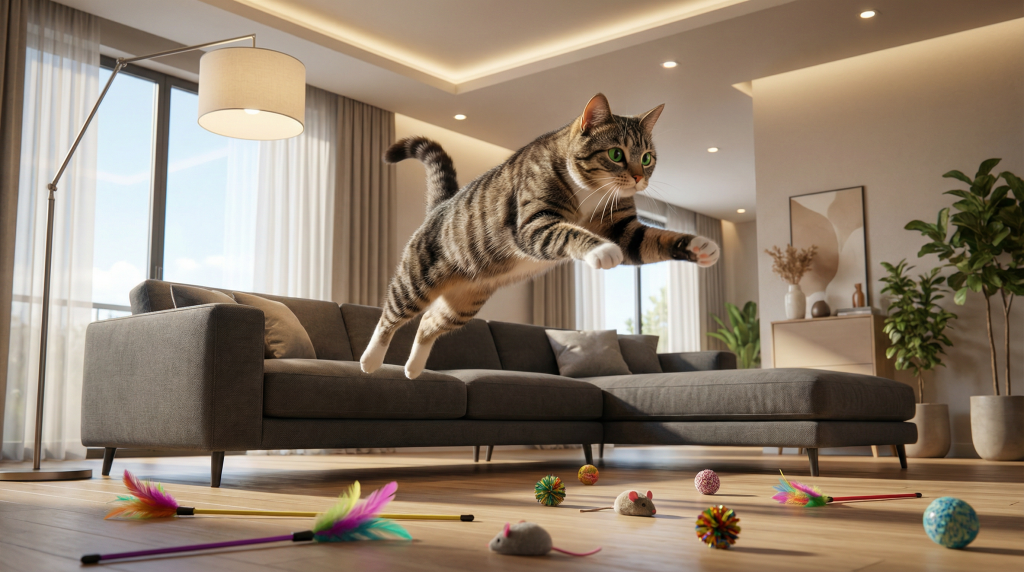
Indoor cats don’t expend energy hunting throughout the day. As a result:
- Energy accumulates and releases in short bursts
- Limited environmental stimulation concentrates activity windows
- Inconsistent play routines intensify zoomies
Quick Tip Box – Common Dawn & Dusk Behaviors:
- Sudden sprinting or “parkour”
- Vocalizing or play-biting
- Stalking toys, feet, or shadows
- Rapid shifts from calm to intense play
Channeling Energy in Healthy Ways
Rather than suppressing these instincts, owners can work with them.
Play Timing Matters
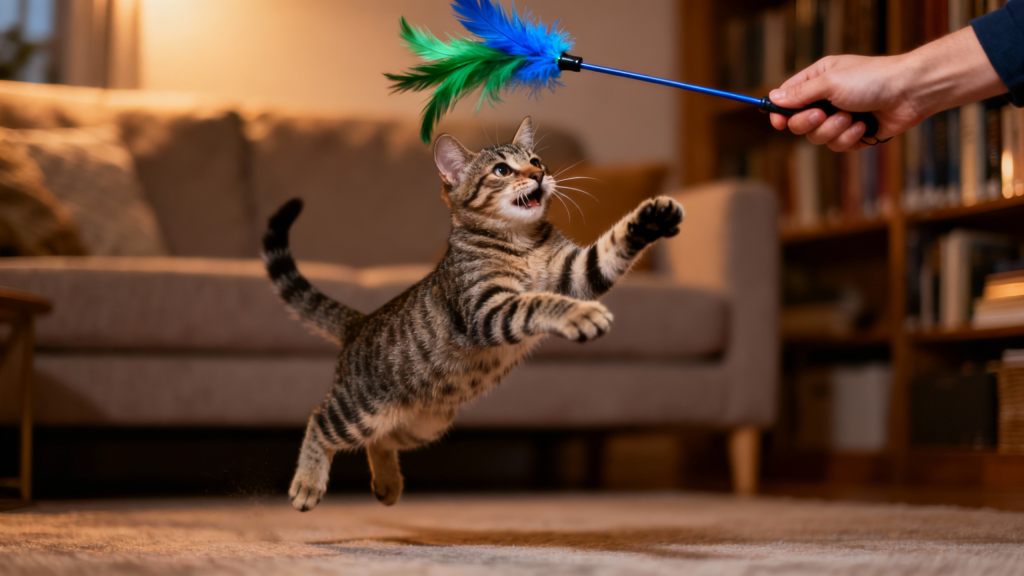
- Schedule interactive play before dawn (if possible) or in the evening
- Use wand toys or chase games that mimic hunting
- End play with a small meal to complete the hunt–eat–rest cycle
Environmental Enrichment
- Vertical spaces (cat trees, shelves)
- Puzzle feeders that engage problem-solving
- Window perches for visual stimulation
(Related reading: How Interactive Toys Keep Your Pet Mentally Sharp and Physically Fit)
The Sleep–Energy Connection
Cats sleep 12–16 hours per day—but in short cycles.
- Frequent daytime naps preserve energy
- Lack of structured activity increases nighttime restlessness
- Proper play improves sleep quality and timing
Cats with unmet stimulation needs may shift activity later into the night.
When Energy Bursts Signal a Problem
While dawn and dusk activity is normal, consult a veterinarian if you notice:
- Sudden hyperactivity paired with weight loss
- Vocalization with disorientation (especially in seniors)
- Aggression or anxiety behaviors
- Inability to settle at all between bursts
These may indicate stress, metabolic issues, or cognitive changes.

References
- Bradshaw, J. W. S., & Cameron-Beaumont, C. (2000). The signaling repertoire of the domestic cat. Animal Behaviour, 59(3), 471–479.
- Piccione, G., et al. (2010). Daily rhythms of activity and rest in cats. Journal of Veterinary Behavior, 5(1), 1–7.
- Ellis, S. L. H., et al. (2013). The influence of environmental enrichment on cat behavior. Applied Animal Behaviour Science, 144(3–4), 157–164.
- Landsberg, G. M., et al. (2012). Circadian rhythms and behavior changes in aging cats. Journal of Veterinary Behavior, 7(4), 202–213.
Conclusion
Dawn and dusk energy bursts are a natural expression of feline biology—not misbehavior. These crepuscular activity peaks reflect hormonal rhythms, sensory adaptations, and deeply ingrained hunting instincts. By aligning play, feeding, and enrichment with these natural cycles, owners can reduce frustration, support healthy sleep, and help cats express their instincts in positive, balanced ways.