Understanding Arthritis in Dogs: Early Signs and Long-Term Support Options
Written by MyCern Research & Editorial Team
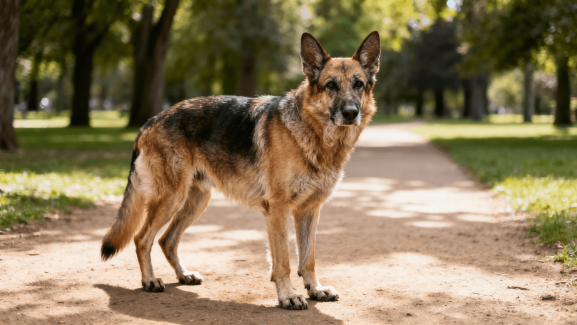
Arthritis is one of the most common chronic conditions affecting dogs, particularly as they age. Yet it often develops quietly, long before limping or obvious pain appears. Many dogs continue to eat, play, and interact normally while underlying joint changes slowly progress. Because of this, arthritis is frequently recognized later than ideal, especially in large and active breeds.
Degenerative joint disease is not simply a problem of “old age.” It is a biological process involving cartilage breakdown, inflammation, altered joint mechanics, and changes in how the nervous system perceives movement and discomfort. Understanding these mechanisms helps owners recognize early signs and support long-term joint comfort more effectively.
This article explores:
- What arthritis is and how it develops in dogs
- Why large breeds and aging dogs are at higher risk
- Early, often-missed signs of joint degeneration
- How arthritis progresses over time
- Practical, long-term strategies to support mobility and comfort
What Is Arthritis in Dogs?

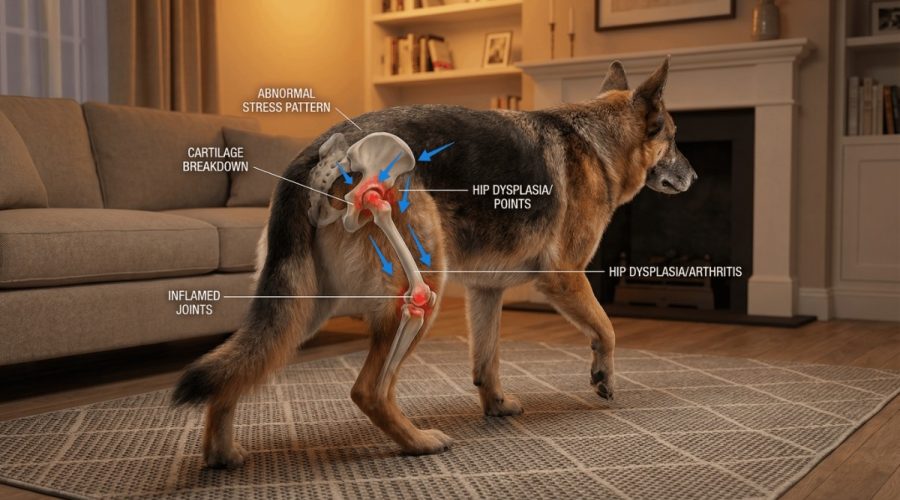
Arthritis, most commonly osteoarthritis, is a degenerative joint condition characterized by the gradual breakdown of cartilage, the smooth, protective tissue that cushions joints. As cartilage thins and loses elasticity, joint surfaces experience increased friction, leading to inflammation, reduced range of motion, and structural changes within the joint.
Over time, surrounding tissues such as ligaments, tendons, and muscles are also affected, altering how a dog moves and distributes weight.
Why Large Breeds Are More Vulnerable
Large and giant breeds place greater mechanical load on their joints throughout life. Rapid growth during puppyhood, combined with body weight and activity demands, can increase stress on developing joints.
Common contributing factors include:
- Genetics influencing joint structure
- Faster growth rates in early life
- Higher cumulative joint load over time
- Greater risk of hip and elbow dysplasia
These factors can accelerate cartilage wear and increase the likelihood of arthritis later in life.
Aging and Degenerative Joint Changes
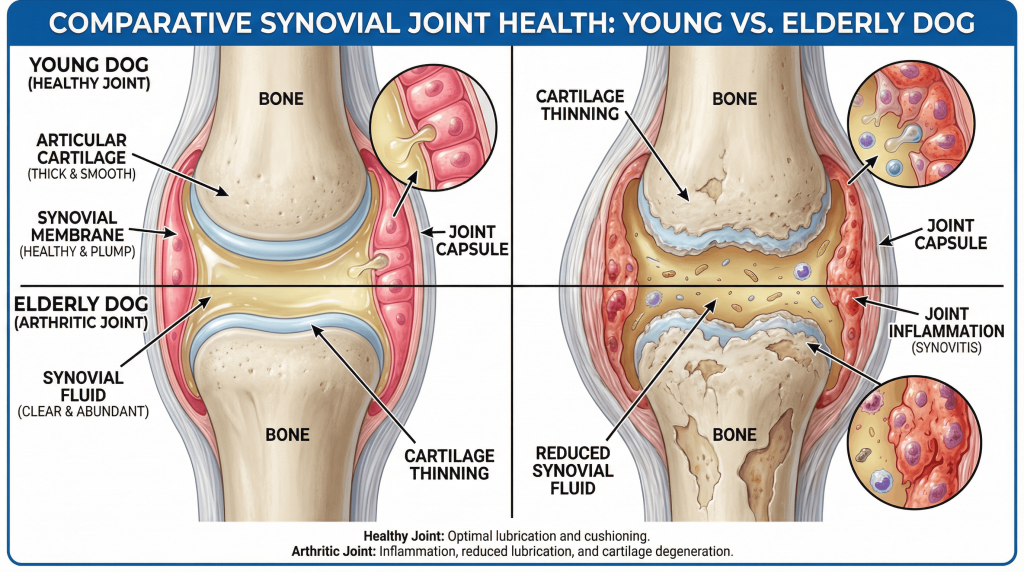
As dogs age, their joints naturally undergo structural and biochemical changes. Cartilage becomes less resilient, synovial fluid composition shifts, and the body’s ability to repair joint tissue gradually declines.
Importantly, arthritis is not an abrupt condition, it develops progressively, often over years. This is why early detection relies more on behavioral observation than visible injury.
Early Signs That Often Go Unnoticed
Many early signs of arthritis are subtle and easily mistaken for normal aging or personality changes. These may include:
- Stiffness after rest that improves with movement
- Hesitation before jumping, climbing stairs, or getting into cars
- Slower rising from lying down
- Reduced enthusiasm for walks or play
- Changes in posture or gait that come and go
Because dogs adapt their movement to avoid discomfort, these changes may appear inconsistent at first.
How Arthritis Progresses Over Time
Without support, degenerative joint disease tends to follow a gradual pattern:
- Continued cartilage erosion
- Increased joint inflammation
- Muscle loss around affected joints
- Reduced mobility and endurance
As movement decreases, joint stiffness and muscle weakness can worsen, creating a cycle that further limits activity and comfort.
The Role of Weight and Muscle Mass
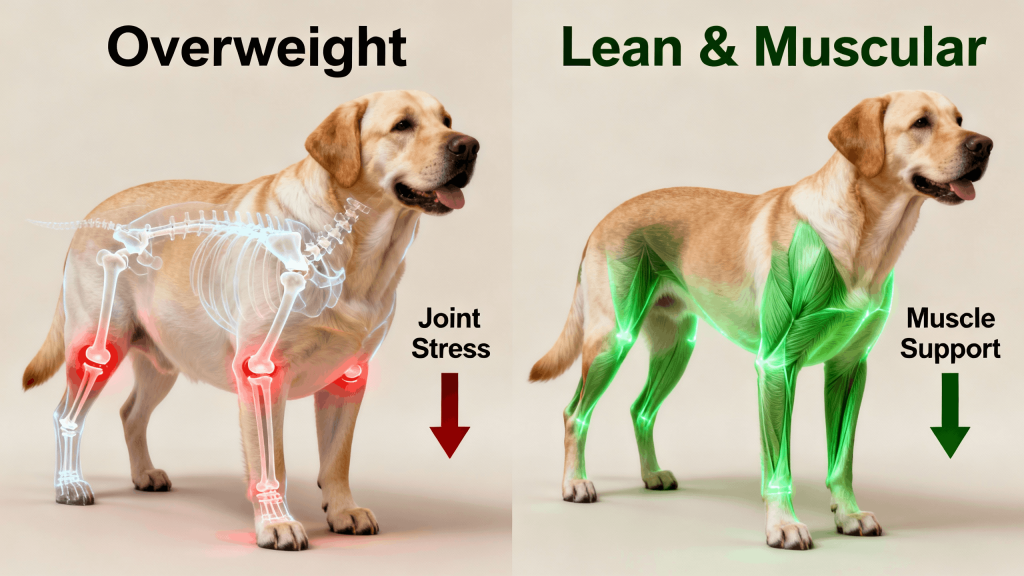
Body weight significantly influences joint stress. Even small increases in weight can amplify pressure on joints, particularly hips, knees, and elbows.
At the same time, maintaining muscle mass is essential. Muscles help stabilize joints and absorb impact, reducing mechanical strain. Loss of muscle can accelerate joint instability and discomfort.
Long-Term Support Strategies for Arthritic Dogs
Supporting a dog with arthritis involves a multi-faceted, long-term approach, not a single intervention.
Key considerations include:
- Consistent, low-impact activity to maintain joint mobility
- Weight management to reduce joint load
- Comfortable bedding that supports joints during rest
- Thoughtful home adjustments, such as ramps or non-slip surfaces
- Regular veterinary assessments to monitor progression
The goal is not to eliminate movement, but to encourage safe, regular motion that supports joint health and overall wellbeing.
When Veterinary Guidance Is Essential
Any persistent mobility change, stiffness, or reluctance to move should be evaluated by a veterinarian. Imaging, physical exams, and gait assessments help distinguish arthritis from other causes of discomfort and guide appropriate long-term care planning.
Early involvement allows for more proactive support and better preservation of mobility.

Conclusion
Arthritis in dogs is a progressive, biologically complex condition that affects far more than just joints. By recognizing early signs and understanding how degenerative changes develop, especially in aging and large-breed dogs, owners can take meaningful steps to support comfort, mobility, and quality of life over the long term. Thoughtful, consistent care makes a significant difference in how dogs age and stay active.
References
- Johnston, S. A. (1997). Osteoarthritis: Joint anatomy, physiology, and pathobiology. Veterinary Clinics of North America: Small Animal Practice, 27(4), 699–723.
- Anderson, K. L., et al. (2020). Prevalence, duration and risk factors for osteoarthritis in dogs. Veterinary Journal, 252, 105373.
- Smith, G. K., et al. (2012). Evaluation of risk factors for degenerative joint disease in dogs. Journal of the American Veterinary Medical Association, 240(11), 1366–1375.
- McGowan, C. M., et al. (2007). The role of exercise in maintaining musculoskeletal health in aging dogs. Journal of Small Animal Practice, 48(10), 507–514.
- Lascelles, B. D. X., et al. (2010). Pain and osteoarthritis in dogs. Veterinary Clinics of North America: Small Animal Practice, 40(3), 381–395.